
What are the differences between MP3, FLAC and other audio formats?
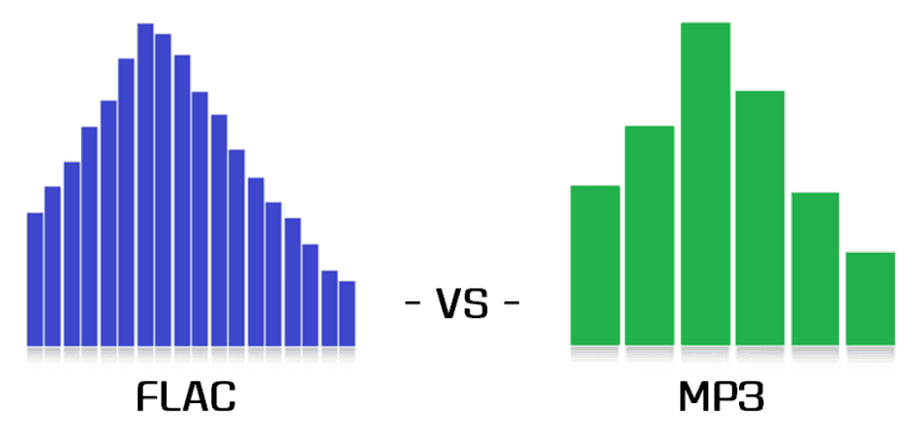
Digital audio has been around for a long time, so many audio formats can certainly be found. Here are some of the most common, what sets them apart and what to use them for.
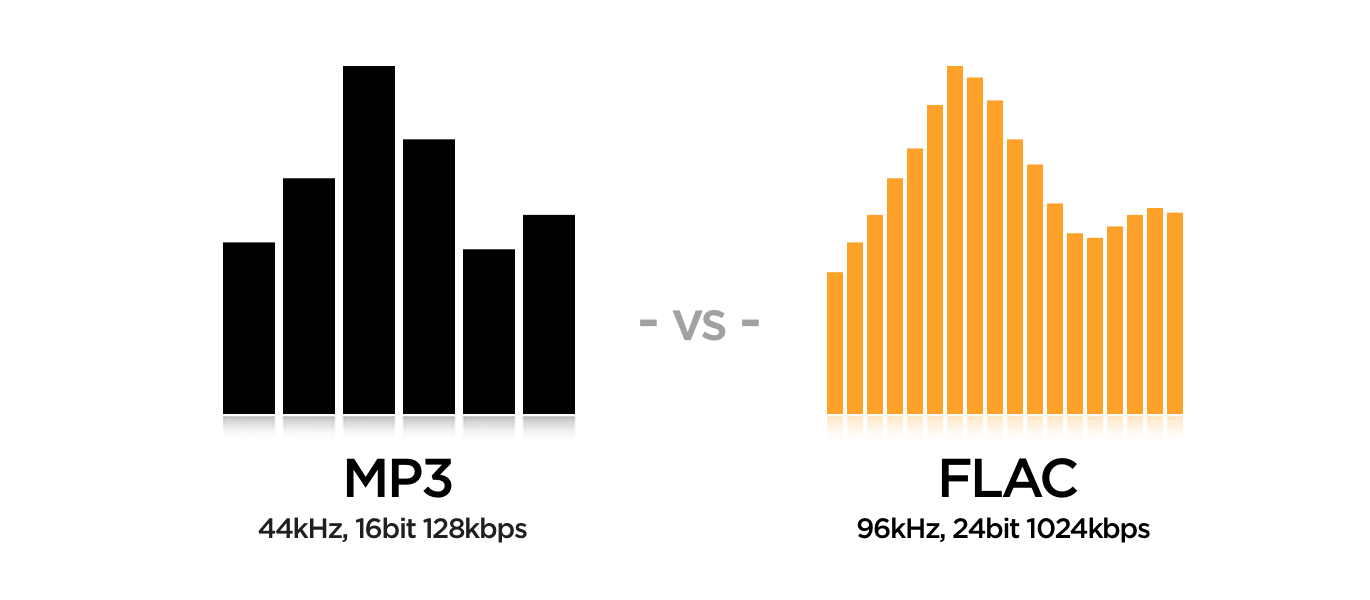
Before talking about everyday audio formats, it is important to understand the basics, what it means to understand PCM. After that, we will tackle compressed formats.
PCM audio: where it all begins
Pulse code modulation was created in 1937 and is the closest approximation to analog sound. That is, the analog signal approaches at regular intervals. PCM has two properties: sample rate and bit depth. The sample rate measures the frequency (per second) that the amplitude of the signal is taken and the bit depth measures the possible digital values. In terms of audio formats, this is pretty much the base.
True sound in the real world is continuous. This is not the case in the digital world. In some ways this is more confusing for audio than video, so let’s take a look at the video for comparison. What we interpret as “movement” or think as “fluid” and in constant motion is actually a series of still images. Also, the amplitude of digital sound waves is not “smooth” or constantly changing. It changes based on certain criteria at predetermined intervals.
I know there are a lot of things here that might not be second nature unless you’re an engineer, a physicist, or an audiophile, so let’s make a little analogy.
Let’s say the water coming out of an open tap is your “analog” sound source. We can compare the temperature of the water with the amplitude of a sound wave; It is a property that must be measured in order to enjoy it properly. Sampling is the number of times per second that you place your finger in plain water. The more often you put your finger on it, the more “continuous” the temperature changes will be. If you put your finger in running water 44,100 times per second, it’s like keeping your finger there all the time, right? This is the basic idea behind sampling.
Bit depth is a bit trickier. Instead of using your finger, let’s say you actually used a thermometer. Basically it said “Hot” for anything above room temperature and “Cold” for anything below. No matter how many times you put it in the water, it won’t give you much useful information. Now if instead of two choices, let’s say a thermometer has 16 possible values that you can use to measure the temperature of the water. More useful, right? Bit depth works in the same way, as higher values allow more dynamic changes in the amplitude of the sound to be accurately displayed.
As mentioned above, PCM is the foundation of digital audio, along with its variants. PCM tries to simulate the waveform of glory uncompressed as much as possible. It’s special, it’s ready to get stuck in a DSP and more or less universally playable. Most other formats manipulate the audio using algorithms, so they need to be decoded during playback. PCM audio is considered “lossless”, it is not compressed and therefore takes up a lot of hard disk space.
Uncompressed packet: WAV, AIFF
Both WAV and AIFF are PCM-based lossless audio container formats with minor changes to the data store. PCM audio for most people comes in these formats, depending on whether you are using Windows or OS X, and they can be converted to each other without any degradation in quality. Both are also considered “lossless”, they are uncompressed and a stereo PCM (2ch) audio file sampled at 44.1 kHz (or 44,100 times per second) with 16 bits (“CD quality”) is approximately 10 MB for a minute. If you are recording


