Apple Music lossless sound quality is not important?


Free Download Mp4Gain
picture

Apple Music lossless sound quality is not important?

Lossless Audio

Apple VP admits he “can’t hear the difference”

Apple Music

In an interview with Billboard, Eddy Cue, Apple’s senior vice president, admitted that he couldn’t actually hear the “fidelity compression” that Apple Music recently added, that is, the difference between lossless sound quality and the original AAC file. . But Cue thinks Apple Music’s lossless sound quality should still satisfy “a small group of users.”

Cue also believes that if he finds 100 people to test blindly, there may be 99 or 98 people, and it’s impossible to distinguish the quality of the Apple Music sound being played, whether it’s lossless or compressed. Cue noted that this has something to do with the fact that most people’s ears are “not that good” after all, after all, only a few people are gifted with hearing performance; In addition, to truly experience good lossless sound quality, additional devices such as an expensive stereo are usually required.

However, compared to the lossless performance and user experience, Eddy Cue highly praised the “spatial audio” that is upgraded with lossless sound quality. The musicians join in, even when the recording requires attention. Cue also announced that going forward, every new song added to Apple Music is expected to support spatial audio.

Eddy Cue’s statement may also explain that when Apple talks about this update to Apple Music, it’s actually talking about “spatial audio” in a larger space, rather than lossless sound quality. Apple officials also said “spatial audio” will permanently change the experience of streaming music.


Free Download Mp4Gain
picture


Mp4Gain Main Window
picture


Mp4Gain Features
picture


Free Download Mp4Gain
picture

Can a human tell the difference between lossless and lossless music? Part 2

Can a human tell the difference between lossless and lossless music? Part 2

lossless

Answer 2:

Apple Music Lossless

First, let’s talk about point of view. There is definitely a difference between lossless music and lossy music. There are many factors that affect whether you can hear it. The audio source format, decoding, amplification, line and playback equipment. all can affect the playback effect, generally speaking.

Personally, if you give me a random set of listening gear and let me listen to some songs I’m not familiar with, in this case I really can’t hear the difference between 320K and lossless. But if you let me use my own listening device to listen to the evaluation tracks that I’m normally familiar with, I can basically make a good guess. Physiologically, this shouldn’t be scientific, but actually I did. That’s why I said that there are many factors that can influence people to distinguish between lossless and lossy.

To give another example, many well-known tuners are over 50 years old and their hearing range is much less than some young tuners, but these older tuners have very good tri-frequency handling and can tune very well. sound equipment So, in a way, whether you can hear the difference between lossless and lossy has a lot to do with personal experience and competition.

Answer Summary:

Lossless audio refers to “lossless sound format data”, which only compresses the amount of data, but not the quality of the sound. Compared to lossless audio, lossy audio loses some information. It is mainly compressed by reducing the audio sample rate and bit rate, and the output audio file will be smaller than the original file.

Can a human tell the difference between lossless and lossless music?

Can a human tell the difference between lossless and lossless music?

lossless audio

I think to answer this question, we first need to figure out what is lossy and lossless music.

Apple Music lossless

First of all, it should be noted that the lossless music we talk about is often lossy in theory. Because the music recording is converted into an audio file, it must be converted, and there must be data loss in the process of digitizing audio, so in fact, the lossless we usually say is actually lossy.

So what do we generally mean by lossless and lossy?

Lossless refers to “lossless sound format data”, which compresses only the amount of data, but not the quality of the sound. Compared to lossless audio, lossy audio loses some information. It is mainly compressed by reducing the audio sample rate and bit rate, and the output audio file will be smaller than the original file.

So what does lossy audio lose? Lossy audio mainly loses the high-frequency part of the audio. Theoretically, the hearing range of the human ear is 20~20000HZ, but in fact, each person’s hearing range is different. Some people may have a hearing range of 20~19000HZ, which is sensitive to high frequencies. Others may have a hearing range of 20~16000HZ. It is not sensitive to high frequency sounds and is completely inaudible after a certain frequency.

Is there really a big gap between lossless music and normal music? Part 3

Is there really a big gap between lossless music and normal music? Part 3

Lossless

First understand the concept:

Apple Music lossless

Lossless music is the equivalent of lossy music. The so-called distortion compression means that by reducing the audio sample rate and bit rate, the output audio file will be smaller than the original file.

Lossless music is naturally not compressed. For example, it will not improve the sound quality of music by reducing the audio sample rate and bit rate.

In fact, we can already see the difference between them, the most important being the difference in sound quality:

The standard sound quality is 2.8M.

Lossless sound quality is 20.1M

The difference between the two is about 10 times. This difference is relatively large, which also leads to different sound quality effects when listening to audio.

Is there really a big gap between lossless music and normal music?

In fact, we can also perceive different characteristics:

Lossless music can reach 1411Kbps bit rate, which is more original and can retain all details of music. Ordinary music is severely compressed at 128 KB, which makes the following differences between lossless and lossy:

Is there really a big gap between lossless music and normal music?

A lossy track has a lower waveform, while a lossless track has a higher waveform, and that’s the difference.

For most consumers, it doesn’t matter if it’s lossy or lossless, as long as they can hear.

Is there really a big gap between lossless music and normal music?

1 The general lossless suffix is ​​called flac wav format (of course there are many uncommon formats)

Common music suffixes are mp3 aac wac ogg these four.

2 Lossless music files are 4 to 30 times larger than ordinary music (size is determined by different lossless formats)

For example, after downloading an ordinary 3 minute music, the volume of the mp3 is about 4m. If the flac is downloaded, the lossless sound quality is about 18 and the lossless wav is about 100m.

3. Lossless is much better than normal sound quality. It is close to the original sound of the recorded scene, and the stereo playback is clearer and louder.

This is unavoidable, otherwise why is lossless music so great?

The following is a normal mp3 audiovisual

Is there really a big gap between lossless music and normal music?

For a person who pursues sound quality, it must be very big.

I didn’t even want to hear it as long as it wasn’t damaged.

However, lossless music is not just a lossless sound source that can achieve perfect sound quality. A lossless music must be combined with good playback equipment such as HIFI, good headphones or audio equipment to fully shine.

In fact, when we use ordinary mobile phones or MP3, we don’t really feel it, but if you listen carefully, there is still a difference. The vocals and accompaniment are distinct, and the sense of hierarchy is relatively strong, so if you have so many requirements for sound quality, the memory of the mobile phone or MP3 is large enough, or if the traffic is sufficient, it is a lot better play lossless music

Is there really a big gap between lossless music and normal music?
tuner
2019-07-24 21:31:29
Is the gap between normal music and lossless music really that big?

I will answer this question.

The answers from the older ones above were too professional, and the younger brother has no talent, so I’ll answer in simple words.

First of all, when producing music, it must have lossless sound quality, and its file size is also very large, usually in the tens of megabytes. We call music in this format lossless music. Just like music creators. Due to the large file size, the transmission speed of the network will slow down during the day, and the popularity of the music will also slow down. Second, large-capacity files will consume more disk memory, especially in mobile phones, and other software, photos and videos need to be installed, so everyone expects a music file to be as small as possible.

Because of this, there is now ordinary music, which is called compressed music, its function is to erase all the content that is inaudible to the human ear in lossless music.

Is there really a big gap between lossless music and normal music? Part 2

Is there really a big gap between lossless music and normal music? Part 2

LOSSLESS

In many cases, the recording quality of the source is more important than the bit rate.

LOSSLESS

If the recording quality is poor, even distortion-free compression will not provide a good experience. The quality of the recording depends on the performance of the performer/singer, the studio environment, the recording device, the operation of the recording engineer, etc., and this requires good planning and management. Any problem in any link will affect the quality. from the sound source. Among the music files that I have experienced so far, the music files produced by the German DG record club and the Chinese record club are of high quality, and many record clubs have experienced quality problems.

All early recording came from analog methods, and digital recording only became popular in the 1980s. But there are some legendary performances/songs in history that are dead and can only be re-recorded digitally. For example, the AAD sound source, its own sound range data has been lost during performance and recording, and the lossless file storage will be no different than 256k. Personally, I think only DDD audio sources have the value of existence of lossless files. And if there is a problem with the production quality of the music file itself, the higher the fidelity of the music file, the bigger the problem.

In the end, the content of the music is much more important than the format of the music file. The nutrients we get from listening to music are not lost due to differences in music file formats. As we strive for perfection in music, it makes sense to search for the perfect music file for greater expressiveness.

Is there really a big gap between lossless music and normal music?

First set a flag: Can you hear the premise of lossless and ordinary ~ your headphones can make a difference between them?

Let me give you an unprofessional answer: you can hear it, but you can’t hear it. Everything is conditional. Lossless sound recording is nothing more than a sample rate issue. No matter how high the frequency is, you can’t restore the truth~~ This is a recording. Next, let’s talk about the output after the recording is complete ~~~ speakers. Different speakers are like different sizes of the same mobile phone screen with the same dot matrix size. The same video on iPhone 4s and iPhone 8 plus needs to be corrected for its physical resolution. It is impossible to add more details to the screen. Playing very clear video on ip8s will definitely lose a lot of detail on ip4s. In contrast, a video that exceeds the viewing limit is actually the same when displayed on the same device. To say that you can listen to normal and lossless forerunners is that your headphones can make all the difference between them. It is not like this? Not that you can hear it. Many people say that lossless and ordinary can’t tell the difference~~ Ha ha. Because it’s indistinguishable from your device~~ How can you not hear the difference?

Is there really a big gap between lossless music and normal music?

Is there really a big gap between lossless music and normal music?

lossless

I personally think there is a big difference

apple music lossless

I just bought the Sony A55HN recently, and all of the following tests were heard with the a55 and its included headphones. Blind listening method: put the two sound quality files of one song into a folder, then let my friend press the next song a random number of times, listen to A first, listen to B after listening, then listen to A, then say A High or low sound quality.

I heard it twice:

First time was MP3 (320k) format downloaded from NetEase Cloud compared to FLAC (48khz/24bit) format purchased from Mora

The second time was the “lossless” FLAC format (44.1khz/16bit) downloaded from Netease Cloud, which also compared the FLAC format (48khz/24bit) purchased from Mora.

I listened to 2 songs in total, and the results were obvious 4 times. When I listened to A for the second time, I could tell within 10 seconds if it was normal or lossless.

Even if Dafa’s dsee hx is on, you can still hear the difference.

Is there really a big gap between lossless music and normal music?

Music that is listened to or downloaded online is generally divided into various grades: smooth, high-quality, high-quality, and lossless.

These different grades of music are all digitally encoded, but the encoding format is different. As a 3 minute song, the smoothness is only 1-2M, and the loss is up to 20M. Therefore, different music formats have different amounts of information and different sound quality.

With a low-end music player, such as a mobile phone, the difference between smooth and lossless is not obvious, but with a slightly higher-end music player, you can hear the difference.

Is there really a big gap between lossless music and normal music?

Under the conditions of the same playback device and the same audio source, the quality of lossless music files is better than that of distorted compressed music files, but the difference depends on the format of the music file. My own experience is that a 320k bitrate distorted compressed mp3 file is about the same as lossless, and looks a bit dull in the very high register, which occasionally happens on big band recordings. A 256k mp3 file doesn’t have a noticeable effect on small bands or singing. 128k mp3 files are good enough for pop songs, but the sound starts to muffle. 96k mp3 files have no problem hearing the voice, such as Mr. Hou Baolin’s cross talk.

Lossless sound quality, is it a tax on IQ? Do I feel like I can’t hear any difference at all compared to normal sound quality?

Lossless sound quality, is it a tax on IQ? Do I feel like I can’t hear any difference at all compared to normal sound quality?

Apple Lossless Audio

Lossless sound quality, is it a tax on IQ? Do I feel like I can’t hear any difference at all compared to normal sound quality?
answer ask questionsreport

Apple Lossless

The difference between lossless sound quality and ordinary sound quality
First, the so-called lossless sound quality generally refers to the compression of CD records into ape and flac format files. When this compressed music file is uncompressed and played by the player, it can reproduce almost full CD direct playback sound quality.

Second, to ensure a higher compression rate, the normal sound quality has been cut at some high frequencies. The human ear is not sensitive to high-frequency sounds, and after reaching a certain frequency, it is completely inaudible.

What is the difference between lossless music and normal music? Answer: Lossy audio primarily loses the high-frequency components in the audio. However, due to the characteristics of the human ear, it may not be possible to hear the difference.

First of all, I am not a music enthusiast, nor do I play lossless music, I usually listen to songs from time to time, and they are also normal MP3s. However, I know a bit about lossless music and have read some articles about lossless music, so what I said below, if I’m wrong, please advise me:

First let’s talk about the bottom line: 1. Lossless sound quality is not a tax on IQ, it has its real meaning and value 2. You don’t feel any difference from normal sound quality, whether you listen to popular music, especially popular songs, or really lack The quality of music enthusiasts, of course, can not tell the difference.
Let’s briefly talk about the so-called “lossless” and “lossy” problems of music files:

1. Except for live music or concerts, there is no absolute lossless music in the world.
I’m not going to talk about those who are too professional. In fact, I don’t understand it myself. I will only speak from my experience after learning. That is to say, in a song or in a piece of music there are many details that you cannot hear if you do not go to the concert hall or even approach the band, details of the process, etc. Mariah Carey sang a “Hero” on stage, some of her breathing, her inhaling, and some excessive vocals, and her preparations when she sang the dolphin sound Sounds, etc., maybe you can’t hear it if you don’t you do. Don’t lie on the edge of the stage. For concerts or professional recording production, the equipment is very advanced, so it can be recorded very close to the actual scene, but it can be said that this recording process, no matter how advanced the equipment or professional-level recording , can not be exactly the same Full acoustic recording, at this level, as long as you listen to music or songs other than live concerts, there is absolutely no lossless music

what is the “lossless sound quality” in the upcoming music streaming platform battlefield? Part 2

what is the “lossless sound quality” in the upcoming music streaming platform battlefield? Part 2

Apple Music Lossless

But what exactly is lossless sound quality?

Apple Lossless Audio

For the music files supported by the current Dashuosu music streaming platform, the formats are mostly “MP3” and “AAC”, and the specifications range from 128kbps to 320kbps. However, the format for lossless sound quality is “FLAC”, and the specifications are “sampling precision (unit bit)” and “sampling frequency (unit Hz)”, the higher the two values, more music can be retained.

For example, in KKBOX “HiFi Lossless Sound Quality”, it is divided into 16bit/44.1kHz and 16bit/48kHz. The sound quality effect is the same as that of a CD; and the most advanced “Hi-Res high- resolution sound quality” sound quality It is better than CD and the specifications are 24bit/48kHz, 24bit/96kHz, 24bit/192kHz.

But on different music streaming platforms, the definitions are slightly different. Apple collectively calls this “lossless sound quality,” and the rating ranges from 16-bit/44.1 kHz, which is the same as CD quality, to 24-bit/48 kHz, which is higher than CD quality. CD, and even up to 24 bits. /192kHz.

Such an upgrade, if picture quality resolution is used as an analogy, is from SD to HD, or even 4K. You can hear the singer recording the “real” sound in the studio, but the music file size has changed. also increased a lot, which can be even 25 times higher than the general music streaming specifications in the past.

Apple Music VS KKBOX, the sound quality strategy is very different
Taking stock of the practices of major music streaming platforms at present, for KKBOX, which has a music library of 70 million songs, hi-fi songs exceed 40 million, and hi-res songs exceed 3 million, but KKBOX considers it as a new added value. The service costs twice the subscription fee to obtain it. It can be seen that the cost of producing lossless sound quality is not low.

But Apple Music takes a very different approach. Users won’t have to pay extra, and the 75 million song library will eventually be fully upgraded, but by the early June release, around 20 million songs will support lossless sound quality.

Source: KKBOX
But with lossless sound quality, whether the headphones can actually deliver such specs is another question. If you use a Bluetooth headset, it must support aptX HD and LDAC decoding; wired headphones are better with DAP (Digital Audio Player) or DAC (Digital Analog Converter).
Source: Apple
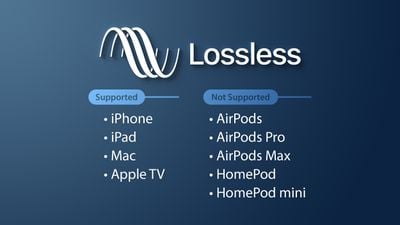
Due to the large size of lossless sound quality files and the need for large bandwidth, in the initial state of Apple Music, this function is disabled by default and needs to be activated manually. Apple further explained that its AirPods, AirPods Pro, AirPods Max, and Beats are Bluetooth headphones that cannot support Apple Music’s lossless sound quality and must be paired with a DAC.

what is the “lossless sound quality” in the upcoming music streaming platform battlefield?

what is the “lossless sound quality” in the upcoming music streaming platform battlefield?

Lossless Audio

Why do music streaming platforms launch “lossless sound quality” services one after another?

Apple Music Lossless

Will it be the next big trend in the music streaming battle?

Many users who subscribe to music streaming platforms like Apple Music, KKBOX, Spotify, etc. You must have recently heard the term “Lossless Audio”.

At the end of last year, KKBOX launched the first “Hi-Fi Lossless Sound Quality” service in Taiwan, and then in April this year, the “Hi-Fi Lossless Sound Quality” service was also launched. ” with improved sound quality; Apple also announced a few days ago that Apple Music will start in June, gradually upgrading its 75 million songs to lossless sound quality, and even Spotify has announced that it will follow up.

Why are music streaming platforms rushing? After all the subscription fees and the amount of music library, will it become the next big trend in the music streaming battle?

With 200,000 members added in half a year, what is “lossless sound quality”?
Music streaming began to emerge in the 3G era. Due to the limited network bandwidth at the time, in order for songs to play smoothly, the size of the music files had to be compressed and some quality was sacrificed. of the music, so it is Impossible to play CDs as “real”. . However, in 2020, 5G began to be popular all over the world. After the network bandwidth and speed improved greatly, users’ music quality requirements seem to have risen with the tide.

Judging from KKBOX data, since the launch of the lossless sound quality service at the end of 2020, more than 200,000 users have applied for the experience service and become new members of KKBOX.

But what kind of people care about sound quality?

Among these 200,000 people, the ratio of men to women is 8:2, and the age range that represents the highest ratio is 26 to 30 years.

What is lossless sound quality?

What is lossless sound quality?

Apple Lossless Audio

What is the sound quality of the music we usually listen to?

Apple Lossless Audio

▲ Both AAC and MP3 are destructive compression, while FLAC and ALAC are lossless compression

Before we go into the details, let’s talk about what is called lossless sound quality; From the author’s concept and cognition, the so-called lossless sound quality is a relative word rather than an absolute word. The main source is the relative word born due to the emergence of the MP3 music compression format. ; After the music industry entered the digital format, digital music files were generally recorded through PCM encoding, and WAVE files were generally used on CDs. The time and space situation of MP3 was Due to the fact that the capacity of the hard disk was generally not large at that time, in order to be limited in the limited space, a large amount of music data is stored in the storage space and you may need to compress the files. .

The reason why MP3 cannot be called a lossless format is because its essence is to compress the original WAVE file with a limited bit rate by combining concepts such as the psychology of sound. In bitrate compression mode, compared to the original WAVE file, the bitrate is at least 1:4 to 12:1. The higher the bitrate, the greater the amount of information retained . For example, AAC format also uses similar audio psychology for compression, but the efficiency is better than MP3. Therefore, the lossless sound quality of most streaming platforms today is mostly AAC as the mainstream.

▲ Although the waveform of digital music in PCM format will appear jagged, but as the sampling rate increases, it will be closer to the analog arc curve

The principle of these audio compression methods is to preserve places that are easily heard by the human ear as much as possible. In conventional fixed bit rate (CBR) mode, the audible data in the audio is removed and is easier for the human ear to hear. The more information that is withheld, the less information that is withheld when the part is inaudible. As the complexity of the sound increases, the degree of deterioration in sound quality becomes more apparent. For example, when listening to pure voice Performances and performances combined with background music, pure compressed music for vocals, sounds less degraded than the original file.

As for the lossless sound quality offered by the current streaming platform, there are many formats, but in fact, strictly speaking, these formats, including flac and ALAC, belong to lossless compression (non-destructive data compression) in place of lossless sound quality in a strict sense. The performance is almost the same as WAVE, but the file size is small, the decoding speed is fast, and at the same time, it can be used in streaming services. Therefore, it is also the representative format of lossless sound quality enters the era of non-optical disc media, and it is also the current music streaming service.

Also, Tidal’s MQA is a more controversial format, because although MQA is a generalized lossless audio reduction, it focuses on making high quality music files higher than CD quality to be similar to files. CD-quality flac. original high-quality sound format, but the point of controversy is whether the higher compression ratio can maintain the same real listening experience as the original high-quality sound quality has been controversial, and MQA requires a specific device to perform the hardware decoding. many devices are still only able to do MQA decoding through software.