What is the best format to save the video?


Free Download Mp4Gain
picture

What is the best format to save the video?

Video File Formats

To reduce the “weight” of the video, various video formats are created using different compression algorithms. Thanks to this technology, a video file can be compressed hundreds of times without loss of image and sound quality.

Video Formats

Today, in addition to the widespread DVD video format, there are many types of video formats that differ in video encoding method and file size.

DVD video
DVD video playback requires a DVD drive and an MPEG-2 decoder (that is, a consumer DVD player with a hardware decoder or a computer DVD drive and a software player with a decoder installed). DVD movies are compressed using the MPEG-2 algorithm for video and various formats (often multi-channel) for audio. The compressed video bit rate (bit rate) ranges from 2000 to 9800 Kbps, often variable (VBR). The standard video frame size of PAL standard is 720×576 pixels, NTSC standard is 720×480 pixels.

It can be viewed on a DVD player and computer, as well as smart devices.

MPEG-2
In reality, MPEG-2 is not just a digital format, but a group of standards used to encode and compress video and audio data. It is most often used to process video intended for DVD recording, as well as to organize the transmission of a multimedia transmission through digital television channels. MPEG-2 encoded videos typically play at around 25-30 frames per second. Compression of the audio backing frames can be performed on multiple channels.

It can be viewed on the computer and on smart devices.

MPEG-4
The MPEG-4 format was created in 1998. The purpose of its creation was the prospect of greater compression of digital audio and video, so that an MPEG-2 movie fits on a DVD disc, but the same movie in compression format MPEG-4 fits freely on a CD, the capacity of which is 6 times less.

The MPEG-4 format, like MPEG-2, stores only the frames in which the image in the frame has changed greatly. But this format does not store intermediate frames, such as MPEG-2. Instead, the MPEG-4 file stores data about changes (also about expected changes) in the image between two control frames (key). Information received about changes can be compressed in the same way that the file is compressed by programs designed to archive data.

This format has a large number of varieties and is used in various video playback devices.

MPEG-4 is an international standard approved by ISO, the international standards organization. It is usually used to compress digital audio and video, for streaming (video streaming), movie recording, in video telephony and streaming, in a word, where digital video and audio compression is actively used.

It can be viewed on the computer and on smart devices.

Windows Media
This format (Windows Media) was developed by the well-known company Microsoft and is intended to store compressed audio and video. This compression format is capable of providing high quality video and sound, which in some cases exceeds the quality of DivX and MPEG-2, but is basically identical, and this is with a less complex compression algorithm.

Another advantage of this codec is that all the necessary software (codecs, decoders) is already installed in Windows operating systems, making it easy for users to find and install software and easily view it in the built-in Windows player: Windows Media Player or devices. smart.

Containers
Many people confuse concepts like “container” and “format” of a file. Often in my environment, phrases like “AVI file format” fly by. This expression is not entirely correct, although AVI is a long-standing file format. But files with the AVI extension can contain uncompressed video of various formats: MPEG-4, DV, DivX, Xvid, and of course MPEG-1 and MPEG-2. Also, the AVI format can only contain audio. This tells us that AVI files are containers for content in various formats.

A container is a file that has some kind of extension that is used to store analog information converted to digital format. Some containers store service information. For example, a video file can include captions that are inherently not part of the video image, but only plain text. Many players have a feature to enable and disable the display of titles in the frame. Summarizing, we can conclude that a container is a file of a certain


Free Download Mp4Gain
picture


Mp4Gain Main Window
picture


Mp4Gain Features
picture


Free Download Mp4Gain
picture

What is video format and which one is better?

What is video format and which one is better?

Video format

Digital video is increasingly included in our lives, and if a few years ago users were limited to watching movies and videos on the Internet, now these same users create video content themselves, and in such quantity that even film studios Hollywood couldn’t. Sound.

video format

Private video clips have filled social media Vkontakte, Facebook and now Instagram, Youtube video hosting is packed with newly created video channels and gigabytes of video uploaded to them.

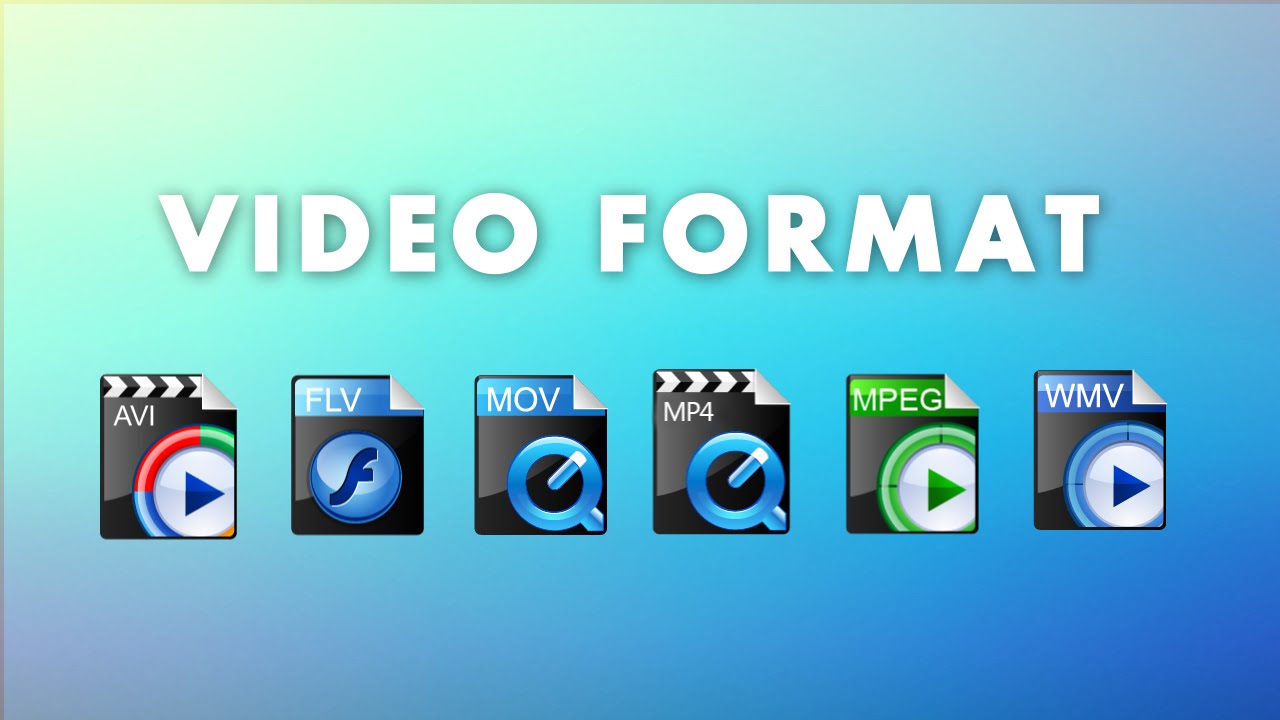
Thanks to modern devices and software, it has become as easy as possible to work with video: editing, pasting, layering sound, as well as converting from one format to another, all of this is now done literally in a few clicks and does not require the user has extensive knowledge of the technical part of the process itself … Perhaps, if that requires a little excursion, then these are video formats like MP4, AVI, WMV, MOV, as well as MKV (M2TS). Next, we will talk about what a video format is and take a closer look at each of them.

What is the video format?
The video format is the structure of the video data, how it is stored on the memory card, and with which video codecs it is encrypted. Depending on the format: MP4, AVI, etc., the structure of the video files may differ significantly from each other. The structure is a container for the separate storage of audio, video, and text data, as well as service metadata. Some video formats, in their structure, can store several audio or video tracks, with different quality and sound. When watching, using a video player, the user can select one or another track to play (for example, in Russian or English).

video file structure

All data, both audio and video, is encoded with special audiovisual codecs, such as AAC and H.264. Depending on the quality of the sound and video, the size of the file, as well as the resource requirements of the device on which this file is played, may change.

Let’s look at various video formats and find out which video format is better, for this we will compare video formats on three parameters: quality, processing (playback) speed, and video file size.

All video formats
AVI
The oldest presented format is a Microsoft development, it supports multi-streaming audio and video, it can contain data encoded by various video codecs. The main advantage is video playback on low-power devices, achieved due to the low compression ratio, from which the second advantage arises – good quality. However, the video file size is poor.

Video processing speed: 8 points (high);
Video file size: 1 point (low score);
Video quality: 8 points (good).
Overall score of 17 points.

MP4
It stands for MPEG-4 Part 14 and it is one of the most common formats. Today it is difficult to find a video device or video application that does not support this format.

Video processing speed: 6 points (average);
Video file size: 6 points (average);
Video quality is 7 points (above average), during viewing, you may notice “apostrophes”, changes in shadows and contrast.
The total score is 19 points.

WMV
Another Microsoft development, the format that replaced AVI at the time, is proprietary and used only in the Windows operating system, but it is also quite widespread. The main advantages are the small file size and high video quality, while this format is quite demanding on device resources due to the high degree of data compression.

Video processing speed: 2 points (average);
Video file size: 8 points (average);
Video quality is 8 points (above average), during viewing, you may notice “apostrophes”, changes in shadows and contrast.
The total score is 18 points.

Conclution
We found out what video formats are, what they are and what they consist of, and we also examined some of them, comparing them in more detail according to three main criteria. In the benchmarks, the title of the best video format to date is MP4, with an overall rating of 19 points. Acceptable video processing speed, good quality and average video file size. Obviously, it is thanks to these qualities that this format has gained such popularity among users. So, if you have AVI video that takes up a lot of hard drive space.

What is the best video and movie quality? Part 5

What is the best video and movie quality? Part 5

Video Formats

What is the best video format?

video file formats

There are many different video file formats that allow you to store compressed video and audio information in a single file. Many people used to call the extension of the video file itself a video format, but in reality this extension is just a container in which videos of various formats can be stored. Some users may have faced such a situation that the downloaded video file with the familiar and familiar AVI extension did not want to be played on the computer, because a suitable codec was not found for playing.

Most of the video files distributed on the Internet are now created using the two most common containers, AVI and MKV. AVI container has been used for a long time and many different programs have been written to edit such video files, but with MKV things were quite different for a long time and users did not know how to cut an mkv file.

To play or create each video format, an appropriate codec must be installed on your computer. The most popular codecs can be counted on one hand, and we will consider some of their features below.

The XviD codec of the MPEG4 standard provides high definition images for dynamic scenes. It is distributed completely free of charge and is widely used by amateur video masters to encode any video.

DivX is still one of the most popular codecs and is compatible with all DVD players. By encoding, you get high-quality video with a high level of data compression, allowing you to get small video files. At the moment, the DivX codec is paid when used for encoding.

The H.264 codec has become very popular in recent years due to its higher compression efficiency. When encoding, a very high degree of image compression is obtained with no loss of quality. It has proven itself very well when it comes to encoding HD quality videos.

The MPEG2 codec is used to create DVD video discs and digital television.

What is the best video and movie quality? Part 4

What is the best video and movVideo File Formatsie quality? Part 4


Best quality video formats. Video resolution:
Mobile is a video created for mobile devices; Typically, the resolution is between 320 × 240 and 640 × 480 pixels.

Video Format

Standard Definition (SD): video standard

What is the best video format?

It is no secret that recently there have been very popular sites that distribute free files of movies, music, books, programs and much more. But how not to get confused with all the variety of distributions offered? What video format should you choose? Let’s deal with this. So:

What is the best video format?
One of the most common and good video formats is the avi format. It is small in size and does not lose much in image quality. But there is also an alternative to this format, which combines both an acceptable size and a high image resolution. These are files in mkv format.

And finally, I would like to point out that the highest video quality you can see on a computer is BluRay video. Versions of such files are generally scanned from BD discs. This format is so realistic and deep that it competes with analog tape in the cinema.

Surely, many have heard a term like “codecs”. This is a program that converts diverse information into digital. The essence of the program is that the codecs form a conditional folder for storing data, thanks to this process, the information becomes more convenient for storage. At the same time, the folder structure does not change, only the data transfer method changes.

Today, the most common codecs for saving videos are:

If you want to create your own video or movie presentation, you must decide which video codec to use. Let’s take a closer look at each of them.

XviD. A codec that supports the popular MPEG4 standard. If your movie’s plot contains a lot of movement, choose this particular codec. Dynamic scenes will be clear.

DivX. This codec is perhaps the most popular. If you convert folders with this codec, the video quality will be of the highest definition. Also, the video can be played on any DVD player due to the small size of the saved files.
H.264. This codec will require a separate installation on your computer. But it is difficult to dispute the effectiveness of his work. The quality is still excellent despite the higher compression ratio of the folders.
MPEG4. The most popular video standard. It is widely used in digital television. The standard allows high-speed transmission of any amount of information. This codec is also used to record DVD discs.
These are the characteristics of different types of codecs. Now you must decide what you want to create. For example, let’s say you decided to create a video presentation. To understand which video format to choose in this case, you need to answer the question: where will you broadcast your presentation? If you are going to publish the created video on some special video portal, then a codec like H.264 will suffice, because it allows you to maintain high quality, while significantly compressing the data.

What is the best video and movie quality? Part 3

What is the best video and movie quality? Part 3

video formats

To encode video, the best video formats MPEG-2, MPEG-4, H.264 or AVC (video compression standards (codecs) designed to achieve a high degree of video compression while maintaining high quality are currently used ).

Video Formats

Transmission of the HDTV video signal over a short distance (from the user’s tuner (receiver) to the monitor (TV)) is carried out in its original form (uncompressed) via HDMI and DVI-D digital cables. The use of digital interfaces (cables) completely avoids video compression and conversion and preserves the best possible image.

Digital video quality is a measure of signal-to-noise ratio. What is the best video and movie quality, and which can be downloaded from the Internet? Well, first of all, it must be said that the main requirement of Internet formats is compactness. It is clear that the DVD or HDTV format will not work. But almost any video recorded with a mobile phone or digital camera meets the requirements of the Internet. And the question arises, what is the most optimal and best video quality with maximum compression for the convenience of downloading from the Internet, and what are the designations of movie formats?

Better quality HDTV movies are confused by many Internet users with the HDTV-Rip video extraction method. HDTV-Rip is a video copy of a high definition video (movies) streaming source: HDTV. This can be done using a variety of codecs and compression methods. As a result, HDTV-Rip movies may not be of the highest HD quality. Rip video streams from an HDTV channel may come with the channel logo. Also, do not confuse HD video with HDTV high definition video.

What is the best video and movie quality? Part 2

What is the best video and movie quality? Part 2

Video Formats

What is the difference between 1080i and 1080p?

Video File Formats

Each of these video formats uses a different way to convert a series of still images into movies. In interlaced scanning (“i” symbol), a still image or “frame” is reproduced by scanning 2 sets of alternating lines or “fields” (half frames). With progressive scan (“p” symbol), a frame is created in a single pass (sweep). That is, if the image scanning in both video formats (“i” and “p”) is performed at the same speed, then an equal number of runs per second occurs, then the advantage of progressive scan (“p”) becomes obvious (image quality is better) as the entire image (frame) is scanned and not half of the image (field). This progressive (“p”) scan generates fewer dots and lines, but doubles the speed.

Bottom line: 1080i and 1080p video formats look best in different conditions. The 1080i video format is designed to reproduce fine image details with little movement or in frames and still images. This video format is much better suited for “spatial resolution”. The 1080i video format works fine as long as there is no frame movement. When objects begin to move, the path of movement between alternating fields (half frames) begins to change. This is called “motion artifacts,” that is, visible image noise or video distortion that resembles an uneven pattern. 1080i video quality is considered outdated.

1080p video quality takes priority in motion. It does not introduce visible distortions in the image, regardless of the speed of moving objects, so it has the best “temporal resolution”. However, still images will not look very clear when the image is frozen, because there are far fewer dots and lines in 1080p video compared to 1080i.

Long-distance transmission of HDTV video signal (satellite TV – S2, cable TV) is generally done using compression methods to reduce bandwidth requirements for data transmission (from 1.485 Gbps to 8-25 Mbps ), while the video quality is still good.

What is the best video and movie quality?

What is the best video and movie quality?

Video Formats

What video formats are there?

Video formats

Video (video – watch, watch) is the transformation of an image by a recording device into a sequence of electrical signals recorded in storage (storage).

In addition, video is a great variety of technologies for recording, processing, transferring, storing and reproducing visual or audiovisual material (cinema, films, video recordings, music, video, etc.). Video differs from film and cinematography only in that it uses any medium other than film for its reproduction and recording, although the modern development of digital technologies in filming and digital cinema projectors eventually blurs the line between the video, movies and cinema. The video format determines the structure of the video file, how the file will be stored on the storage medium (CD, DVD, Blu-ray Disc, flash memory cards, hard drives or communication channels).

The best highest quality video today is HDTV (High Definition Television in English): high definition television, high definition television. HD is a high definition video format, a modern format with a high definition of the image.

The most popular HD video formats are:
1) 720p – 1280 × 720 pixels (dots), progressive scan (progressive scan, all lines of each frame are displayed sequentially), 16: 9 aspect ratio, frequency – 24, 25, 30, 50 or 60 frames per second ;

2) 1080i – 1920 × 1080 pixels, interlaced (each frame is divided into two half frames, consisting of lines selected with a line separating, 2 times the frame rate compared to progressive), 16: 9 aspect ratio , frequency – 50 or 60 fields per second;

3) 1080p – 1920 × 1080 pixels, progressive scan, aspect ratio 16: 9, frequency – 24, 25 or 30 frames per second.

Types of videos

Types of videos

Video Formats

MPEG-1

Video formats

The MPEG-1 video compression format was developed by the Motion Picture Expert Group, an international organization that creates video compression standards. It supports a maximum frame resolution of 4095 x 4095 pixels at a frame rate of up to 60 times per second. However, a resolution of 352 x 288 is generally used, which corresponds to the quality of recording on a normal VHS cassette.

How is the information compressed in this format? Suppose we have the following scene: the car moves from point “A” to point “B”. The movement of the machine can be described by two parameters: the vector of movement from point “A” to point “B” and the angle of rotation around its axis. At the same time, the background remains unchanged or almost unchanged: the viewer is unlikely to pay attention to the vibrations of small branches near distant trees. So you can divide the frame into two components: the background, which is saved once and then replaced during all-frame playback, and the area where the car moves, will have to be recorded separately for each frame.

Digital video: an overview of formats

In MPEG-1 format, all frames in a movie are classified into three types: I, P, and B frames. The first type (I-frames, Intra Frames) includes anchor frames. Your images are saved in their entirety in JPEG format. For the predicted frames, only the differences from the previous i-frame are recorded, which requires much less disk space. For B-frames (bidirectionally interpolated frames), the differences with the previous and next I or P-frames are preserved (Fig. 2).

Digital video: an overview of formats

As a result, the compressed file size is approximately 1/35 of the original. This means that an hour and a half movie with the quality equivalent to an analog VHS cassette in MPEG-1 format will fit on two CDs. For transmission over the Internet or in satellite transmission networks, this standard, of course, is not suitable. But there have been many consumer video CD players that work in this format (and they are still being produced now, by the way).

MPEG-2

MPEG-2 is an additional extension of MPEG-1. The recommended frame size has been increased; it is now 1920 x x 1080 pixels, added support for six channel audio. However, playing video in this format requires more processing power from your computer.

It should be noted that work was underway to create the MPEG-3 standard (not to be confused with the now popular audio compression format: MPEG-1 Audio Layer 3). It was supposed to become the basis for HDTV digital television systems. But the work was interrupted, because the necessary requirements for HDTV were implemented in the form of small extensions of MPEG-2.

This format is now quite widespread in the West: it is used to transmit video through satellite channels and digital cable networks, in addition, all DVD video discs are recorded in this format.

MJPEG

In fact, MJPEG (Motion JPEG) is a transition format from compressing normal photos to compressing videos. Each frame is recorded in JPEG format and then placed in the footage. MJPEG is mainly used in video editing cards like Fast AV Master, MiroVideo DC50, etc. You can reduce the video stream from 30MBps to 6MBps. For use in home video players, this standard is not very suitable due to the low compression ratio (5: 1) and the lack of means to synchronize video and sound.

MPEG-4

The MPEG-1 and MPEG-2 formats did not provide a real possibility to transmit video over the Internet and create interactive television based on them: the file size was too large. To drastically reduce it, as well as implement other functions necessary for video transmission, work has begun on the specifications of a new format: MPEG-4. In fact, it does not focus so much on video compression as on the creation of so-called “multimedia content”: the fusion of interactive television, 3D graphics, text, and so on.

As for the video itself, the most important innovation was the further improvement of technologies for decomposing a scene into objects and algorithms for their effective compression. Thus, for example, when compressing a video recording of a tennis match, most of the frames can be conditionally decomposed into images of the stands (background) and the players.

Which video format is the best?

Which video format is the best?

Video Format

At the moment, you have a large number of different options for storing and presenting information. There are many different video formats, each with unique characteristics. And although a modern video converter supports many formats at the same time, you must first find out which video format is better.

video formats

To convert any information into digital form, special programs are used – codecs. They create a special file – a container in which all the data is stored. You should not confuse these concepts, as they mean fundamentally different things.

A codec is a special computer program that converts a stream of data or a signal for later use. Codecs transform the information available to store it more optimally and compactly. In this case, the main structure of the file (container) remains the same, only the way the data is presented changes. The most popular codecs for video recording are: DivX, XviD, MPEG2, H.264, etc. If you decide to record a movie or, for example, create a slide show online, you must decide which video codec to use. Familiarity with the main codecs will help you determine which video format is best.

XviD is a modern MPEG4 codec. Allows you to obtain high definition images in dynamic scenes. Therefore, when choosing a codec, proceed from the characteristics and characteristics of the video file itself. This will allow you to understand which video format is best for a particular case. Unlike DivX, XviD is free software released under the GNU license.

DivX is one of the most popular video codecs. Provides high-quality images. The files converted with this codec are small and can be viewed on almost all modern DVD players. As of the fifth version, you paid for encoding.

H.264. Compared to the two previous video codecs, H.264 is more efficient and offers higher compression rates without compromising on quality. However, as a general rule, this codec is not available on the computer initially and must be installed additionally.

MPEG2 is a popular video standard that is actively used in digital television to provide high-speed information transmission. In addition, the MPEG2 codec is used when recording DVD discs, as well as in video compression systems.

On the Internet, you can find compressed files using a wide variety of codecs, both popular and rare. Quick and convenient it will allow you to open and convert videos of any format.

The codecs then convert the information into a special file called a container. A container is a kind of shell in which the information converted by codecs is stored digitally. The container structure is heterogeneous and includes several components: video stream, audio stream, various additional information (file information, titles, etc.). Therefore, the container itself cannot convert information, it only serves to store it. The most common containers are AVI, TS, MP4, MKV. Let’s look at some of them in more detail to answer the question, which video format is the best?

Video formats and video standards

Video formats and video standards

Video file formats

First, let’s decide the video standards. They should be taken into account when creating a video movie or video.

Video formats

PAL and NTSC standards
PAL is a video standard for analog color television used in Europe and Russia: 720×576 video size, 25 fps (25 frames per second).

NTSC is a standard for analog color television, developed in the USA, with a resolution of 720×480, 29.97 fps.

There is also the SECAM standard developed in France.

When creating a video in the editing program, converting it, burning it to a disc, make sure that the PAL standard is selected in our settings (if you live in Europe). Learn more about video standards.

At the time of writing this article (2010) this was very relevant, but now analog television is actively being replaced by digital and will soon be completely supplanted.

VHS – Analog Video is the format of video tapes, which was (and still is) seen on the VCR.

DV (Digital Video) is a video format jointly developed by the world’s leading video companies for digital recording. This format has a low video compression ratio (5: 1) and provides high quality video recording. In this format, video is recorded with MiniDV cameras.

The DV format is characterized by a large video stream and consequently has a large output video file. An hourly recording on a MiniDV cassette will have a volume of approximately 12-13 GB, or 1 minute – 200 MB.

The resulting video must be compressed for later viewing on a computer, projector, DVD player, on the Internet. Those. From the resulting high-quality video, we can obtain any format we need with the appropriate quality.

Attention! It should not be confused with the DVD (Digital Video Disc – DVD), a disc with digital information, what we call in the life of the DVD-ROM.

AVCHD – high definition video format, means: advanced video coding – advanced video coding, HD – high definition – high definition. This is the most modern format used in HD cameras. More >>

Compression standards
MPEG is one of the main compression standards. The abbreviation MPEG (Moving Pictures Expert Group) is the name of the international committee that develops this compression standard. Its varieties:

MPEG-1 – a compression format for compact discs (CD-ROM). The video quality is the same as that of a normal VCR, the resolution is 352×240, a disc with a movie in this format is usually designated as VCD (VideoCD). It is rarely used now.

MPEG-2 is a format for DVD, digital television. In this format, video is recorded with DVD, HDD and Flash cameras.

MPEG-3: not currently used. Do not confuse it with MP3 (MPEG Audio Layer 3) – audio compression technology.

MPEG-4 is a format obtained using the popular DivX, XviD, H.264, etc. codecs. It is often simply called MP4. It reduces the video stream even more than MPEG-2, but the picture is of decent quality, so this format is compatible with most modern DVD players. Of particular note is the high-quality video compressed with the latest-generation H.264 codec.

Yandex.Direct
Free Vov Sirus server
Unique content. Promotions for beginners. More than 15,000 online. Ahead!
Learn more
sirus.one
18+

HD (high definition) is a high definition format, a new format for high definition images. Currently, two varieties are used: with a resolution of 1280×720 and 1920×1080, both are designed for a frame with an aspect ratio of 16: 9 and a square pixel.

There is also the so-called anamorphic version of HD video with a resolution of 1440 x 1080 and an aspect ratio of 16: 9, which is explained by a rectangular pixel (1.33 aspect ratio).

Recently, most consumer cameras have been recording in HD format based on the MPEG-2 codec. The video quality is high, but to watch HD videos, you need to have the appropriate display equipment (for example, an LCD or plasma TV with a large diagonal), otherwise you will not be able to appreciate the video quality (watch and edit HD videos).).

Video file extensions
AVI
AVI (Audio-Video Interleaved) is an extension of a large number of video files, but it is not a format or codec. It is a container developed by Microsoft that can store 4 types of transmissions: video, audio, text and midi.

This container can contain video of any format from mpeg1 to mpeg-4, sounds of different formats, any combination of codecs is possible.