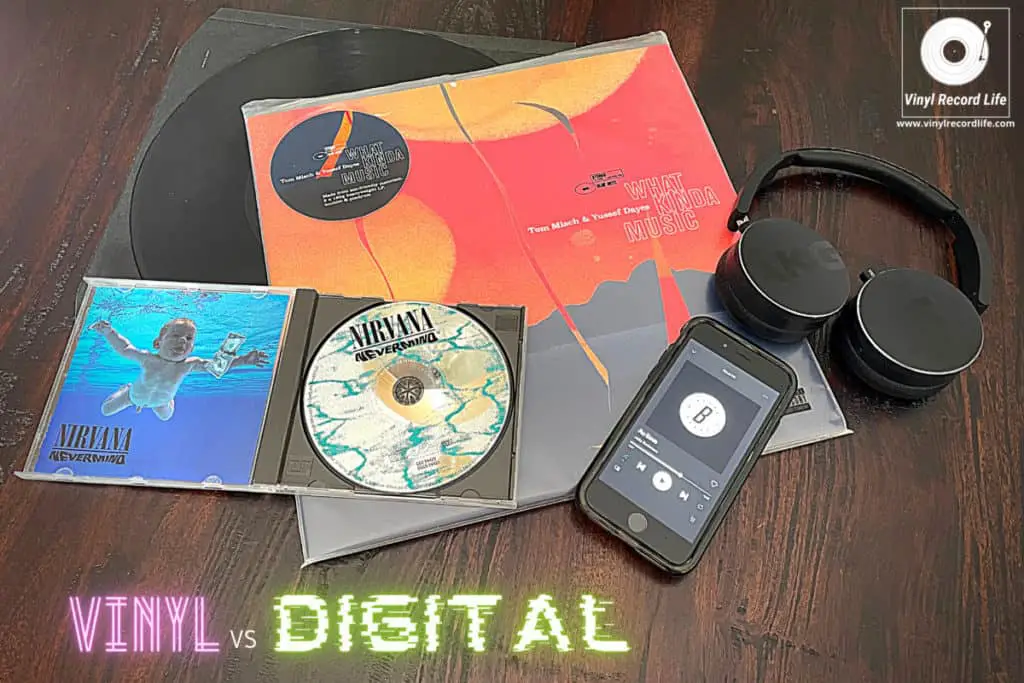
Vinyl vs Digital: The Battle of Lo-Fi vs. High Tech Part 2


Free Download Mp4Gain
picture

Vinyl vs Digital: The Battle of Lo-Fi vs. High Tech Part 2

Vinyl Vs. Digital

What is analog recording technology? In short, it is the musician’s work recorded in the studio on 8 or 16 track tape.
Vinyl vs Digital

The recording of a song is continuous and the sound is continuous without interruption. In contrast, CDs, which are sound samples from analog or digital recordings, can theoretically capture an extremely high amount of information beyond what the human ear can distinguish.

Interestingly, at least for me, the first band I met to switch to a new digital format was Steely Dan, who had very good recording quality and were said to be the best example of marketing at the time. They recommend and sell this new format to potential buyers, telling them that CDs won’t suffer from the popping, galvanic, or other noises that vinyl normally has, and claiming that CDs are less likely to wear out after multiple plays than vinyl. o The CD is nearly indestructible, and neither scratches nor fast-forwarding will damage it. Well, we all know that’s a lie, and I’ve already re-polished a lot of damaged CDs.

But problems and controversies immediately arose, and the CDs had distinct, audible voices. Some say the sound is cooler, as if it floats aimlessly in midair. I don’t remember what my first CD was, but the difference in sound is fresh in my memory. They all sounded too light and lacked the warmth of analog records.

Now you must remember that stereo technology came into use in music performance and recording at that time, and its several important components included amplifiers/loudspeakers (speakers), and if you ask me what the quality of the speakers is, give it Not the The most important thing is that the speakers provide enough power to turn up the volume, we want more than just volume, to be an accurate and faithful representation of the high and low frequencies, as well as the all-important midrange.

Mono or binaural?

Stereo technology itself was a controversial topic in the mid-1960s. Many people don’t know that The Beatles are recorded in mono, layer after layer on the same track. Believe it or not, Sgt, Pepper was the first song recorded in mono, but since then everyone has stereo speakers and everyone expects the sound of two-track recordings.

Their producer George Martin and talented recording engineer Geoff Emerick (who was 15 when they worked with The Beatles in 1962) were extremely reluctant to meet the label’s stereo requirements, so they simply put the vocals and rhythm guitar on a single channel. and the bass, drums, and lead guitar are placed on the other channel. You can clearly hear these changes in your headphones or earphones. Even today, it’s a bit of a shock to hear John and Paul singing in the right channel with George’s lead guitar buzzing in the left channel.

Most of today’s stereo sound systems are built in TV 6.1 surround sound system, and most people do not use speakers to listen to songs, but use computers to download songs from online music libraries, and phones mobiles have also become the option. of many people. . But the song is not yet recorded for a cinematic surround sound system, it is still based on stereo, so once again the “sound” is broken.

As far as I am right now, there is nothing better than listening to a BOSE ceiling or bookshelf box under a high-end CD player connected to a high-power amplifier.


Free Download Mp4Gain
picture


Mp4Gain Main Window
picture


Mp4Gain Features
picture


Free Download Mp4Gain
picture

Vinyl vs Digital: The Battle of Lo-Fi vs. high-tech

Vinyl vs Digital: The Battle of Lo-Fi vs. high-tech

Vinyl vs Digital

“What I’m doing is trying to save the art that I’ve been in for the last 50 years,” Neil Young told Wired magazine. “We live in the digital age, but unfortunately, instead of progressing, music has gone backwards in this age.”

Vinyl vs Digital

Jobs, the giant who revolutionized MP3 products with his iPod line, was also an audiophile and used to listen to his vinyl records at home. MP3 used to be considered a compromise between loading smaller files and listening quality.

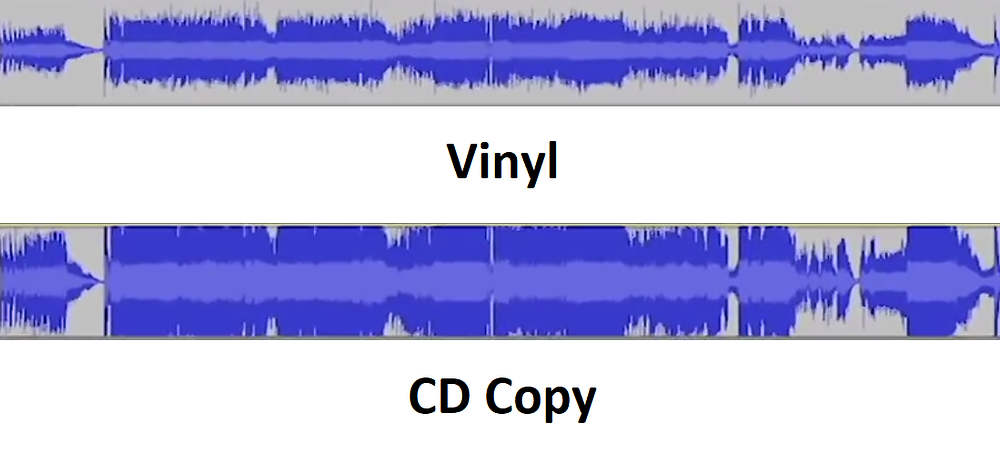
Ironically, we used to grow up listening to music and the way we listened to music was much better than the way we listen now – the sound quality we heard back then was much better than the way it’s now common, whether ripped from CD . MP3s are also bought. from iTunes or Amazon. As digital technology became more widespread and replaced analog recording technology and the number of physical discs consumed, the quality of music slowly declined. For example, an MP3, regardless of whether it is ripped from a CD or downloaded, or downsampled at 192 kbps, only retains 5 of the recorded vinyl records from a master recording studio tape.

You may not notice this difference when listening to songs on the go with normal sound quality headphones, but listening to the same song, your MP3 may not be very good compared to a CD.

The vast majority of modern music turns up the low-frequency volume, with “heavy bass” and “subwoofer” as a trend or selling point, but gets a muffled midrange. It also loses a lot of the dynamics of the high quality format, especially the analog texture that is nowhere to be found.

Heading into the damped midrange

I had a huge vinyl collection a few years ago, but for some reason I’ve been trying to replace them with CDs and digital downloads over the years. I used to be able to hear the vocals before the chorus of a Judybats song, but now that’s gone and the mids are muddy. The 320 kbps sound quality of the song, which was ripped from a CD, lost its inherent dynamics and was attenuated by compression.

And a song with a sample rate of 320 kbps should have no difference to the human ear with a CD. At least that’s how it should be for most people, including me, but with today’s technological advances, photos and videos have reached “diamond” level, but music quality has gone downhill, especially when beginning of the evolution of analog recording. to the birth of the digital format.

Is Vinyl Sound Better Than Digital Audio Formats?

Is Vinyl Sound Better Than Digital Audio Formats?

Vinyl vs Digital

True music fans want the best sound quality for their favorite albums and recordings, and with the return of vinyl, the debate over which is better (CD versus vinyl, digital versus analog) has only sharpened.

Vinyl Vs. Digital


Many people value vinyl not only for its clean playability and the lack of digital sound processing during playback, but also for the very process of installing a record on a turntable and being able to hold the record in your hands.

Nowadays, it is possible to play tracks as often as musicians record them. They record music at frequencies above the standard 44.1 kHz (96 kHz or 192 kHz) CD recording rate for better sound quality. Many people in the audio industry say that they can see a noticeable improvement in quality with higher sample rates than CDs, which is why they prefer to listen to high-resolution music.

When turntables take priority over other formats

There’s a reason the vinyl revival has taken place. Yes, there is a certain appeal when you can hold a recording in your hands, which is different than choosing digital tracks on the screen. But there is also the argument that vinyl sounds better than digital recordings, exactly as the musician intended. The main difference between a vinyl record and a CD and MP3 is that the record on the record is analog. It is a physical recording, represented by a continuous electrical signal that reflects a change in the sound wave that is fully consistent with the original sound.

Unlike vinyl, most digital formats are compressed during recording and playback to minimize file size, making it ideal for various devices and can easily be streamed over the Internet. Most streaming services simply won’t be viable without audio compression technology.

When compressed, audio files lose not only size but also sound quality. This means that the listener loses the smallest sound details that the musician wanted to convey when he recorded this track. For the average listener this may not matter, but for music lovers, losing this depth of sound is completely unacceptable.

However, in both cases, analog or digital, good sound always begins with a good recording and how the sound engineer created it. If mistakes were made from the beginning, this cannot be corrected during playback.

Vinyl provides a warmer, livelier sound

Vinyl fans always talk about the “warmth” they get from classic records. This is not nostalgia, but a very real sonic phenomenon. According to sound engineer Adam Gonsalves, vinyl provides a more pleasant and warmer sound to your ears. This is especially noticeable when listening to classic rock artists like the Beatles, Led Zeppelin or Pink Floyd.

In the 1990s, record labels struggled to make their records stand out from the rest. To do this, the sound was processed and compressed with special programs for greater saturation. But this digital sound processing not only increased the volume, it also noticeably spoiled the sound quality. Compared to those processed tracks, vinyl is just so much cleaner and better.

When digital formats win

There is an important caveat that vinyl sounds better in certain but not all circumstances, especially when modern music is digitally recorded in the studio. In this case, albums released on vinyl and digital have little or no difference in sound quality between them. In addition, there are high definition digital audio formats and SACD (Super Audio CD) formats that surpass vinyl in sound quality.

In terms of convenience, digital formats outperform vinyl. Streaming music from your smartphone or mobile device is infinitely easier and more convenient than putting on a disc and flipping the disc every three to four songs.

Ultimately, it is up to each listener to decide what is most important to listen to: the high sound quality of vinyl records or the convenience of digital formats.

If you want to hear your favorite classical composers in exactly the way the musicians and sound engineer wanted to convey it, vinyl is made for you. Be sure to check out Denon turntables, amps, and other hi-fi components today to begin your journey to real sound.

Sound quality of Vinyl vs CD

Sound quality of Vinyl vs CD

Vinyl vs CD

Short answer: NO !!

At the moment, the best sound quality is HD audio formats such as DVD or Blu-ray Audio.

CD VS VINYL

So now we are faced with the problems of the skeptics, like you can’t hear the difference between audio CDs and HD audio, because audio CDs can play louder sounds than anyone else, or vinyl records they sound so much better. But just ignore these people as I explain how digital audio works, which most people don’t understand.

Uncompressed digital audio has two components. One is the sample size, the other is the sample rate.

The sample size determines how loud the music can be, or more precisely, the dynamic range, the difference between the quietest and the loudest parts (you can always turn the stereo up to 11 for more volume). It turns out that people can easily hear more than 16-bit dynamic range than a 16-bit audio CD provides. What this really means for HD audio is that you can have a very quiet section (and not hear noise) and then play loud music. In practice, extremely loud sounds are just instantaneous peaks, but you can, if you wish, record something with a large difference in volume, for example, next to an emergency siren. You will hear the background sounds of the birds and then the siren. If you turn up the volume to hear the birds well enough to hear them during playback,

Another component is the sampling rate, the frequency with which you sample the sound to reproduce the sound wave. The higher the sample rate, the more realistic the recording will be. Since CDs are played 44.1K times per second, sounds can be played up to 20 kHz, which is louder than most people can hear (I can only hear up to 17 kHz), so in In theory, a CD can reproduce a wider frequency range than people can listen to. … But sadly, this does not account for all the people who can hear. People have a highly developed sense of stereo sound. We can easily determine the direction of the sound. This is the result of very small differences in the time it takes to reach each of our ears. The brain processes this and produces spatial awareness of where the sound is coming from, and that’s pretty accurate. So this is where HD (high definition) audio comes in. With a higher sample rate, you can get a more refined waveform with enough detail to reproduce these subtle differences, which make the sound more vivid and lifelike than typical CD recordings.

When it comes to analog audio sources, the main problem with all analog formats (tape and vinyl) is that they degrade with each playback (and not even playback). Vinyl is famous for the awe, the thrill, the shock, and of course the scratches, cracks, and pops when the needle goes through the grove. The tape is elastic, has speed issues, and only sounds great at 15IPS or higher. Neither is perfect.

A few things to consider when considering HD audio.

Never discuss HD audio with someone who has never heard it. A complete waste of time arguing with idiots. This is the main rule of HD audio.
Most of the commercially available audio is already compressed for CD and radio playback. They deliberately remove dynamic range so music sounds clearer and better on low-quality systems (like phones).
The higher the sample rate, the more natural the sound will be. Good uncompressed 24/192 sound sounds open and natural, like you’re in the room listening with headphones. Compare the same recording on HD and CD if you can. You want to listen to uncompressed music, not a rap or pop cut. The quality of the CD is good enough for this.
Ignore those who say you have to spend a lot of money to listen to HD sound. You can use any analog amp (most of them), a DVD or Blu-ray player (make sure it can handle up to 192), and decent speakers or headphones. Good speakers and headphones can be bought for less than $ 300 if you look around. Obviously, you can spend more, but that will get you to the door. And, of course, a DVD or Blu-ray disc. Look for full digital recordings with a sample rate of 96 or higher. 48k is not much different from 44.1 except for the dynamic range (which can be significant). I have created new systems for $ 500 and even novice listeners can tell the difference.

Answer 2:
No, but that’s more than enough if you haven’t spent thousands on a listening room / system.