Digital recording formats


Free Download Mp4Gain
picture

Digital recording formats

Digital Recording

Television video equipment using digital tape recording methods has been supplied for several years.

Digital Recording

However, the majority of television workers in the world still do not have a sufficiently clear idea of ​​what a “digital” is, why it is needed and if it is worth working on it. The media specializing in television technology have focused on image quality, comparing the quality of digital formats, digital compression, artifacts, etc. Communication with television engineers shows that negative opinion often comes from the experience of working in incorrect settings, faulty equipment, or due to ignorance of the features and subtleties of the latest technology. That is why those who are now dedicated to television continue to be confused with the new concepts and prefer to use the old Betacam SP or the inferior, but familiar S-VHS. And some television executives, wanting to keep up and trying to make sense of the new teams, get misconceptions due to lack of information and focus their attention on insignificant details, missing highly profitable opportunities. Meanwhile, digital formats are developing rapidly, the range of relevant equipment is expanding,

So, in the process of developing video recording formats, the following main features have been improved:
– picture quality;
– operational capabilities;
– recording density and cost of 1 minute of recording;
– weight and size parameters of the videotape;
– the cost of purchasing and operating the equipment.

Image quality
Image quality generally refers to resolution, that is, the number of vertical lines reproduced. Of course, this is a cursory assessment, as there are many other, no less important parameters that are as perceptible to the human eye as the readability of the line. This review will also take into account the signal-to-noise ratio of the path, the quality of the composite, Y / C and component encoders / decoders, the effectiveness of the fight against tape drops. To a large extent, the evaluation of this parameter was quite subjective.

Operational capabilities
This concept includes everything related to the operation of the device in the system, operational functions, ease of use, integration capabilities, presence of interfaces and inputs and outputs, certain configuration characteristics, etc.

Recording density, cost per minute of recording, and video tape size and weight parameters
These are important parameters for the video recording format. They take into account three factors: the size and weight of the videotape, the duration of the recording, and the unit cost of one minute of recording. The higher the capacity of the cassette and / or the smaller its size, and / or the lower the unit cost, the higher the estimate.

Expenses
This parameter takes into account the cost of equipment, maintenance and spare parts. According to our system, a high score corresponds to a lower total cost of ownership and maintenance of equipment of one format or another.

In each new video format, developers strive to improve these indicators, but improvement in one indicator often occurs at the expense of others. But it must be admitted that the total level of indicators for all categories is growing from format to format.
Let us consider the video formats that are used in television centers in our country. Format features are rated on a 10-point scale, with ratings in parentheses after each feature. The effectiveness of the format will be determined by the total score.

Analog formats

Format Q (Ampex, NZTM)
Home television switched to video recording, using Q-format Kadr-3PM video recorders, using 2 “wide tape videotape as the carrier. Naturally, there was no Q-format camcorder at all. : mobile TV stations and cameras Format features:

1. The Q format provides high image quality (6 MHz bandwidth). Signal / noise ratio 40 dB. A complete composite video signal is recorded on tape in the SECAM standard, so no transcoding is required for broadcast playback. (Score 8)
2. The opportunities are minimal. VCRs can only be used by qualified engineers; preparing for playback requires at least five minutes of careful adjustment of the CAP modes and parameters of each of the four video heads. There is no search for an image with preview, markup editing is done in motion only.


Free Download Mp4Gain
picture


Mp4Gain Main Window
picture


Mp4Gain Features
picture


Free Download Mp4Gain
picture

Working with sound

Working with sound

Analog and Digital

Analog and digital audio

 Analog and Digital

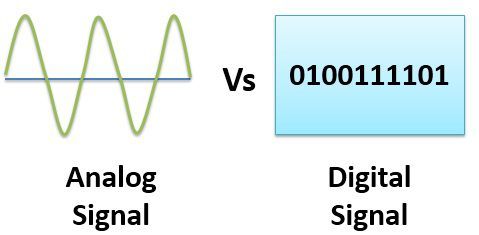
Analog sound recording is based on the conversion of acoustic waves into electrical waves using a microphone. A microphone consists of a small membrane that can vibrate and a mechanism to convert the vibrations of the membrane into an electrical signal. (The exact electrical mechanism differs depending on the type of microphone.) Generally, a higher pressure corresponds to a higher voltage and vice versa.

The recorder transmits the waveform one more time, this time from an electrical signal through a wire to a magnetic signal on tape. When the recording is played back, the opposite process occurs: the magnetic signal is converted into an electronic signal, which makes the speaker vibrate (usually electromagnetic).

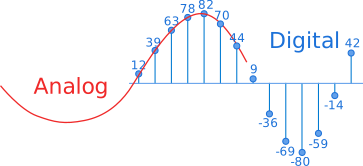
The main device for digital recording is an analog-to-digital converter (ADC, analog-to-digital converter, ADC). The ADC captures a chunk of electrical voltage on the audio path and presents it as a number, which is then transmitted to the computer. By capturing the voltage several thousand times per second, you can get a signal quite close to the original. The unit of capture is called a sample (each number in a sound file represents corresponds to a sample in a waveform).

There are two factors that determine the quality of a digital recording:

Sampling rate
The frequency at which samples are captured or played, measured in Hertz (Hz) or samples per second. A typical audio CD is recorded at a sample rate of 44100 Hz, more commonly known as 44 kHz for short. This is the same default sample rate used for most digitals.

Sample format (size)
The number of digits in the digital representation of each sample. Imagine that the sample rate is plotted horizontally and the sample size is plotted vertically. Audio CD is 16 bits wide, which corresponds to approximately 5 decimal places.

Higher sample rates for digital recording provide accurate recording at higher frequencies. The sample rate must be at least twice the highest desired sample rate. The average human ear is believed to be unable to distinguish frequencies above 20,000 Hz, so 44,100 Hz was chosen as the standard for audio CDs. Now the transition to the frequencies of 96 and 192 kHz is taking place gradually, in particular within the DVD-Audio format. However, many people just don’t hear the difference between 44.1 kHz and 192 kHz audio.

Larger sample sizes provide a greater dynamic range, that is, the ability to present louder and quieter sounds. If you are familiar with the decibel (dB) scale, you can give an example from ordinary audio CDs – its dynamic range is theoretically 90 dB, but it actually sounds lower than -24 dB. Audacity supports two more sample sizes: 24-bit, which is most often used in digital studio recording, and 32-bit floating point, whose dynamic range covers all imaginable needs, despite the fact that the data with these parameters occupies just twice the disk space compared to 16-bit audio.

When playing digital sound, a digital-to-analog converter (DAC) is used. In this case, to recreate the original signal and then digitized with the ADC, a sample is taken, from which a certain voltage is established at the analog outputs. The first CD players did just that, so the sound quality was not very good. Modern players also smooth out the audio signal by sampling within a range of the sampling frequency. The quality of the filters on the DAC also affects the sound signal that is recreated. The filter is one of the signal adaptation stages in the DAC.

The inevitable loss in the transition from analog to digital audio can be offset by a number of advantages of digital recording. Digital data can be copied as much as you like and there is no loss of quality. This data can be burned to a music CD or posted on the Internet as compressed files. Also, digital recordings are much easier to edit than analog tapes.

A personal computer has all the necessary devices to convert audio data from analog to digital and vice versa. First of all, it’s a sound card, an additionally installed separate device like Creative SBLive !, and maybe a sound chip built into the motherboard. In both cases, the audio device contains an analog-to-digital converter (ADC) to record sound and a digital-to-analog converter (DAC) to play it back. The operating system you are using interacts with the sound card,

Analog and digital sound sources

Analog and digital sound sources

analog and digital audio

Digital music comes from two main sources: analog and digital.

Analog and Digital

Analogous sources
An analog music source must use an analog-to-digital converter, such as a sound card, to convert the physical changes of the analog medium into a digital file that can be read by a computer. An analog medium is an object that stores music in itself through physical changes.

For example:

A cassette recorder changes the degree of magnetization of a cassette tape to record sound. Connecting a cassette deck to a recording device allows you to make a digital copy of an analog cassette.
The recorder cuts grooves in the vinyl record to create a physical representation of the sound. Ripping vinyl with a preamp and sound card allows you to make a digital copy of an analog record.
Analog recordings can be converted to digital music files in various formats, such as FLAC and MP3. Vinyl recordings can always be posted to the site, but posting tape recordings and other analog sources requires approval from the moderator.

Digital music sources
Music from digital sources is already encoded in a computer-compatible format, so no additional conversion is required. A digital medium is an object that stores music digitally (as a sequence of binary numbers).

For example:

CD
DVD
Super Audio CD (SACD)
Content from online stores (iTunes, Amazon, etc.)
Music from digital sources can be uploaded to RED after analyzing the spectrograms of the files to verify lossy transcoding.

Comparison of analog to digital music sources
Controversy still exists as to whether music sounds differently from analog and digital sources. Some people prefer the feel of vinyl and find that music on vinyl sounds “warmer” and “brighter.” On the other hand, some believe that digital sources provide true, pure and authentic sound. Both are represented in RED, so you can compare and make your own choice!