
Working with sound
Analog and digital audio
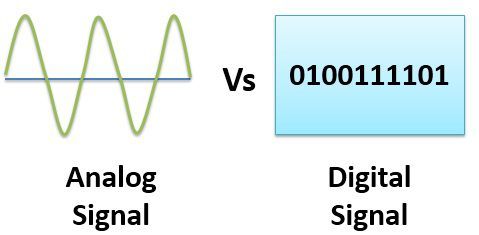
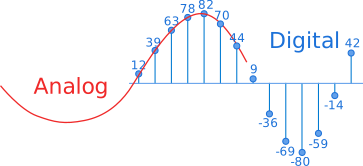
Analog sound recording is based on the conversion of acoustic waves into electrical waves using a microphone. A microphone consists of a small membrane that can vibrate and a mechanism to convert the vibrations of the membrane into an electrical signal. (The exact electrical mechanism differs depending on the type of microphone.) Generally, a higher pressure corresponds to a higher voltage and vice versa.
The recorder transmits the waveform one more time, this time from an electrical signal through a wire to a magnetic signal on tape. When the recording is played back, the opposite process occurs: the magnetic signal is converted into an electronic signal, which makes the speaker vibrate (usually electromagnetic).
The main device for digital recording is an analog-to-digital converter (ADC, analog-to-digital converter, ADC). The ADC captures a chunk of electrical voltage on the audio path and presents it as a number, which is then transmitted to the computer. By capturing the voltage several thousand times per second, you can get a signal quite close to the original. The unit of capture is called a sample (each number in a sound file represents corresponds to a sample in a waveform).
There are two factors that determine the quality of a digital recording:
Sampling rate
The frequency at which samples are captured or played, measured in Hertz (Hz) or samples per second. A typical audio CD is recorded at a sample rate of 44100 Hz, more commonly known as 44 kHz for short. This is the same default sample rate used for most digitals.
Sample format (size)
The number of digits in the digital representation of each sample. Imagine that the sample rate is plotted horizontally and the sample size is plotted vertically. Audio CD is 16 bits wide, which corresponds to approximately 5 decimal places.
Higher sample rates for digital recording provide accurate recording at higher frequencies. The sample rate must be at least twice the highest desired sample rate. The average human ear is believed to be unable to distinguish frequencies above 20,000 Hz, so 44,100 Hz was chosen as the standard for audio CDs. Now the transition to the frequencies of 96 and 192 kHz is taking place gradually, in particular within the DVD-Audio format. However, many people just don’t hear the difference between 44.1 kHz and 192 kHz audio.
Larger sample sizes provide a greater dynamic range, that is, the ability to present louder and quieter sounds. If you are familiar with the decibel (dB) scale, you can give an example from ordinary audio CDs – its dynamic range is theoretically 90 dB, but it actually sounds lower than -24 dB. Audacity supports two more sample sizes: 24-bit, which is most often used in digital studio recording, and 32-bit floating point, whose dynamic range covers all imaginable needs, despite the fact that the data with these parameters occupies just twice the disk space compared to 16-bit audio.
When playing digital sound, a digital-to-analog converter (DAC) is used. In this case, to recreate the original signal and then digitized with the ADC, a sample is taken, from which a certain voltage is established at the analog outputs. The first CD players did just that, so the sound quality was not very good. Modern players also smooth out the audio signal by sampling within a range of the sampling frequency. The quality of the filters on the DAC also affects the sound signal that is recreated. The filter is one of the signal adaptation stages in the DAC.
The inevitable loss in the transition from analog to digital audio can be offset by a number of advantages of digital recording. Digital data can be copied as much as you like and there is no loss of quality. This data can be burned to a music CD or posted on the Internet as compressed files. Also, digital recordings are much easier to edit than analog tapes.
A personal computer has all the necessary devices to convert audio data from analog to digital and vice versa. First of all, it’s a sound card, an additionally installed separate device like Creative SBLive !, and maybe a sound chip built into the motherboard. In both cases, the audio device contains an analog-to-digital converter (ADC) to record sound and a digital-to-analog converter (DAC) to play it back. The operating system you are using interacts with the sound card,


