What is the H.264 video encoding format and why is it becoming the industry standard for video compression?

The H.264 video compression standard, also known as MPEG-4 Part 10, Advanced Video Coding, MPEG-4 AVC, or AVC video, is a standard for video compression currently among the most widely used formats.
H.264 affects all aspects of our digital life and its popularity continues to grow. For example, we find this codec on HD DVD, HDTV, pay TV or YouTube video. However, H.264 is not only limited to consumer electronics, but has also spread to business.
By 2025, more conventional video distribution solutions using HDBaseT or other proprietary streaming methods are forecast to be replaced by more flexible IP-based systems, given the continued growth in popularity of H.264.
What is H.264?
H.264 or MPEG-4 AVC (Advanced Video Coding) is a video encoding format that allows you to record and distribute Full HD video and audio. It was developed and maintained by the ITU-T Video Coding Expert Group (VCEG) with the ISO / IEC JTC1 (MPEG) Moving Image Expert Group.
Commonly used for recording, compression and distribution of video content, the H.264 format is a video transmission method that provides high-quality images without taking up bandwidth.
H.264 encoding and decoding
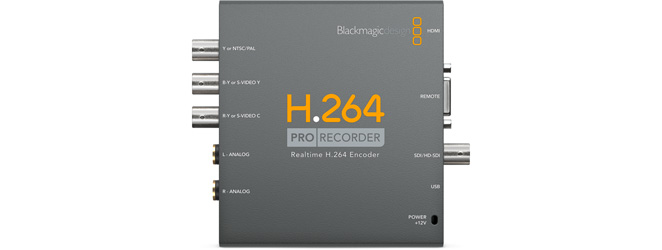
The H.264 works by encoding (converting) HDMI (HD) video and audio signals into an IP transmission that can be transmitted over an IP network. On the other hand, a decoder converts the signals into an uncompressed HDMI format. What makes H.264 so versatile is that it allows you to stream video from one encoder to multiple decoders simultaneously. For example, it is possible to transmit a set of video signals to a screen, a video wall, and a digital signage system at the same time.
H.264 applications: when and where to use?
The H.264 video compression format is perfect for AV distribution to one or more video sources (multicast broadcasts for many displays). Its use may be particularly suitable for long distance signal transmission using existing cables and infrastructure.
The H.264 video compression format is perfect for AV distribution to one or more video sources (multicast broadcasts for many displays). Its use may be particularly suitable for long distance signal transmission using existing cables and infrastructure. For example, these are fast becoming the standard video compression format for the world of video surveillance. Applications can range from external transmissions (OB vans), energy sector, education, recording, transport drones for environmental monitoring, as well as Video Wall processing, digital signage solutions and video conferencing.
Comparison between H.265 and H.264
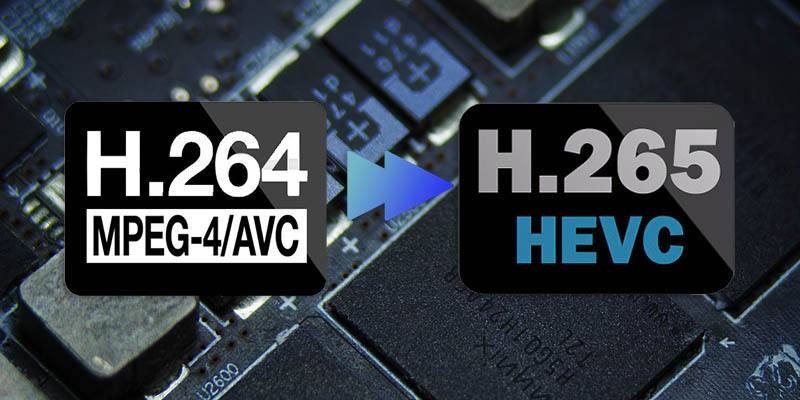
H.265, the younger brother of H.264, is a format also known as High Efficiency Video Coding (HEVC) and MPEG-H Part 2. Compared to H.264, H.265 offers duplicate data compression for the same video quality. It was designed to support future resolutions up to 8K UHD (8192×4320) compared to 4K (4092×2160) supporting H.264. Some new devices, such as televisions, are starting to provide a set-top box with built-in hardware to play H.265 content, though the superior quality and reduced bandwidth certainly come at a cost. H.265 encoding and decoding require significantly more processing power than H.264, therefore the cost of H.265 solutions remains decidedly higher.
Comparison between H.264 and MPEG-2
Compared to MPEG-2, H.264 has:
Better remote viewing quality with the same compression bit rate as MPEG-2
30-50% lower bit rate
Use up to 50 percent less bandwidth
H.264 is best suited for transmission oriented technologies
Advantages derived from the use of H.264 encoders and decoders
Higher resolution monitoring and low bandwidth usage.
H.264 was created to provide high-quality full-motion video streaming with lower bandwidth requirements and traditional video standards with less latency, such as MPEG-2. H.264 uses a highly efficient codec that provides high-quality images and uses a minimal amount of bandwidth.
H.264 bit rate is lower than other formats
H.264 has an 80% lower bit rate than JPEG Motion videos. It can be estimated that speed savings