Explained bit rate

Bit rate is one of the most important metrics for measuring digital audio recordings. It is measured in kilobits per second (for short: kbps, just kilobits, kbps, kbps, kbps, etc.).

On the fingers: answer the question “how much memory occupies a second of audio”.
All kinds of transformations are already underway: there are eight bits in a byte, 1024 bits in a kilobit, 60 seconds in a minute, 60 minutes in an hour, and we arrive at the following empirical data:
bit rate 1400 = 1 hour takes 615 megabytes on disk
320 bitrate = 1 hour takes 141 megabytes on disk
bit rate 192 = 1 hour takes 84 megabytes on disk
bitrate 24 = 1 hour takes 11 megabytes on disk
Naturally, we all want to use disk space sparingly. This is where the format war begins. 11 MB is sixty times cheaper than 615 MB. Megabytes is the cost of storing audio recordings.
The price of storage can also be expressed in bills, dividing the cost of the disk by its capacity. For an archive of audio recordings, the price of storage is far from being as critical as for an archive of video recordings.
In addition, the price of storage can be conditionally expressed in man-hours, if the playback device has a much lower capacity than your general archive of audio recordings. It takes time to regularly download new tracks to the device.
The storage price can also be expressed in terms of square meters of work area. 500 audio CDs will take up a lot of space and require furnishing solutions, but a small external hard drive will fit in your pocket.
If there is a different price, then the question of quality arises: then we assume that the lowest bitrate has the lowest quality. So we come to the main question: where is the limit of reason, where is the ideal “price / quality” ratio.
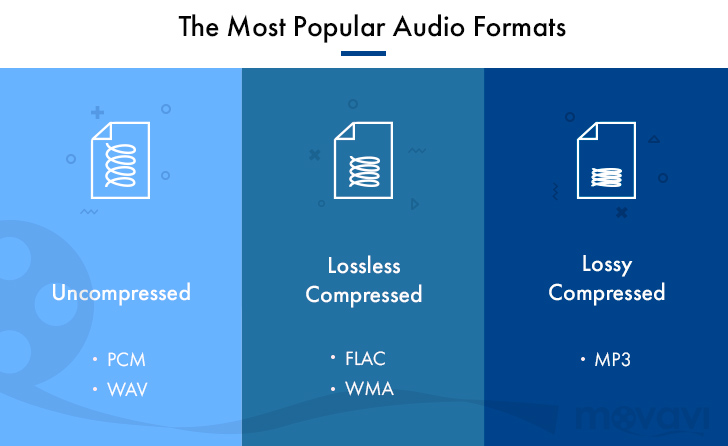
The closest division of audio formats in descending order of average bitrate:
uncompressed audio
lossless compression
lossy compression
Uncompressed audio is the pure signal without conversion, “as is”, the equivalent of WAV or audio CD. Classic parameters: 1411 kbps, 44100 kHz sample rate, 16-bit audio.
Codec is an abbreviation for the words (KO der and DEC oder). An encoder is a program that packages a pure audio signal in the desired special format. A decoder is a program that converts a special format into a pure audio signal. In modern English, the two terms somewhat transform: is code continuation and dE below code, which corresponds to directing Russian counterparts to code and coding races. And do not confuse encryption and encryption: these are two very different processes, although externally there is a lot of similarity.
For an ordinary person, only a player that can work with this format (that is, has a decoder) is required. The “encoder” itself is only required to “create” such files.
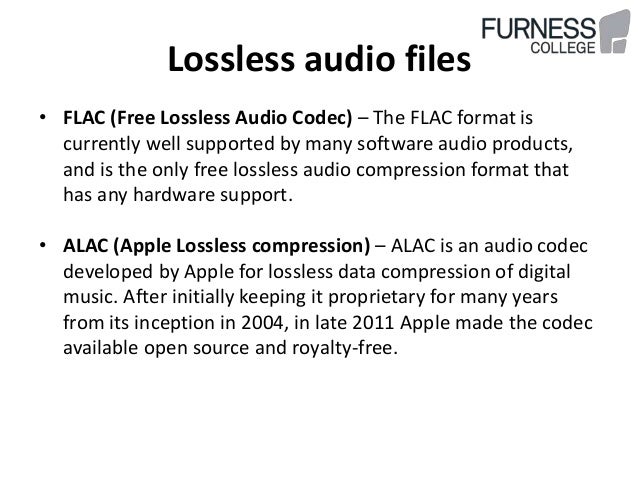
Lossless Compression – Typically used for collectible audio material. In general, it is believed that this format can be exactly converted back to Audio CD.
Better is this compression:
Save disk space by about half
The file format assumes the storage of additional information (artist, album, track number, track name, etc.)
The compression formats themselves differ:
format openness and compression algorithms
player support
encoding, decoding overhead costs
compression ratio
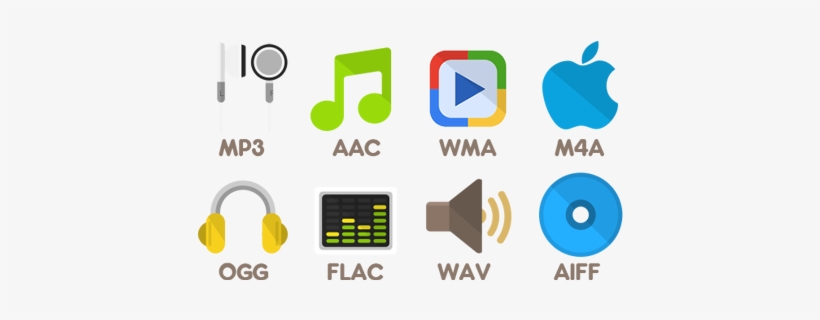
The overhead is negligible for the average person and the compression ratio of the codecs differs only slightly. Main actors: FLAC, APE, WAVPACK, ALAC.
Lossy Compression – Provides a much higher compression ratio by discarding unimportant audio details. The smaller the size of the file we are trying to compress, the more details we will have to discard. In addition to details disappearing, technical artifacts also appear.
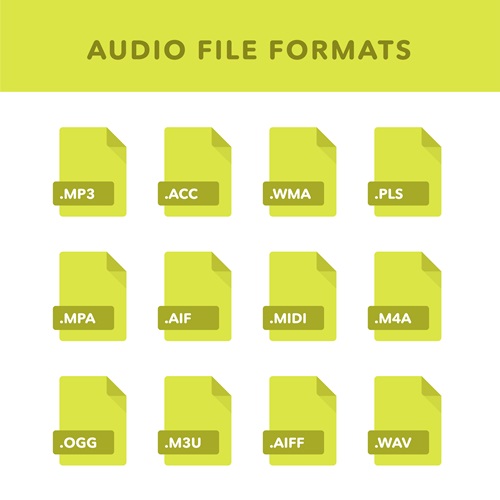
Main market players: MP3, OGG, AAC, WMA. They all have quality gradations – the higher the bit rate, the closer the quality is to the original. With the same bit rate, different codecs under different conditions can give different results.
You can explain with your fingers what lossy compression is using the example of compression of graphic files in JPEG format.
sample_jpg_100sample_jpg_090sample_jpg_080sample_jpg_070sample_jpg_060sample_jpg_050sample_jpg_040sample_jpg_030sample_jpg_020sample_jpg_010
At first, it is perfect and practically indistinguishable (no magnification).
In between, the quality drop is already visible to the naked eye, but you can still bear it.
In the end, the degradation of quality already goes beyond the limits of patience.