After all, what is the difference between “high resolution”?

What are the advantages and disadvantages?
The keyword “high resolution” that suddenly increases its presence due to the diffusion of downloaded sound sources.
Even if you know that “high resolution” = “high sound quality”, not many people really understand what is different from conventional.
In this article, I will introduce how to listen to high resolution based on the difference between “high resolution” and conventional sound.
What is high resolution?
High Resolution is an abbreviation for “High Resolution Audio” and means a high resolution sound source.
Here, high resolution is used to refer to “a digital sound source with an amount of information that exceeds the sound quality of a CD.”
So what does “a digital sound source that exceeds the sound quality of a CD” mean?
High resolution sound source definition
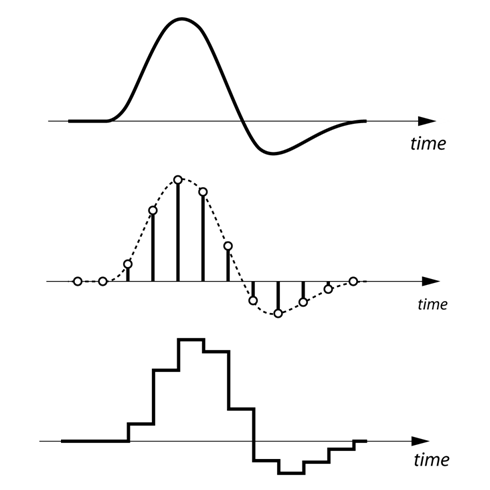
The sound quality of a digital sound source is determined by the precision with which it is converted into a digital signal. The more information there is, the better the sound quality.
A sound source that can be called high resolution requires that the “sample rate” and “bit depth” exceed the level of a CD. I think it is an unfamiliar word, so I will explain this point briefly.
The CD sound source has a “sampling rate of 44.1 kHz / s” and a “bit depth of 16 bits”.
“Sample rate” refers to “the number of pieces of information divided per second”, and the higher the number, the softer the sound.
On the other hand, “bit depth” refers to “the amount of data per information divided”, and the higher the number, the greater the expressiveness of the sound.
Also, there is a unit called “bit rate (kbps)” when importing a CD or selecting the sound quality with a streaming service.
This is the product of “sample rate”, “bit depth” and “number of channels (monaural = 1 / stereo = 2)”, and is a unit that expresses good sound quality. Similarly, the higher the number, the higher the sound quality.
If the sound quality of the CD is the Famicom pixel art Mario, is it easy to imagine that the high resolution sound quality is as accurate as the Super Nintendo pixel art Mario?
The sound is good! That is why the downsides of “high resolution”
High sound quality has the downsides of data.
Since this is digital data, the greater the amount of information, the greater the data capacity. Therefore, the amount of data from the high-resolution sound source is also quite large.
The capacity of each sound source per song for 5 minutes is as follows.
“Mp3 (normal sound quality)” = ”
7.2 MB ”
“CD” = “52.9 MB” “High resolution (96 kHz / 24 bit)” = “168.6 MB”
A 16GB SD card can only support about 10 albums. It costs money.
How to get and listen to a high resolution sound source?
Due to the large capacity of high-resolution audio sources, they cannot fit on existing CDs, so you must purchase them through a music distribution site that handles high-resolution music.
Currently, Hi-Res Audio sources can be purchased from music distribution sites such as “e-onkyo music”, “mora” and “HDtracks”.
If the demand for high resolution increases in the future, it can be handled by “iTunes” etc.
Also, even if you get a sound source, you basically cannot enjoy high-quality sound unless you use a “high-resolution compatible” playback device, so be careful.
At present, the impression that the obstacles are a bit high cannot be erased, but it is an opportunity to listen to the songs of your favorite artists with better sound quality, and it will surely be a new musical experience.
There are also retail electronics stores where you can listen to them, so why not look for a viewer when you pass by?



/AAC-vs-MP3-861dbce7e28045dda598a9c5cd2a6b65.jpg)