Dynamic range compression


Free Download Mp4Gain
picture

Dynamic range compression
Dynamic range compression


Dynamic range compression, also known as simply “compression,” is a common technique used in audio processing to reduce the dynamic range of an audio signal. In this article, we will explore the concept of dynamic range compression, how it works, and its applications in music production and sound engineering.
Dynamic range compression

What is Dynamic Range Compression?

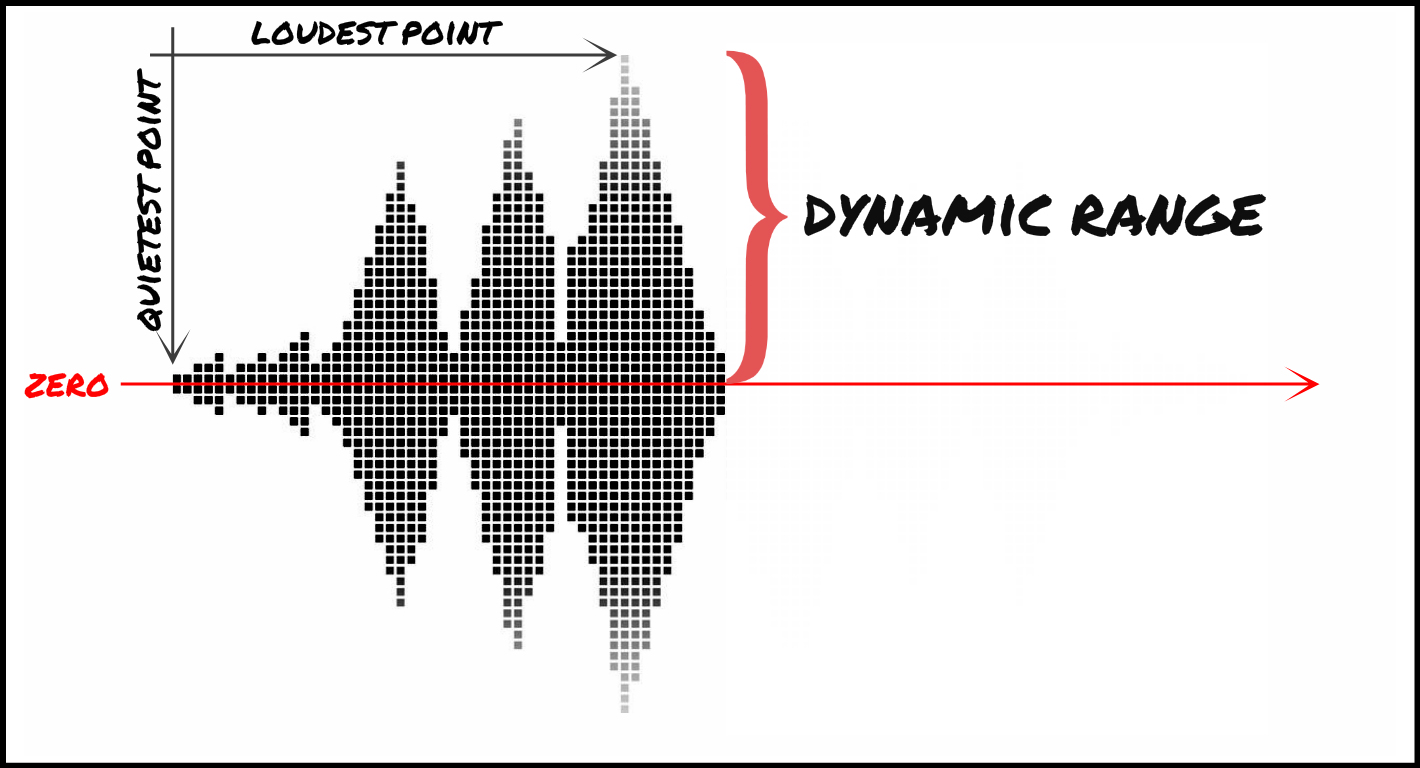
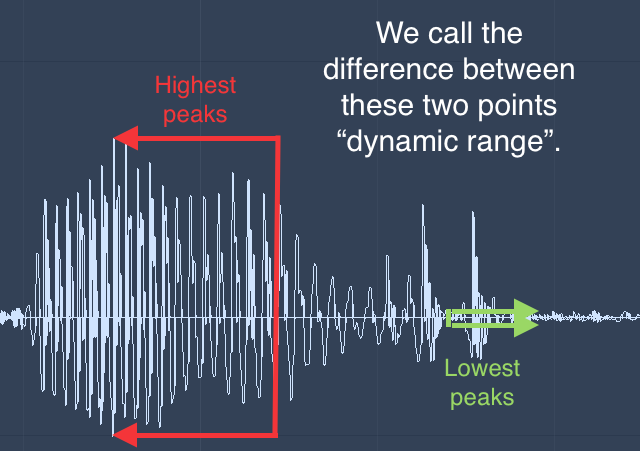
Dynamic range refers to the difference between the loudest and softest parts of an audio signal. In music production and sound engineering, it is desirable to have a wide dynamic range to create a more natural and dynamic sound. However, some musical genres, such as rock or electronic music, rely on a more consistent volume level throughout the song, which can be achieved through compression.

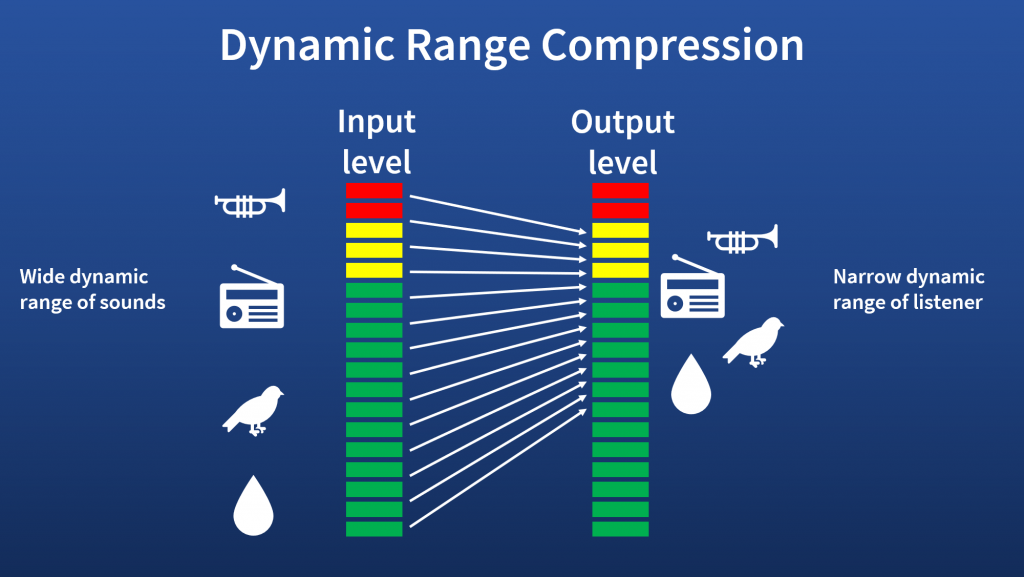
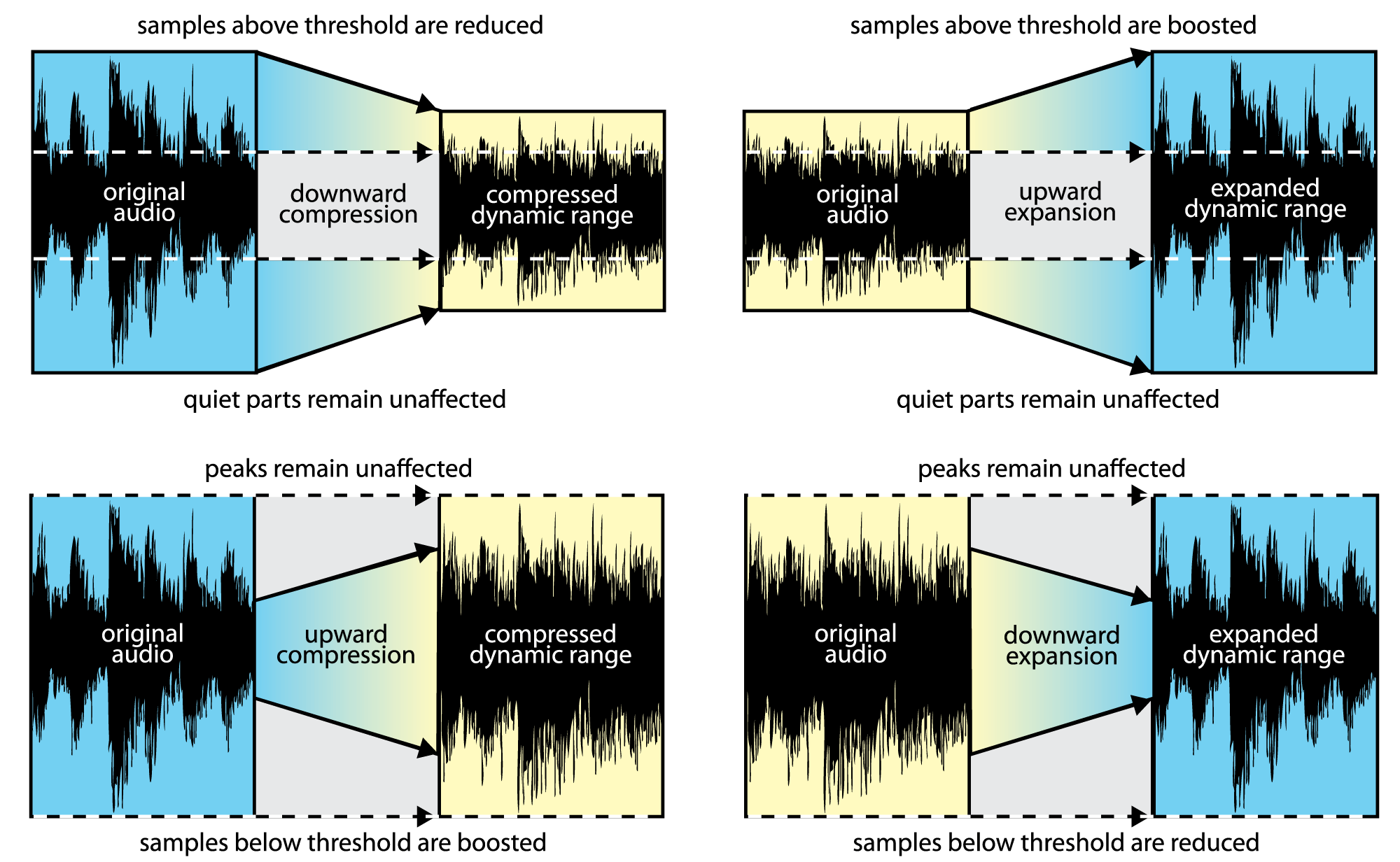
Dynamic range compression is a process that reduces the difference between the loudest and softest parts of an audio signal, resulting in a more consistent volume level. Compression works by lowering the volume of the loudest parts of the signal and boosting the volume of the softest parts, effectively “compressing” the dynamic range.

How Does Dynamic Range Compression Work?

Dynamic range compression works by applying a gain reduction to the audio signal when the volume exceeds a certain threshold. The threshold is set by the user and determines at what volume level the gain reduction will start to occur. Once the threshold is reached, the compressor reduces the gain of the signal by a set amount, called the ratio.

For example, if the threshold is set to -10 dB and the ratio is set to 2:1, then any part of the signal that exceeds -10 dB will be reduced in volume by half. So if a part of the signal that was originally at -8 dB is now reduced by half, it will be brought down to -11 dB.

Applications of Dynamic Range Compression

Dynamic range compression is used in a variety of applications in music production and sound engineering. Here are some of the most common applications:

Leveling the Volume of a Mix

When mixing a song, it is common for certain parts of the track to be louder than others, such as the chorus being louder than the verses. Compression can be used to level out the volume of the mix and make it more consistent.

Adding Punch to Drums and Percussion

Compression can be used to add punch and impact to drums and percussion by bringing out the attack of the sound. By setting a fast attack time and a high ratio, the compressor can reduce the volume of the sustain portion of the sound, while leaving the attack relatively untouched.

Controlling the Dynamics of Vocals

Vocals are one of the most important elements in a song, and dynamic range compression can be used to control their dynamics. By compressing the vocals, you can make them more consistent in volume, while still retaining the natural dynamics of the performance.

Managing Peaks in Audio Recordings

When recording audio, it is common for certain parts of the signal to exceed 0 dB, which can cause clipping and distortion. Compression can be used to manage these peaks and prevent clipping, allowing for a cleaner and more dynamic recording.

Conclusion

Dynamic range compression is a powerful tool for music production and sound engineering, allowing for a more consistent and controlled sound. By understanding how compression works and its various applications, you can use it to enhance your recordings and mixes. While there are many software options available for dynamic range compression, one that we recommend is MP4Gain, which provides a user-friendly interface and a variety of compression options to suit your needs.


Free Download Mp4Gain
picture


Mp4Gain Main Window
picture


Mp4Gain Features
picture


Free Download Mp4Gain
picture

Dynamic range normalizer

Dynamic range normalizer

Dynamics Processing

The audio quality of compressed formats such as MP3 or AAC is often perceived as better or at least equivalent to so-called lossless formats or audio CDs even by trained listeners. This is the conclusion reached by the TrustedReview test platform in a blind test with several people.

TrustedReview points out that this is not an experiment with strictly scientific parameters. However, what was remarkable about the results was that the self-reported hi-fi enthusiasts among the test subjects were wrong to recognize the uncompressed piece of music.

Dynamic Compression

Already sophisticated coding

“I am not surprised by this result, because we reached a similar conclusion in our internal experiments. Encoding technologies are now so sophisticated that most people no longer hear any difference even when compressing at a lower data rate,” he explains. Bernhard, MP3 expert at Fraunhofer. Grill in conversation with press release.

“It would even go so far that a properly encoded 192 kbit / s AAC sound file is the best alternative to today’s audio CD, as the 16-bit resolution of the CD can be far exceeded.” For people who are particularly sensitive to audio and want to be absolutely sure, Grill recommends a data rate of 256 kbit / s for AAC and 320 kbit / s for MP3.

The development trend goes in two directions

According to Grill, the current trend in audio encoding is bi-directional. For one thing, it’s about getting even smaller files with low-quality compromises. “This currently plays an important role, especially with streaming services over cellular networks, as bandwidths are still low despite UMTS and retrieval of large amounts of data is still expensive in most countries. “explains Grill. The most promising encoding is the HE – AAC audio codec, also known as AAC +, which is a further development of the AAC standard used by iTunes, for example.

On the other hand, the developers are also targeting the best of music listeners and want to show that with the right encoding technology, even the last noticeable differences from Audio CD can be eliminated. “Meanwhile, record labels and sound engineers have also understood how to encode for excellent sound quality. Another advantage of existing encodings, such as MP3 or AAC, is that the processes behind them are constantly being improved,” he says. Grill. MP3 encoded at 128 kbit / s sounds much better today than 15 years ago.

The term “compression” is misleading

The Fraunhofer MP3 and AAC developers find the term “compression” misleading anyway. “This should not be confused with dynamic compression, that is, the weakening of noisy passages and the elevation of soft passages, which has always been a technological necessity, especially with famous records and in FM broadcasting.” In this regard, MP3 and AAC with dynamic range up to 24 bits are even better than audio CD, which is limited to 16 bits. This restriction is not removed with a lossless copy of an audio CD.

Mp4Gain offers a dynamic range normalize, that is, the weakening of the noisy passages and the elevation of the soft passages, which is the most modern.

Much more important for good sound quality or an attractive sound image is not the medium or file format used, but the speakers used. “These are still the worst adulterers in the entire chain,” says Grill.