What do you like more, analog sound or digital sound? Part 3
Difference between digital and analog
The sound is analog. And sound is the vibration of the air. How is this sound vibration transmitted?
For example, when a stone is thrown onto a surface of calm water, the ripples spread around it, but if
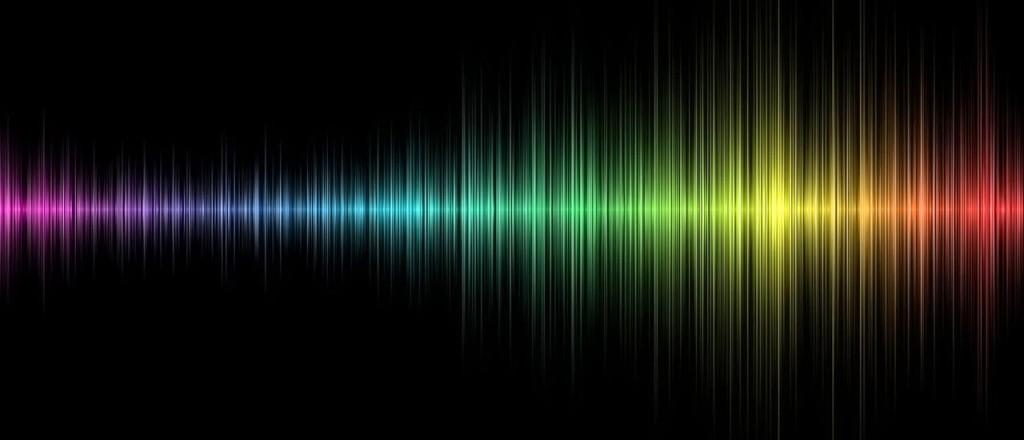
Cut in the direction of the waves and look at the cut, the waveform is as shown in Fig.1.
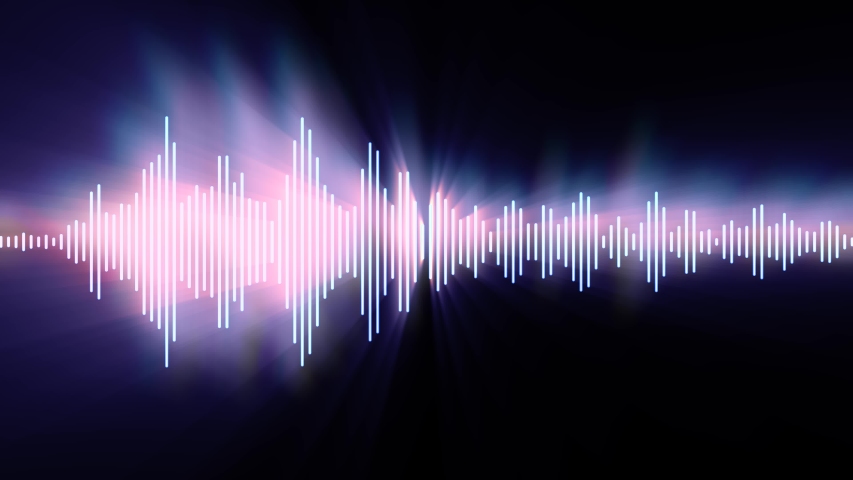
Air waves spread from the point where sound is emitted even in air. Although invisible to the eye, it has a
similar waveform. This is the analog waveform of sound.
Therefore, although it is digital, when such a sound waveform is recorded or communicated by phone or wirelessly, as
shown in Fig. 2, the change in the analog waveform is electrically replaced with a series of numerical values according to a certain promise. ..
When recording or communicating, if you handle it as analog, it is easy for noise to enter and the sound quality to deteriorate, but when trying
the waveform of the sound as digital = numerical data, you can eliminate that worry and
maintain a certain quality. You can do various processing while maintaining it.
(2) What is convenient when it is digital?
Digital audio signals are convenient because they can be recorded and edited using a personal computer, for example.
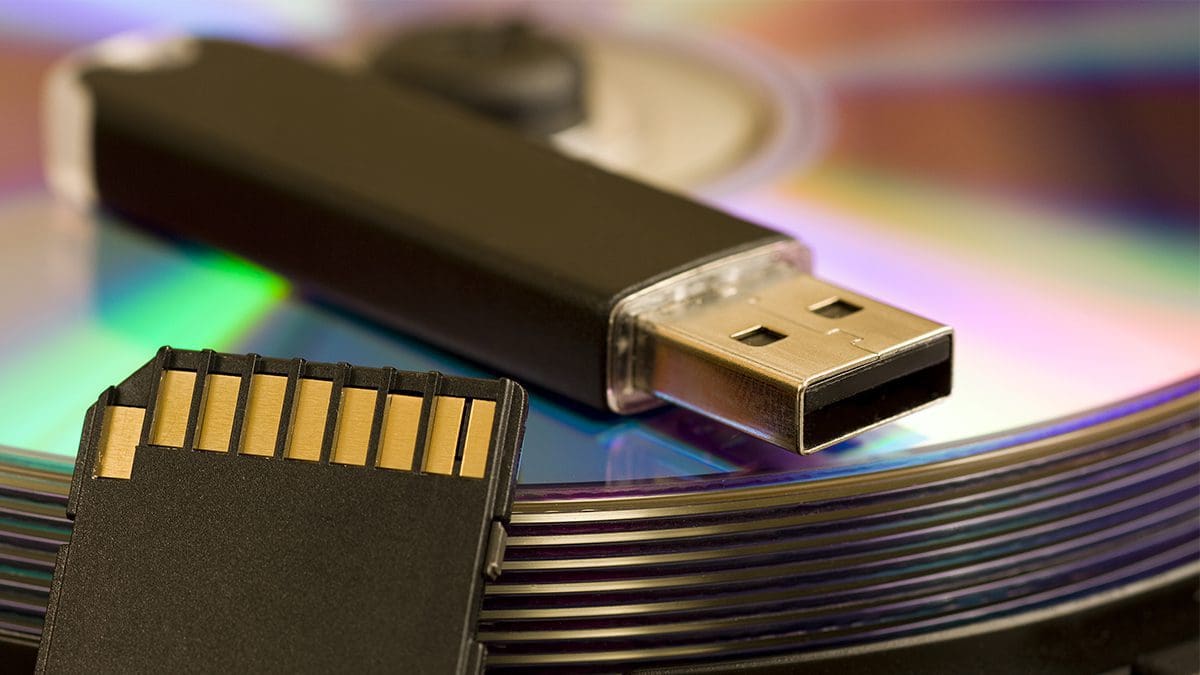
In addition, 74 minutes of music can be recorded on a CD with a diameter of only 12 cm, and through digital compression processing
, music of the same length can be recorded on an MD with a smaller diameter.
Since digital signals can be compressed in this way, it is also convenient for storing large amounts of information.
Not only sound, but also more informative video signals can be recorded and communicated at high speed by using compression technology.
Especially in communication, a two-way digital multiplex communication can be realized communicating multiple pieces of information with a single wire.
In addition to electrical signals, laser optical communication is also possible, so communication is possible at extremely high speeds.
(3) What is the sampling frequency?
Digital signals are processed at predetermined fixed time intervals.
The sample rate (sample rate) indicates how many times a second is processed and is expressed as Fs or fs.
The sampling frequency unit is Hz (Hertz), and the
44.1 kHz (kilohertz) sampling rate means 44,100 pieces of data are processed per second.
(K represents 1000 times)
AD conversion converts a continuous analog signal into a digital signal,
measures the size of the signal at each moment determined by the sampling frequency (sampling) and converts
the result in a binary number (quantization).
On the contrary, DA conversion consists of converting a digital signal into an analog signal,
and the digital signal is read in the time interval of the sample rate and connects smoothly.
Since digital signals can be reproduced up to half the sampling frequency, how much
The higher the sample rate, the higher the playable frequency and the better the sound quality.
In familiar places, 44.1 kHz is adopted for CD and 48 kHz for DAT and mode B of satellite transmission.
Also, recent professional equipment uses high sampling frequencies (high sampling), such as 88.2 kHz and 96 kHz, and is
designed to faithfully reproduce even higher frequency sounds to improve sound quality.
(4) What is bit?
bit is an abbreviation for binary digits.
16 bit and 24 bit in catalogs, etc. they represent the number of digits of binary * that computers handle.
In digital audio, analog sound is converted to a digital signal,
but the number of bits determines how accurately the amplitude value is converted when it is converted to a binary number (quantization) after sampling.
In the case of 1 bit, only 1 or 0 can be judged, but in 8 bit (10001001), 2 raised to the eighth power, that is, 256 steps can be judged in detail.
Currently, the 16-bit mainstream has 65,536 steps and the 24-bit mainstream has 16,777,216 steps.
Now,
there is a part that does not match the actual waveform (analog waveform) and the quantized and sampled digital waveform. This is called quantization noise.
This noise is especially noticeable when the number of bits is small.
So simply increasing the F’s and the number of bits will improve the sound (closer to the original sound)
, but it will consume a lot of memory. Furthermore, in the case of digital recording, it is
It is very important to control the input level to bring out the high quality of the sound.