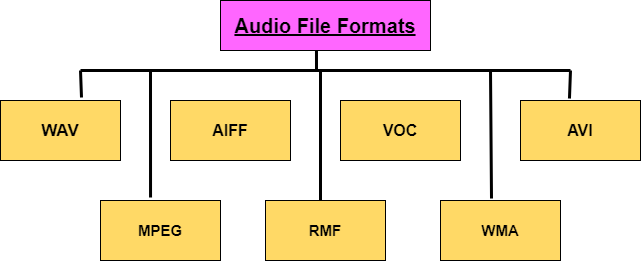
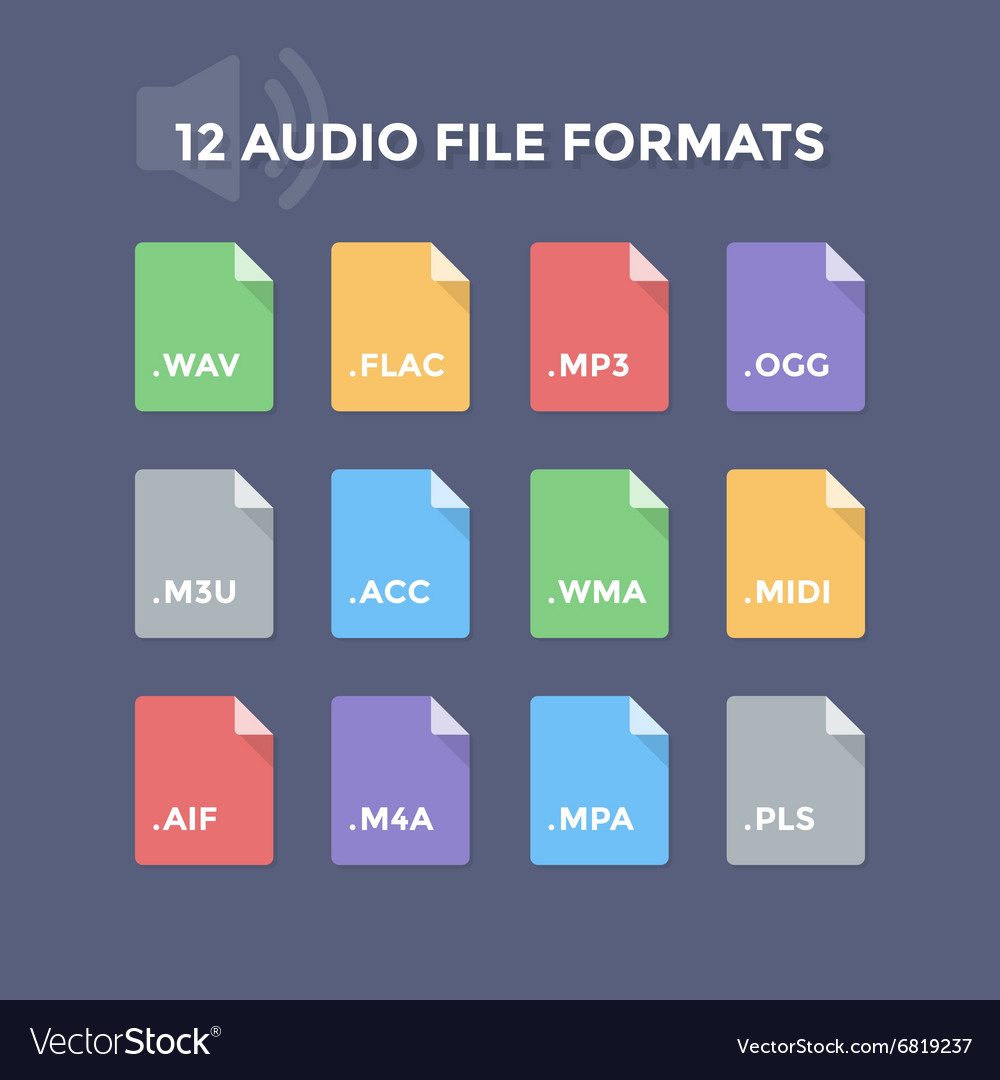
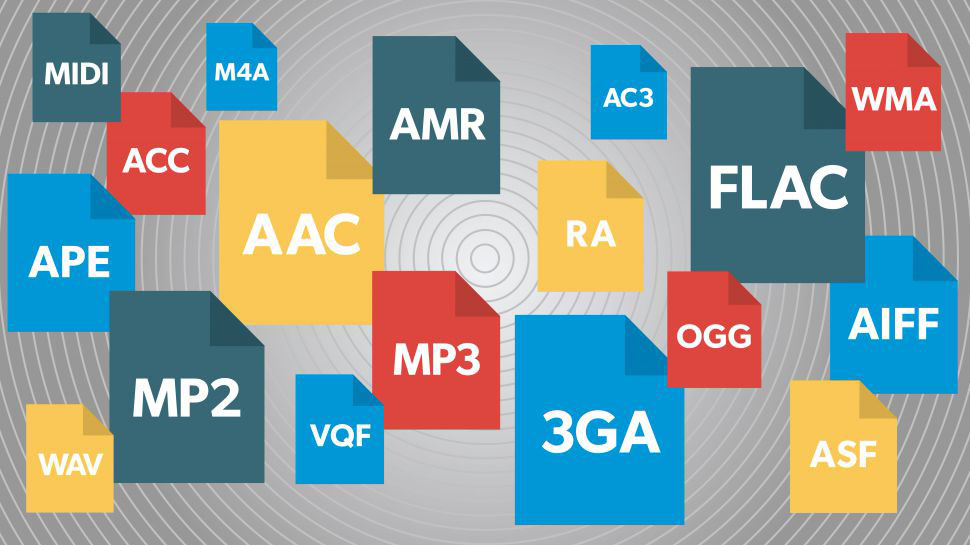
Popular digital audio file formats


Free Download Mp4Gain
picture

Popular digital audio file formats
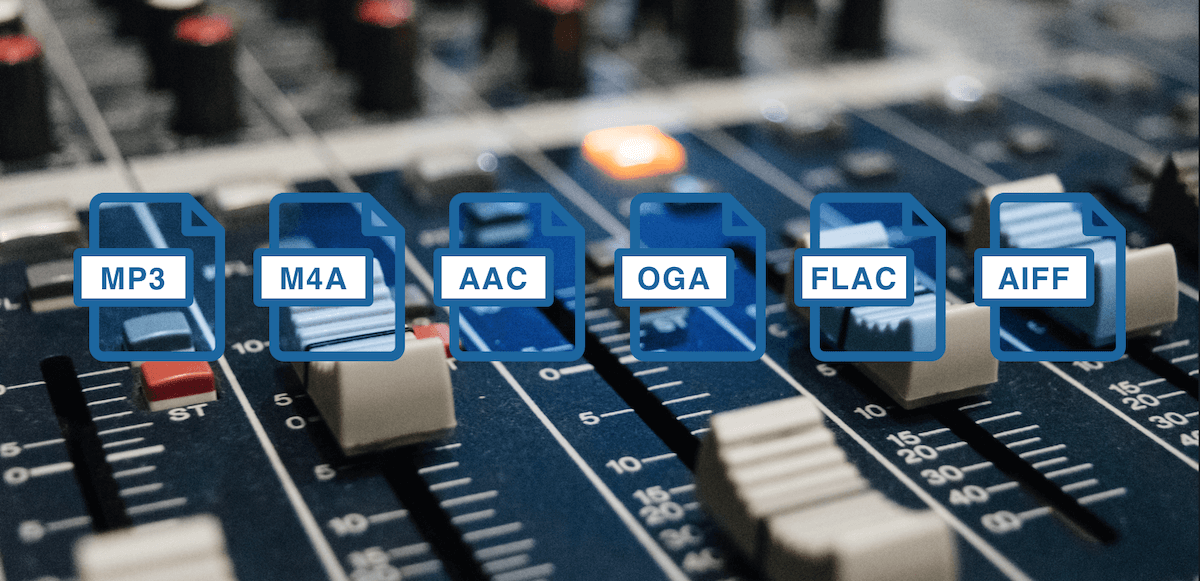
Audio File Format

The last five years gave a great boost to the development of portable and stationary audio systems, and with this support for a variety of digital audio formats.
audio format

Small pocket devices have large internal memory, and stationary audio equipment has become even smarter and more demanding. That is why, now, we cannot save space on the player and download songs that weigh between 15 and 30 MB each, but at home, listen to digital music in a quality equal to the sound of analog vinyl.

Description of popular digital audio formats
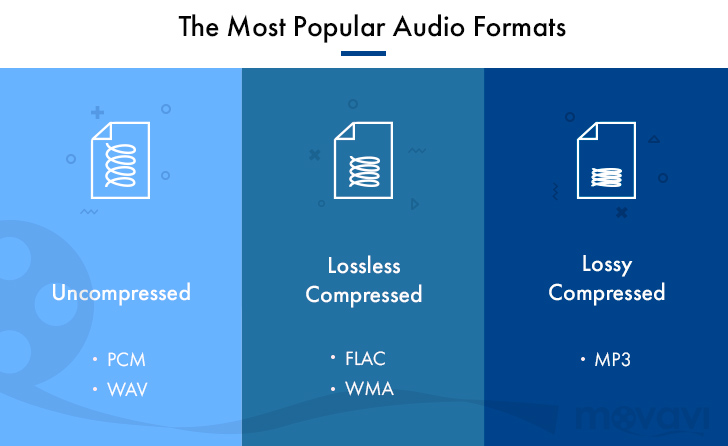
However, the most widespread audio formats still have their pros and cons, and even in an urgent matter like digital audio, a “panacea” has not yet been found. Classic digital audio formats are divided into “compressed” and “uncompressed” streams, as well as formats such as “lossless”, which exclude loss of sound.

Description of digital audio formats Description of digital audio formats

Wav audio format
The Waveform Audio File Format (WAVE, WAV) is a file format for storing a recording of an uncompressed digitized audio sequence. In general, this is the most common format for working in the studio and broadcasting, because it allows you to get the most honest sound quality. For example, the standard audio CD format is an LPCM audio stream, with parameters: 2ch (stereo), 44-100Hz, 16bit.

Mp3 audio format
MPEG-1/2 Audio Layer 3: (MP3) is the most popular digital format for storing compressed audio. The MP3 format uses a special algorithm designed to greatly reduce the size of the original file. This format allows you to preserve audio that is close to the original sound, but thanks to many settings, it is extremely small.
Compared to the standard audio CD format, a file in MP3 format and a bit rate of 128 kbps will be approximately 1/11 the size of the original file.

FLAC audio format
FLAC (Free Lossless Audio Codec) is a popular free codec designed for lossless audio compression. What does it mean? Unlike lossy audio codecs such as MP3 or OGG, the FLAC audio codec does not remove any information from the audio stream. This format is ideal for audiophiles who create their own music collections and listen to music on high-quality equipment.

Ogg audio format
OGG is a format that has not gained great popularity, but is nonetheless used by a fairly large audience. The OGG format, similar to MP3, compresses audio with loss of quality, but is fundamentally different in practical conversion calculations. This made it possible to get better quality with a smaller file size and to display this codec as absolutely independent. In addition to similar formats that convert lossy audio, OGG has the ability to adjust container properties.

Aiff audio format
The Audio Interchange File Format (AIFF) is a fairly universal audio file format developed by Apple, which is used to store audio data. Like its counterpart, the WAV format, it is uncompressed audio and is widely used in professional recordings and music production.
The .aiff and .aif files created by Apple Loops are used by GarageBand and Logic Audio music editors.

M4a audio format
Apple Losseles (also known as Apple Lossless Encoder, ALE or Apple Lossless Audio Codec, ALAC) (m4a) is another Apple development. This audio format refers to uncompressed audio for lossless playback. This is a fairly specific format, which is mainly supported by products of the creator company, and in some cases, as in the iPhone system sounds, where it is possible to use exclusively the m4a format.


Free Download Mp4Gain
picture


Mp4Gain Main Window
picture


Mp4Gain Features
picture


Free Download Mp4Gain
picture

What audio format should I choose?

What audio format should I choose?

Music File Formats

Everybody loves music. Some listen to it on the way to work, and others can’t go a minute without their favorite songs.

Audio File Formats

Listening to music comfortably depends not only on the mood, the time, the moon phase and good headphones, but also on the audio format in which it is stored on our devices.

In the 21st century, streaming services are becoming popular, but most people still store music offline and listen to it from their phones, players, audio systems, etc. But this post is not a discussion “Which headphones are better?”, “Why listen to music?” or “Why vinyl, not CD?” but a brief summary of today’s most popular digital audio formats, their pros and cons. I will not discuss all, or compare different encodings, the differences between “this AAC from this AAC”, but I will try to explain in an accessible way the differences of some popular audio formats from each other.

So what is the best way to store your music collection? Today there are many digital audio formats, and if you want, you can see a list of them on Wikipedia. But we will focus only on MP3, AAC, WMA and FLAC.

MP3

The most popular audio format and no one can argue with it. Why is it so popular? It’s simple, because Mp3 was the first audio format with the best ratio (at the time) of file size and quality when compressed. Therefore, most of the songs were translated into MP3, which served as the undisputed primacy of the audio format on the market.

The advantages are clear from the previous paragraph: small size, tolerable loss of compression, ubiquity, support for all devices, and in addition, due to the small size, you can store a large collection of songs on a medium with little memory capacity. which is also an advantage for some.

But Mp3 also has some disadvantages. Even though compression losses are not visible to ordinary people, informed people will immediately notice them. This is a low sound quality compared to other audio formats, as well as a “cut” of frequencies above 17 kHz, which is felt by ear with good headphones.

CAA

The young audio format AAC, mainly promoted by Apple, can be considered the successor to Mp3. AAC seems much more advantageous because Compared to MP3, AAC file compression is more efficient. At a bit rate of 128 kbps, an AAC composition is comparable in sound quality to the same MP3 composition at a 192 kbps bit rate.

Better compression quality is an important advantage of AAC. The disadvantage is not the same prevalence as in the same mp3. Some devices do not yet support this format. And also the compositions in AAC take up more space than in MP3. Not as much as FLAC, but still, for some it is a critical factor.

WMA

The WMA format was created by Microsoft as an alternative to Mp3 for Windows users. It was believed that with half the bit rate of Mp3, WMA produces a similar quality. But, in fact, a composition in WMA at a bit rate of 128 kbps is noticeably lower than Mp3. The advantages include full Windows support, but the disadvantage is extremely low quality at a low bit rate. By personal observation, I will say that I have not seen people storing their music in this audio format for a long time.

FLAC

One of the most common audio formats for music lovers in good quality. FLAC compresses the data, leaving it in the output identical to the original without losing any data, which is the main lossless compression algorithm. Also, decoding the FLAC format is not as demanding on processor resources, allowing you to listen to music on portable devices.

The advantages of music in FLAC are the excellent quality and fast decoding, but less, as a result, the large file size.

So what audio format should you keep your music collection in? If you are not so critical of losses after compression, you want to make a mistake with the support, so that your collection does not become a bunch of useless files in 5 years, you have a limited amount of memory for your music, then choose Mp3. If free space allows you to store larger files, switch to AAC. I personally do not recommend WMA. I think this audio format is dead, although most people will not agree with me. And if quality is important to you, you have a good audio system or headphones, and even minimal compression losses are unforgivable for you, then FLAC definitely is. But be prepared for the fact that you must have plenty of room for music.

Advantages and Disadvantages of Popular Audio Formats Part 3

Advantages and Disadvantages of Popular Audio Formats Part 3

Music File Formats

Ogg
An open container format that has proven its worth in transmitting music and speech, both at low and high bit rates.

Audio Formats

Pros:

– the best audio format in terms of quality-size ratio;
– many additional features;
– small size;
– free license.
Disadvantages:

– low quality;
– Limited support for players and browsers.
Streaming services where you can listen to music in Lossy format
Advantages and disadvantages of popular audio formats
Spotify is the most popular service in the world, which has become a kind of social network, it is distinguished by its speed and the presence of a large number of high-quality music with high bit rates;
Apple Music – 30+ million songs, convenient playlists, author’s picks;
YouTube Premium – a universal service with a large music collection, curated playlists, and easy access;
VK Music (Boom) – a service based on the VKontakte social network with a large collection of music, the ability to download tracks and automatically select music based on user preferences;

SoundCloud: more than 125 million audio recordings with real capacity to connect with artists;
What devices are best for playing audio formats?
Everything is simple here. You can listen to all the richness of the sound of the best audio formats with a high bit rate, for example,

on CD players
on network players
in modern home theater systems
There are many options. The main thing is to make sure that the selected device provides network connections and supports the appropriate formats. Lossy compression formats can be played on almost any device, including mobile.

Advantages and Disadvantages of Popular Audio Formats Part 2

Advantages and Disadvantages of Popular Audio Formats Part 2

Audio file formats

Wav
The waveform audio format is one of the oldest formats that was created by Microsoft together with IBM. It is the best audio format for processing and storing uncompressed audio data in CD-like quality. One minute of sound “weighs” about 10 MB. That is why it is not recommended to store a music library in .wav or send these audio files over the Internet.

audio formats

Pros:

– impeccable quality;
– Instant unpacking – “on the fly” with economical use of the processor;
– wide distribution and support of a large number of programs and audio devices.
Disadvantages:

– a lot of weight.
A THE C
To store lossless compressed information on Apple devices. In terms of compression ratio, it is slightly lower than free FLAC.

Pros:

– there is no loss of quality when copying from a CD;
– the ability to easily convert to any other audio file format with good quality;
– restoration of a collection of CDs by recording new ones with the same quality instead of damaged ones.
Disadvantages:

– big size;
– limitations on compatibility with audio devices.
BOW
Monkey’s Audio is a fairly popular format that is released for Windows, but it has several unofficial codecs for other platforms. The format supports 8-, 16- and 24-bit audio files, which is why it is widely used in the professional field.

Pros:

– high compression ratio and data processing speed;
– the possibility of direct reproduction of compressed information;
– support for information labels and, as a result, the ability to create convenient sound files.
Disadvantages:

– limited support.
Where can I find lossless music?
Listening to lossless music is a real treat. Also, if ordinary desktop speakers are used for a cheap computer or headphones, the full potential of lossless formats cannot be revealed. This requires high-end audio equipment: turntables, speakers, amplifiers, premium headphones, and even high-quality cables. At the same time, a question remains: where to get music in these formats?

Today, together with AudioCD, you can have high-quality music always at hand. This is facilitated by online music streaming services, which are constantly growing in popularity.

Advantages and disadvantages of popular audio formats
Among them are the following:

Deezer is a great selection of lossless music with bit rates up to 1411 Kbps.
Tidal is a popular service with a large collection of high-quality music.
Today, many online radio services have switched to high-quality audio formats. Among them are: Radio Paradise, AI Radio, Absolute Radio, Intense Radio, Frequence 3, Sector.

Lossy – Lossy file formats
MP3
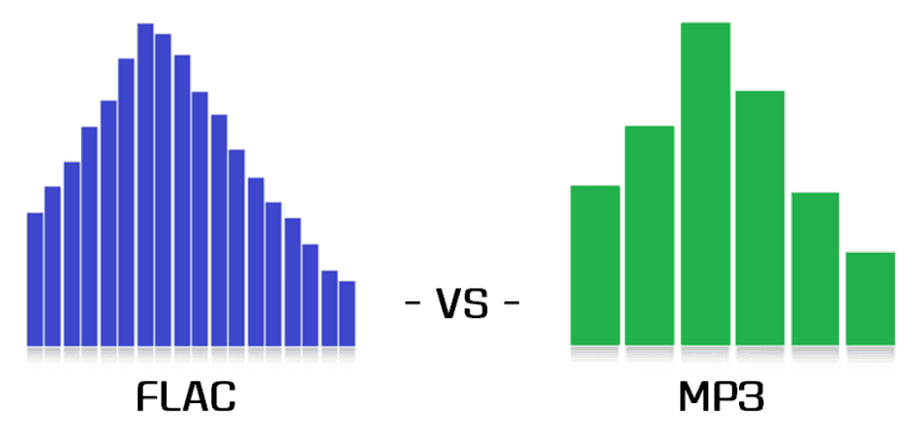
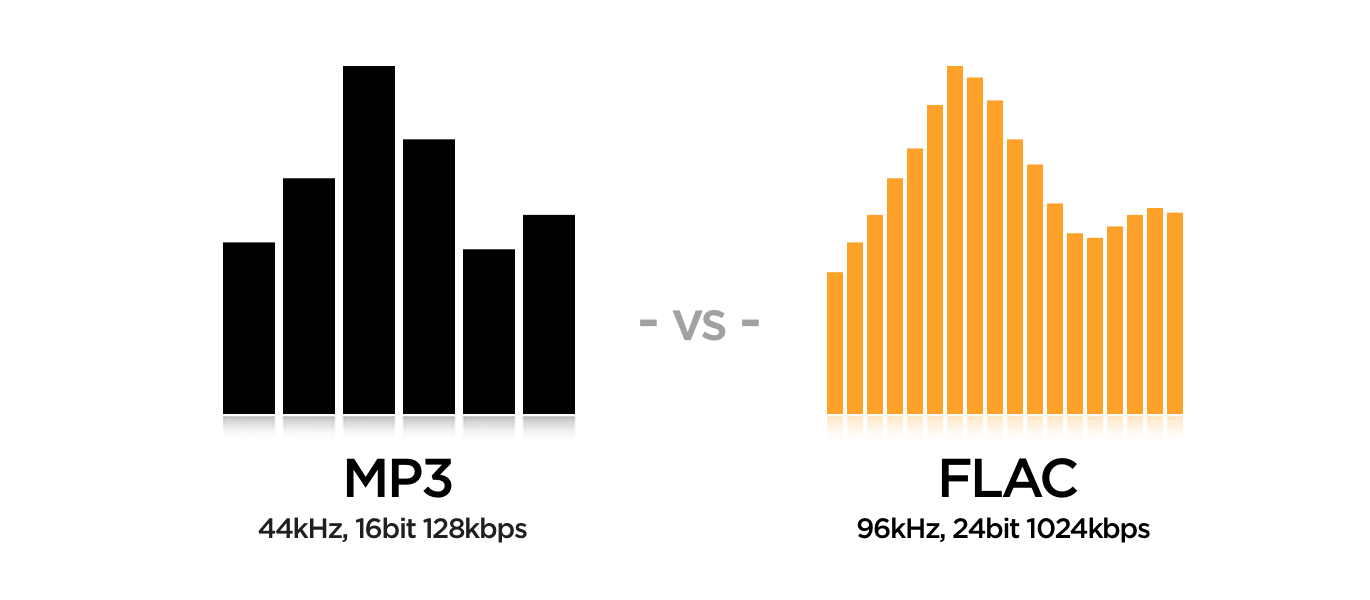
MPEG Layer-3 is one of the most common formats used in file-sharing networks today. The difference between MP3 and FLAC is fundamental. Poor sound quality is felt immediately. It is about the bit rate, which in flac can reach up to 1010 kbps, while in mp3 it only has an average of 128 kbps. This is the difference between flac and mp 3.

Pros:

– excellent compatibility with different programs and audio devices;
– small size.
Disadvantages:

– low quality;
– Very limited technical capabilities.

AAC
Patented format with less quality loss than MP3 and more encoding capabilities.

Pros:

– the presence of MDST technology, which provides good quality with a small bit rate;
– small size.
Disadvantages:

– limited distribution.

Advantages and disadvantages of popular audio formats

Advantages and disadvantages of popular audio formats

audio file formats

In the modern music world, there are a large number of audio file formats that are often confusing for the unprepared user.

Audio File Formats

To understand all this, to find out what they are and what they are used for, the presented review will help.

Advantages and disadvantages of popular audio formats

Types of audio formats

Today is the time that all music lovers, not to mention professional musicians and audio editors, need to understand concepts like audio file formats, bit rates, extensions, bit depth, sample rate and many others. for high-quality sound. Sound has gone digital, which means that it can be used for various purposes, for example, for listening to evidence, for presentations, video dubbing. In fact, digital sound, like an image, is a collection of individual pixels, and the more there are, the better the sound image itself. This “pixelated” sound can be edited and processed.

Advantages and disadvantages of popular audio formats
The figure shows an example of a sound wave recording, where the green curve denotes the original sound and the purple columns indicate its digital form. The number of segments per second is the sample rate. In this case, the digital representation of sound is as follows.

Advantages and disadvantages of popular audio formats
An important role in evaluating the quality of audio formats, and consequently sound quality, is a parameter such as bit rate, which shows how many bits or kilobits it takes to record one second of sound. Low bit rates mean low quality sound, large ones mean high quality sound.

Advantages and disadvantages of popular audio formats
But for the storage and further use of audio in one form or another, audio formats are used – digital recordings of audio data. We can say that the format is a kind of container where the sound is stored. Virtually all audio formats can be divided into two broad categories: lossless compressed and lossy compressed.

No loss, no loss
To avoid as much as possible a decrease in sound quality during the compression of an audio file, special methods have been developed to store audio information, avoiding losses, which in fact can be compared with the file, when the information is simply packed in a zip file, the size of which is noticeably smaller than the original data. Subsequently, this data can be clearly restored on each bit. Also, the bit rate itself is not important for these files. These audio files are collectively called Lossless, Music As Is. These algorithms allow you to compress files two to three times. As a result, the size turns out quite large, but at the same time with the preservation of the original sound.

The most popular lossless formats are as follows.

FLAC
The abbreviation is the name “Free Lossless Audio Codec”. Provides complete security of all data in the audio stream, capable of 1.4 to 4x compression with 350-1010 kbps bit rate, used to create audio collections, and used for listening on premium equipment .

Pros:

– high quality;
– a large number of additional features;
– free license.
Disadvantages:

– quite large size;
– on older operating systems, you must additionally download the appropriate players.

What is a lossless audio format?

What is a lossless audio format?

lossless audio

You might think that the word “lossless” is used for audio formats that use no compression at all.

lossless audio

However, even lossless audio formats use compression to keep file sizes at an acceptable level.

Lossless formats use compression algorithms that preserve the audio data, so the sound is exactly the same as the original source. This is in contrast to lossy audio formats such as AAC, MP3, and WMA, which compress audio using algorithms that discard data. Audio files are made up of sound and silence. Lossless formats are capable of compressing pause to almost zero while retaining all audio data, making it smaller than uncompressed files.

What lossless formats are commonly used for digital music?
Examples of popular lossless formats used to store music:

Commercial

FLAC
Wav
A THE C
Lossless WMA
Impact of Lossless Formats on Music Quality
If you download a lossless music track from an HD music service, you expect the sound to be really high quality. On the other hand, if you convert low-quality music tapes by digitizing them using lossless audio formats, the sound quality will not improve.

Is it possible to convert a lossy song to a lossless song?
It is never a good idea to go from one loss to another. This is because a song that has already been compressed in a lossy format will always be like this. If you convert it to a lossless format, all you get is wasted space on your hard drive or mobile device. You cannot improve the quality of a lossy song using this method.

Commercial

Benefits of Using a Lossless Audio Format for Your Music Library
Using a lossy format like MP3 is still the most common method of storing your music collection. However, there are clear advantages to creating a lossless music library.

Perfect Music CD Backup: Lossless copy of audio files gives you a slightly exact copy of the original music CD. This means that no matter what audio formats come in the future, you will know that you have a perfect copy of the original.
Recovery of loss or damage. Having music in lossless format allows you to recover a damaged original CD or any that has been lost to a blank CD.
Convert to any format. Since your music is in a lossless format, you can convert it to any format and get the highest quality it can support.

Flac compared to Mp3

Flac compared to Mp3

FLAC vs MP3

Lossy vs lossless

Flac or MP3

For an introduction to the topic, let’s start with a simple reference that connoisseurs of audio formats can safely skip … Most of us today listen to music in a car in MP3 format. It is convenient: a huge music library fits in a fist, it is not afraid of scratches, bumps, dirt, it can be easily replenished and edited on a home computer, etc. The MP3 format suits almost everyone except those who are “boosted” due to its internal nature …

And the gist is that when the music stream is compressed, those sounds and frequencies are cut off according to a special algorithm, which, according to the algorithm’s creators, ALMOST does not affect the listener’s perception of the music. This “almost” is the reason for the compromise of the MP3 format … In the music of the club genres, the difference is barely perceptible, but in the good quality rock, instrumental, serious vocals and classics reproduced through a system of decent speakers, the Many may experience the difference between the “cut” MP3 format and the “uncut” WAV source.

MP3 does not convey the depth and fullness of the sound of music, it is perceived as a “poor relative” compared to uncompressed audio formats. All these are, of course, subjective characteristics, and not everyone, due to the physiological characteristics of hearing, is able to “taste” them at all, but the truth is that MP3 and other codecs that compress sound at a loss ( WMA, AAC, and others) degrade the quality of music for the sake of ease of use.

original-3.jpg20151019-2336-1k348sb.jpg
An alternative is “lossless” formats, which are commonly referred to as lossless. Codecs like FLAC and APE also compress music, but during playback the original data is fully restored from the compressed state, unlike MP3, from which compression algorithms remove “extra notes” at their discretion and without your knowledge …

FLAC in cars
Until recently, it was possible to listen without loss in the car mainly only in multimedia centers on Android, since for Android it is natural to install various playback programs that read all formats. But the sound quality was questionable, because most of the Android-based recorder manufacturers, with dubious Chinese ancestry and a blank space in the brand’s history place … Also, the serious restrictions on the distribution of these devices are the high price and two … din format, which also does not suit all.

And now, a year and a half ago, the first FLAC models started to appear in the segment of cheap radio tape recorders from famous brands, with good quality, one-din design and the usual “radio” design. Today, this market segment has taken place: a variety of inexpensive FLAC devices from all well-known brands such as Sony, Pioneer, Kenwood, etc. already strong. Consequently, you can try to draw some conclusions.

The main one will be the answer to the question: was the introduction of FLAC support in low-cost massive devices a breakthrough in the evolution of car audio, or is lossless relevant only to serious and expensive car audio systems, and a simple user in an inexpensive car with standard acoustics does not have different advantages of FLAC will not receive?

What are we testing
Today, the cost of the most affordable car radios with FLAC support is extremely democratic, and these devices are available to everyone: in the initial segment, their prices start at 3,000 rubles. Thus, such equipment leads many budget car owners to the idea that in a budget car, with consumer standard acoustics, you can significantly improve the sound quality simply by replacing the radio recorder and using a music source from high quality: FLAC. instead of MP3.

Advantages of the FLAC audio format

Advantages of the FLAC audio format

FLAC vs MP3

Wave is uncompressed or lossless format, while MP3 is compressed or lossy.

MP3 VS WAV

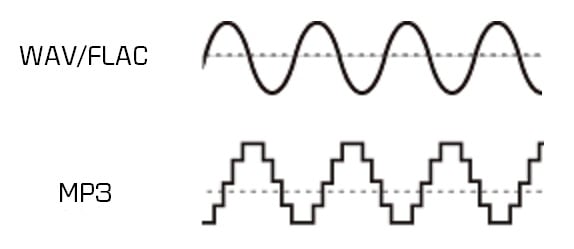
Technically .wav is just a container format and can contain various types of compressed or uncompressed audio, but you will usually find that it contains uncompressed LPCM audio (same as on audio CDs). With .waves files you essentially end up with a raw digital representation of the audio bitstream. Analog sound produced in the real world contains essentially an infinite amount of information because it is a constantly changing wave (see below). To digitize these sounds, you must sample the signal at different intervals to get an approximate sound. For .wav, the audio signal is typically sampled at 44,100 times per second or more, and each sampled value is recorded so that the audio wave can be played:

MP3s are compressed to compress the same audio information into a smaller file size. The .wav format is great for representing an analog signal very accurately, but generally at the expense of large files, as you probably know. Compressed audio (and video similarly) is designed to reduce file size while maintaining an acceptable level of fidelity. In simple terms, compression tries to remove unnecessary data from the stream and reduce the signal to its most necessary components. In MP3, the encoding and compression algorithms use a model of how we listen to analyze the sound in the frequency domain and remove any unnecessary information. For example, due to hearing disguise, if there are two sounds at close frequencies, we will often only hear a loud sound if the difference in volume between them is significant. Therefore, for MP3s, the lower volume sound may be lost and the sound will sound essentially the same as it does to our ears. Find out more about the technical aspect of MP3 encoding here.

In practice, both .wav and MP3 have their uses. For production, .wav is the standard because it will almost always be a 100% accurate, bit-level reproduction of the source material. MP3 can be a decent alternative at high enough bit rates. Bitrate is a measure of how many bits per second the MP3 encoding will use. This means that the higher the bit rate, the closer the MP3 will be to the original uncompressed stream. Bit rate is generally measured in kilobits per second (kbps). I like high-quality sound for my digital music collection, so when I get the chance, I usually encode MP3 at a constant 256 or 320 kbps. This is the upper limit of what MP3 can do, and unfortunately most digital music isn’t encoded that high there. When the bit rate drops, it is usually heard first in the high frequencies, like the cymbals of a drum set. 160 kbps is tolerable, but anything below and you’ll really start to notice. But again, with a fairly high bitrate, the differences between MP3 and .wav subtle, especially for an inexperienced listener (most listeners).

For .wav files, we mainly look at the bit depth and the frequency or sample rate. Bit depth is the number of bits used to encode each sample value. The sample rate indicates how many times per second the audio is sampled. CD (.wav) and MP3 are encoded at a sample rate of 44100 Hz (Hertz stands for “cycles per second”). Newer computers and audio hardware / software now support higher sample rates, including 48 kHz or 96 kHz. For .wav the bit depth is usually 16 or 24 bit on newer systems. For most purposes, 16-bit and 44.1 kHz is sufficient when using .wav, but if you have this capability, it’s generally worth switching to 24-bit, 48 kHz.

Some examples of file sizes for 5 minute stereo recording:

.wav, 16-bit, 44.1 kHz: 50 MB
.wav 24 bit 48 kHz: 82 MB
.wav 24 bit 96 kHz: 164 MB
MP3, 128 kbps, 44.1 kHz: 4.5 MB
MP3, 192 kbps, 44.1 kHz: 7 MB
MP3, 320 kbps, 44.1 kHz: 11 MB
FLAC, 24-bit, 44.1 kHz: 28 MB
FLAC, 24-bit, 48 kHz: 31 MB
24-bit 96 kHz FLAC: 61 MB
There is also a variable bitrate option for MP3 encoding, which should have a slightly smaller file size for the same quality. It uses an encoding scheme that changes (alters) the bit rate for different parts of the song, depending on the complexity and how many samples are needed to accurately recreate the section.

[FLAC] There is a third category: lossless compression. FLAC is a good example of this, and has the quality and fidelity of a .wav file, but with smaller file sizes

Differences between FLAC and MP3?

Differences between FLAC and MP3?

FLAC vs MP3

Lossless vs lossy

FLAC vs. MP3

“Here, of course, the question is not about the difference between MP3 and FLAC, it is broader: that lossy compression formats (MP3, AAC, WMA, Ogg Vorbis and others; that is, lossy) are They differ from “lossless.” ”(FLAC, ALAC, APE, WavPack and others; that is, no losses). Actually, with such wording, it becomes clear that in the first group of formats, the original data is not completely saved, and the second can be restored to the original format (for example, Wav or Aiff extracted from CD) without loss. What exactly is lost and in what proportions depends on the specific type of lossy files and their bit rate, that is, the degree of compression. But to say that all MP3s sound bad and that “flacks” are perfect is the height of arrogance and incompetence. Lossy audio formats have been developing for more than twenty years, and serious research laboratories (Fraunhofer Institute, for example, in addition to working on MP3, is also famous for the invention of the most efficient solar battery) and a group of enthusiasts. Mathematical encoding is constantly improving, and nowadays it is no longer so easy to distinguish files produced by different codecs by ear.

I would immediately make a reservation that not only the files themselves are important, but also the equipment they are to be tested on, the listening environment, and the examiner’s listening experience. In MP3 of any low bitrate, Ariel Pink will sing with the voice of Ariel Pink, of that there is no doubt. It is quite possible that a person listening to music as a melody through white headphones in a subway car will be enough for the eye, and the difference in codecs will come down to a file size comparison. A disc jockey who is embarrassed to buy or search without losses will also think that everything is in order with his MP3, as he prepares a set on the “Tractor” on the laptop’s built-in speakers. It is true that during a party in a big, loud and clear audio system of the club (sometimes they meet, believe me), it suddenly turns out that the guy who speaks immediately after for some reason, the music became big, clear and great . Lossy formats are developed for the convenience of transferring files over the Internet, for storage on portable audio players, and finally for personal playback. Okay, it’s silly to watch a gigabyte AVI movie on a big screen. Even in a home theater, this is not entirely decent. The same goes for MP3. On your iPod: listen to your health (although AAC from iTunes sounds better for sure), but if you go clubbing, don’t miss out, even if you start Skrillex. And when you’re listening to Christmas jazz with his girlfriend’s parents on their big lacquered speakers, buy FLAC or ALAC too. With MP3, you risk getting into an awkward situation. In theory, after a bit rate of 256 kbps, it will be quite difficult for your future audiophile father-in-law to know if he is lossy or not.

Usually when viewing an MP3 file, he isn’t paying attention to anything other than the bit rate. If he already considers himself a person with a taste for music and sound, he should look in the properties of the file for the data of the codec that was used during the conversion. Suppose you see “Lame 3.99” there, it means the latest MP3 codec was used and you’re in luck. But next to it is “Joint Stereo”, which is no longer great. This means that to save a couple of percent of the file size, the codec was allowed to add something to mono, although the recording is stereophonic and the sound image is slightly lost in depth and clarity. There are also fully botanical CBR or VBR, ABR and UBR, but if you’re ready to dig that seriously, do it yourself. Well, you figured out the properties of the file, everything is simple there. The difficulty is this: you hardly ever know what your 320 CBR Stereo is made of.
Scammed out of Internet radio? Made from an unremastered original Japanese CD? Recoded from 192? There is a lot of music on torrents or Soulseek, but there are few guarantees. Another complication is that lossy formats slightly increase the peak values ​​of the audio signal. The so-called overshoot: thousands of micro-overloads along the entire length of the file. Again, you won’t notice this on a train with an iPod. And the future father-in-law can hear ”. The so-called overshoot: thousands of micro-overloads along the entire length of the file. Again, you won’t notice this on a train with an iPod. And the future father-in-law can hear ”. The so-called overshoot: thousands of micro-overloads along the entire length of the file. Again, you won’t notice this on a train with an iPod. And the future father-in-law can hear. “

Lossless digital audio formats

Lossless digital audio formats

lossless audio

Uncompressed formats
The first digital audio formats encoded information, as they say, “as is”.

Lossless Audio

This format is, first of all, convenient for the computer itself: there is a simple correspondence between a sequence of digital signals and a sound waveform. Not surprisingly, despite the further development of compressed audio formats, uncompressed formats continue to be actively used in the field of professional (and amateur) sound work. What are these formats?

First, it is the audio CD format itself. For him everything is simple: this is the format in which most audio discs are recorded (unless, of course, several albums have been recorded on them at the same time – in this case, we are talking about a format obviously compressed). The Audio CD format uses Pulse Code Modulation (PCM) to convert “digital” to “analog.” This is the type of conversion that forms the basis of most other audio formats.

Everything is clear with CDs, but what about sound presentation formats on computers? Here, as you can imagine, the biggest computer and software manufacturers were the first to rush in, developing formats like AIFF (Apple) and WAV (Microsoft and IBM), known to computer and operating system users of these developers to this day. from today. Furthermore, Apple, being the undisputed leader in the field of computer multimedia at the time, introduced its format in 1988, ahead of the developers of the WAV format by three years. If you let the computer read the data on the audio CD and translate it into any of these formats, you will get an exact copy, which will take up the same amount of space on your computer’s hard drive as the original on the CD. The only difference will be in the format in which this data will be packed.

It is important to note that the capabilities of these formats exceed those of an audio disc. They allow much greater audio depth (up to 32 bits) and sample rates (AIFF up to 196 kHz, and in WAV, any). But even these parameters were not satisfied with the developers of ultra-high fidelity audio formats. These formats were first used on Super Audio CD (SACD) developed in 1999 by Sony and Philips, and were eventually installed on personal computers for lovers of high-quality sound.

The digital audio format used in SACD is called DSD (Direct Stream Digital). It uses a fundamentally different way of analog-to-digital and digital-to-analog conversion – the waveform is encoded with just one bit at a time. In other words, the “depth” of the sound is only one bit, but this information is updated much more frequently than in most other formats, that is, the sample rate is increased several times. This allows the algorithm to recreate the shape of the sound wave by estimating the density of these pulses in a given time interval.

This way of representing the signal made it possible to avoid non-linear quantization noise. It is true that the higher the frequency of the sound, the lower the number of pulses that encodes it, the precision of the encoding decreases, which means that the constant noise level in relation to the signal, that is, the hiss, increases . But at a high sampling frequency, the level of this hiss becomes critical already in the ultrasound region, which is imperceptible to the ear. At the same time, a much more important task has been accomplished: there is no quantization noise, a kind of “curse” of digital sound. They all “left” with the same inaudible noise. It is not surprising that this format fell in love with critics of “digital”, it seemed to bring it closer to “analog”, eliminating traces of discretion in its sound.

However, it turned out that DSD files are completely unsuitable for editing: they are edited only by converting to PCM (and vice versa when saved), and each such conversion multiplies the amount of noise that soon becomes critical for hearing. . It’s one thing when you record ready-to-use analog material in DSD, which has passed analog mastering. But what should you do when recording and editing new audio material? So, there were formats that went back to pulse code modulation with additional adjustments against quantization noise. Notable among these is DXD (Digital eXtreme Definition), which has found application not only for mastering source data for SACD, but also for listening to high-quality audio on a computer.