
MP3 VS FLAC. How do you hear the difference?
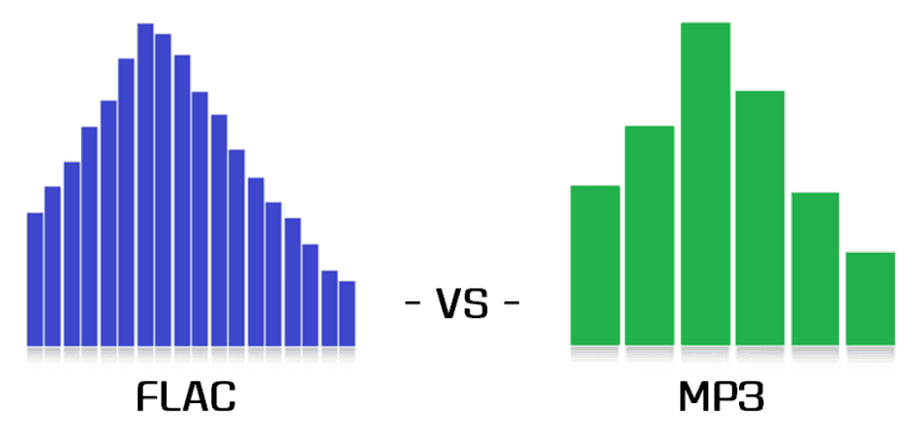
Along with vinyl records and CDs, our music library is increasingly replenished with MP3 and Flac music files. Many consider these two formats to be irreconcilable enemies, while others are sure that the difference between them is small. Are?
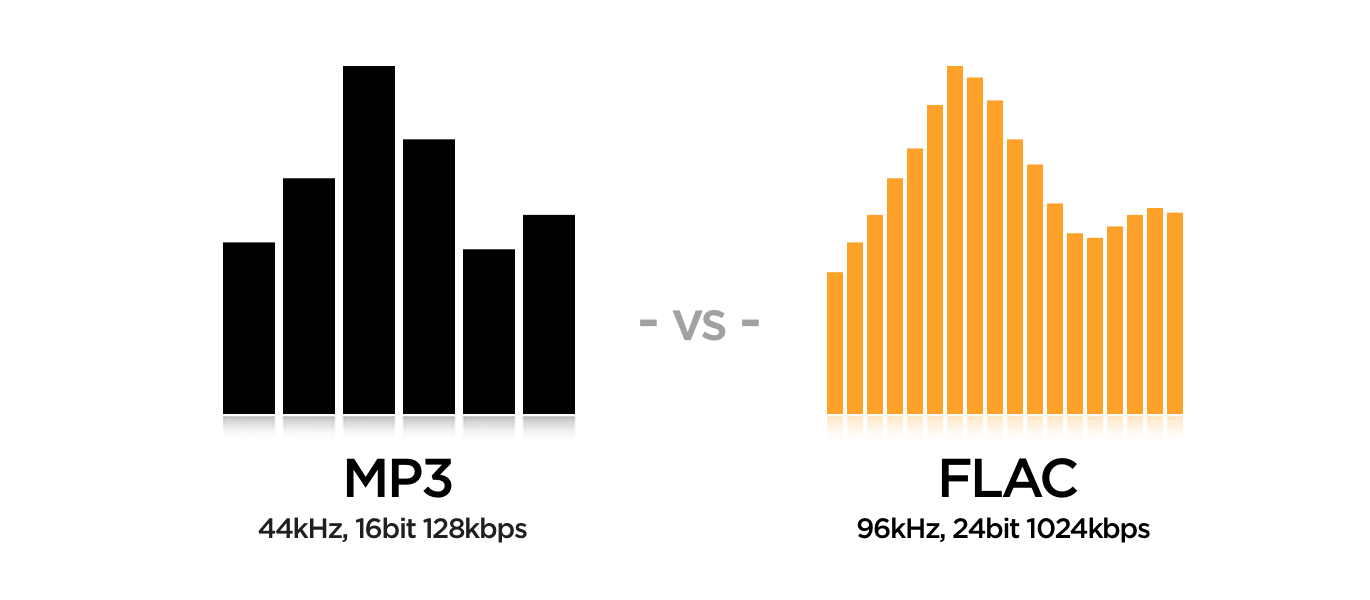
About formats.
A little history. The MP3 format (MPEG-1/2 / 2.5 Layer 3) appeared in 1994. Do you remember those days? There was no talk of gigabytes, hundreds of megabytes cost a lot of money and many still remembered the legendary phrase of Bill Gates: “640 KB of memory is enough for any computer”. And if the veracity of this phrase is still questioned, then as early as 94 no one doubted that music would be distributed over the Internet, and the files would be stored on a computer. Okay, keeping your entire music library on one hard drive and being able to take it with you wherever you go is a great idea. However, at that time the main carrier of “digital music” was the CD.
A standard CD contains 650 megabytes or 74 minutes of music at a bit rate of 1411.2 kbps. In order to preserve a dozen albums in pristine quality in the year 94, it was required to have a very solid quantity! Yes, and a personal computer cost a lot then, and the main task of the MP3 that appeared was the ability to transmit sound through channels with little bandwidth. At that time, transferring an entire CD over the Internet required tens of hours at best. Therefore, the developers were faced with the task of reducing the size of the audio file to the maximum, avoiding to a minimum the losses during the compression of the signal. However, the encoding technologies were not yet perfect, and the processors were not that fast, so it was decided to apply the psychoacoustic method, in which only part of the audio information is lost. For example, all “quiet” sounds above 17 kHz and all bass below 40 Hz. The developers have established various levels of compression for such files, taking the digital stream as the basis for measuring the quality: the more information is transmitted per second of time, the higher the sound quality, but also the larger the file size. The maximum bit rate in MP3 is considered to be 320 kbps, in which the sound is balanced and the quality is as close to the original as possible.
And this is the “closest” and tormented to good sound lovers so far. The fact is that listening to music on high-quality equipment allows you to fully feel the difference between the original recording and its MP3 version, even at 320 kbps.
In all honesty, we admit that you can listen to music even at 64 kbps. If you just want to hear your favorite tune, then no obstacle is terrible. You can even play the nearest musical instrument yourself, if you have the skill, or listen through the speaker phone. However, if you want to enjoy a work in which all the inherent nuances and emotions, its interpretation by the sound engineer and the way the performers play, will be preserved, then MP3 (as, indeed, any other format of lossy compression) will. It will not be a joy, as the playback is excellent.Cd recorded and edited on a mediocre device.
The developers of the Flac format thought about how to reproduce high-quality compressed audio in high-quality Hi-Fi. In fact, FLAC (Free Lossless Audio Codec – “free lossless audio codec”) appeared only 6 years after MP3. However, encoding technologies have come a long way during this time, making it possible to create codecs that compress the audio signal without loss. Of course, it wasn’t possible to make the file smaller than MP3, but users now have an order of magnitude more spacious storage, so a couple hundred megabytes per album is a mere trifle. It is not?


