
“High resolution” basics. What is the difference between DSD, FLAC, MQA, etc.? Part 2

Thus, there is no strict unified standard for determining “whether or not the sound source is high resolution”, and whether or not it is high resolution is not determined only by the older formats such as FLAC and WAV.
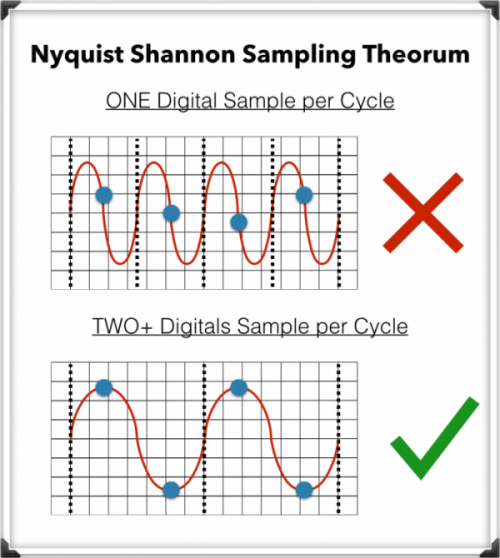
Since the amount of data is required to be greater than or equal to that of an audio CD and, in particular, that the number of quantization bits must be 24 bits or more, a sound source with a “sample rate of 44.1 kHz or more and a number of quantization bits of 24 bits or more “is high resolution. It seems good to think. Of course, it should be noted that the sound quality is not always high quality sound because it meets the high resolution conditions because it is not an audible standard.
Relationship between audio format and codec (for PCM)
Uncompressed or lossless compressed
Linear PCM is the sampled data itself, and theoretically does not deteriorate unless conversion processing is performed. However, since efficient data storage is not considered, the file size increases as the sample rate and the number of quantization bits increase. This is why multi-MB songs with compressed sound sources like MP3 are converted to tens of MB and hundreds of MB in high resolution.
That’s where the “lossless” codec is used. The purpose is to make the data compact by signing the linear PCM (processing to organize the data arrangement / storage pattern according to a certain rule). During playback, it is converted to the original linear PCM in real time, and in theory there is no deterioration in sound quality. “FLAC” and “ALAC” are typical examples, and linear PCM can be reduced to a data size of approximately 60%. The characteristic is that the sound quality does not deteriorate theoretically because the original information is left completely when encoded.
On the other hand, the “lossy compression” codec can achieve a high compression rate so that the data size is 10% of the original, but it is said to sound out of the audible band (human ears cannot perceive) during encoding. High frequency band) is removed. Sounds processed by lossy compression codecs are not classified as high resolution because the presence of sounds outside the audible band is believed to have a great influence on the expression of the realistic sound field and depth, which is You can tell that it is the advantage of high resolution. The way of thinking is dominant. In fact, even the JEITA and Japan Audio Association definition mentioned above does not include high resolution lossy compressed sound sources.
Compressibility and sound quality trends of the main digital audio formats
method Typical format Sound quality Compression rate
(assuming PCM is 100%)
Uncompressed WAV ◎ 100%
AIFF
Lossless compression FLAC ◎ Approximately 60-70%
A THE C
Lossy compression MQA About 15-25%
MP3 △ ~ ○ About 10 to 20%
CAA
Ogg Vorbis
WMA


