Increase Video Sound


Free Download Mp4Gain
picture

Increase Video Sound
Increase Video Sound

In today’s digital age, video content plays a pivotal role in our daily lives. Whether you’re watching tutorials, enjoying your favorite movies, or streaming entertaining content online, one thing that truly matters is the audio quality. Sometimes, you come across videos with poor sound, and that’s where the need to increase video sound becomes evident.

Enhance Video Audio

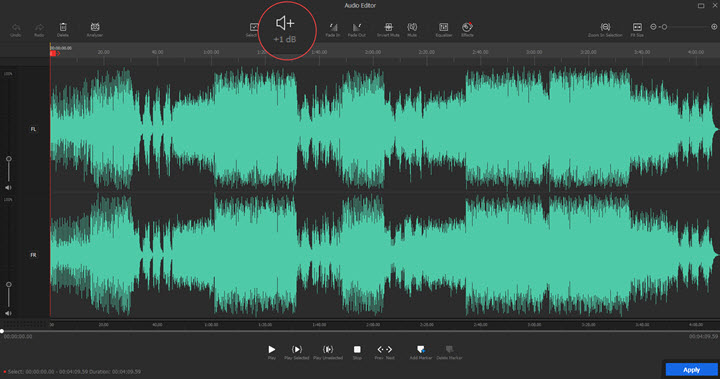
Enhancing video audio is all about making your video sound clearer and more immersive. When you enhance the audio, it’s like adding a new dimension to your video content. You can use various software tools to achieve this, adjusting the audio levels, eliminating background noise, and fine-tuning the sound to perfection. This process ensures that the viewer doesn’t have to strain their ears to hear the dialogue or music.

Boost Video Sound

Sometimes, you come across videos where the sound seems weak or muffled. To boost video sound, you can use equalization techniques to increase the volume of specific audio frequencies, making speech clearer or bass deeper. This can be particularly useful when watching older videos or content with subpar audio quality.

Improve Video Volume

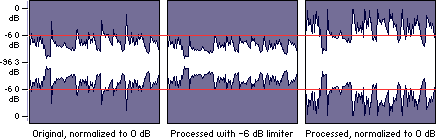
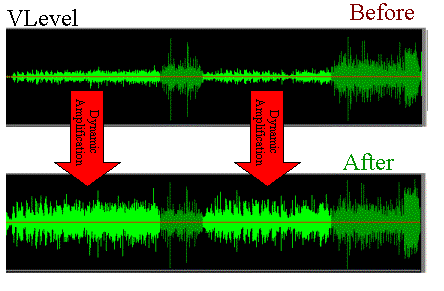
To improve video volume, you need to address not only the overall loudness but also the dynamic range. Dynamic range refers to the difference between the softest and loudest parts of the audio. By optimizing the dynamic range, you can ensure that the audio remains consistent and pleasant throughout the video, even during action-packed scenes.

Amplify Video Audio

Amplifying video audio goes beyond simply making it louder. It involves careful adjustment to prevent distortion or clipping. Modern audio processing tools allow you to amplify the audio while maintaining its clarity and fidelity. This way, you can enjoy your favorite videos without constantly reaching for the volume control.

Raise Video Sound

When you want to raise video sound, you’re essentially elevating the impact of your video content. A well-balanced and clear audio track can significantly enhance the viewer’s experience. It’s like turning up the volume on the emotions and excitement conveyed through the video.

Enhance Audio in Video

Sometimes, videos captured with mobile phones or basic cameras may have subpar audio. To enhance audio in video, you can use specialized software to clean up background noise, amplify voices, and even add effects for a cinematic touch. This can turn an ordinary video into something extraordinary.

Increase Video Soundtrack

For those who create videos for entertainment or artistic purposes, the soundtrack is paramount. To increase video soundtrack quality, you can use audio editing tools to fine-tune music and effects. This ensures that the audio elements complement the visuals seamlessly.

Boost Video Clip Audio

Short video clips, whether for social media or presentations, can benefit from audio enhancement. To boost video clip audio, consider using specialized apps that offer quick and easy adjustments to volume, clarity, and overall audio quality.

Improve Video Audio Quality

Last but not least, improving video audio quality is an essential step for content creators. Whether you’re a YouTuber or a filmmaker, ensuring high-quality audio in your videos is crucial. With the right tools and techniques, you can improve video audio quality, making your content more engaging and enjoyable.

These methods for enhancing video sound can take your multimedia experience to the next level, whether you’re a content creator or simply an avid viewer. Remember that achieving optimal audio quality often requires experimentation and fine-tuning, so don’t be afraid to explore various techniques and tools.

Final Words

In a world where visual and auditory experiences go hand in hand, the importance of quality audio cannot be overstated. Whether you want to enjoy your favorite videos without constantly adjusting the volume or create captivating content that resonates with your audience, the ability to increase video sound and enhance audio is a valuable skill. So, dive into the world of audio editing, and let your videos sound as great as they look!


Free Download Mp4Gain
picture


Mp4Gain Main Window
picture


Mp4Gain Features
picture


Free Download Mp4Gain
picture

Sound level, volume, normalization

Sound level, volume, normalization

Normalize Audio

This article provides a brief explanation of the terms Sound Volume, Sound Level, Normalize, Gain, and some others, and their relationship and use in relation to the Digispot broadcast automation system.

Volume normalization

Sound level
The term sound level refers to the amplitude level of the sound signal. With regard to a programming item, MDB item, or another piece of sound, we are talking about the peak (maximum) signal level in the entire piece. This level is measured in units of dBFS and is almost always negative. This level is important because it depends on how much the level can be increased, and therefore the volume of the sound, without exceeding the theoretical threshold of 0 dBFS.

The signal level indicators are intended for visual observation of the current signal level in real level.

A diagram of the signal level change over time is called a signalgram and is used to display phonograms and other sound elements in various windows of the Digispot system, for example, the splice editing window, when editing audio, etc.

In the Digispot system, the maximum level of the programming item and CDM is calculated once and stored for later use, eg for normalization.
The determination of the peak signal is combined with the simultaneous determination of its loudness, these values ​​are always calculated together.

True sound level
The term True Sound Level refers to the hypothetical amplitude level of an analog sound signal, which is an interpolation of an existing digitized soundtrack. The difference with just “Level” is that when sampling, the sample points on the time axis may not reach the maximum points of the analog signal. For example, if we have a sinusoidal signal with a frequency of 11025 Hz and we digitize it with a frequency of 44100, then the peak value of the digitized phonogram level can have a value from -3dBFS to 0dBFS, depending on the phase shift of the point of sampling on the time axis. enter the sign. At higher signal frequencies, the peaks can be further underestimated.

ITU-R BS.1770-3 (Annex 2) defines the algorithm to calculate the “True Peak Level”. The proposed procedure is reduced to increasing the sampling frequency 4 times and filtering, then the maximum amplitude is found from the interpolation of the signal obtained.

In the Digispot system, the peak indicators in the editor, property windows, and splices have the ability to display the actual sound level.

Sound volume
Loudness is an estimate of the intensity with which the listener perceives the material. This value is calculated using a special algorithm that takes into account the perception of human sound, developed by ITU \ ITU-BS.1770.

Loudness is measured in LUFS units, which are physically identical to decibels. The volume is directly related to the level of the signal: the higher the level of the signal, the higher its volume.
Numerically, this relationship is linear: if the signal level increases by 6 dB, the volume will also increase by 6 LU. (To be mathematically precise, the relationship is not linear, but for most practical applications, the deviation from the linear relationship can be neglected.)

The loudness control in real time is carried out by volume indicators, there are two of them: M – Momentary and S – Short term, they differ in the measurement intervals: 0.4 sec and 3 sec, respectively.

To evaluate the loudness of a range of sound, a special technique has been developed that calculates the value of the loudness of the range, denoted by the value I and called integrated loudness. This is the value you refer to when talking about the loudness of a programming item or MDL.

In the Digispot system, the integral loudness of the programming item and MDB is calculated once and stored for later use, eg for normalization.

In Russia, the methodology for measuring the volume of programs is determined by the order of the Federal Antimonopoly Service of May 22, 2015 No. 374/15. The loudness of the programs is regulated by Federal Law 338.

Relationships between digital audio peak level, actual peak level, volume, and notation
When talking about the signal level (more precisely, the peak level), the notation dBFS – dB Full Scale is used. This scale has a 0dB point tied to the full range of the signal represented in the bit width used. For example, with 16-bit audio samples, the representable values ​​are -32768 to +32767, so the signal level value in dBFS is calculated as 20 lg (s / 32768), where s is the value of the sample in this representation or the maximum absolute value of the samples in the interval of interest.