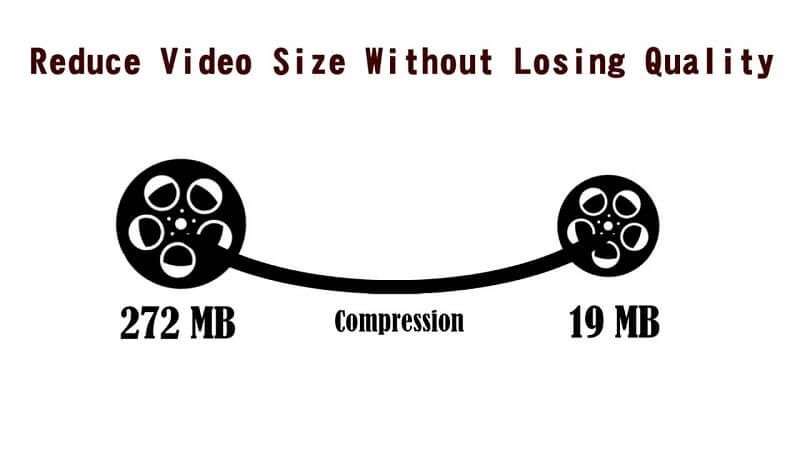
Digital video, its advantages

Digital technologies provide undeniable advantages over analog technologies.
The digitized signal can store all the information stored in analog form. Modern digital data transmission, recording and storage technologies practically do not distort the signal.
One of the indisputable advantages of digital technologies is the ability to apply a powerful mathematical apparatus to compress video and audio information into a digitized signal. Unlike “analog”, “digital” can be reproduced at any time with 100% repeatability. Consequently, the digitized signal opens up convenient post-processing, analysis, and simulation options.
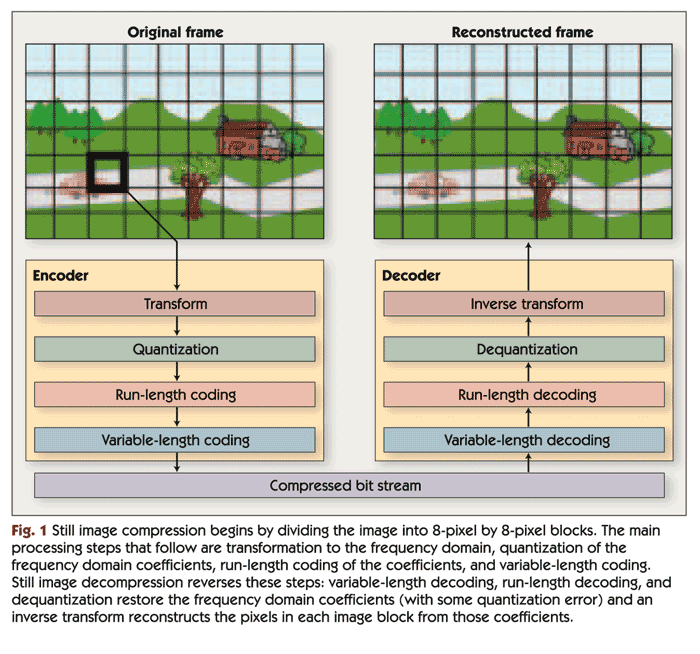
The main video compression methods come down to compressing data within a single frame and optimizing the transfer of changes between frames. Even when looking at a still image, you can see that it contains a lot of information of the same type and duplicate information. For example, the background intensity is usually a constant value; many separate areas of the image, occupying significant frame sizes, also have the same digital signal level. Naturally, it makes no sense to transmit all this information without compression. With the use of specialized video compression techniques, smoothly changing frame by frame, it is possible to further reduce the resulting density of information transmission over the network.
Unlike universal archivers (such as WinRar or WinZip), video compression can occur with some loss, the amount of which depends on the selected codec. Modern compression algorithms use extensive logical analysis of the video to extract duplicate fragments between frames and reduce the size of the final file. During playback, the compressed information is “stretched” and then displayed to the user. On a low-powered computer, it can take a long time to decompress images compressed with some codecs.
Digital video compression technologies
There are many digital video compression technologies. Some of the compressors considered use more than one compression technology, but a combination of them. For example, both Indeo 3.2 and Cinepak use vector quantization. The international standards MPEG-1, MPEG-2, MPEG-4, H.261 and H.263 use a combined BDKP technology and motion compensation. Some modern algorithms use Discrete Wavelet Transform (DWT) technology. Other technologies include fractal image compression.
Lossless compression
Image compression can be performed without quality loss only if there was no data loss during the compression process. As a result, the image obtained after decompression will match exactly (bit by bit) the original. Examples of such compression are GIF for static graphics and GIF89a for video.
Lossy compression
Compression can be lossy if information is lost during the compression process. However, from the point of view of human perception, lossy compression should be considered only that compression in which it is possible to distinguish with the naked eye the result of compression from the original. Thus, despite the fact that two images, the original and the result of compression with one or the other compressor, may not coincide little by little, however, the difference between them may be completely imperceptible. Examples include the JPEG algorithm for compressing static graphics and the M-JPEG algorithm for compressing video.
Lossless compression from a perceptual perspective
Being formally lossy compression, a compression scheme can at the same time appear to be lossless in terms of human perception. Most lossy compression technologies have the so-called Compression Quality Factor (QF), which characterizes the perceived quality side and ranges from 0 to 100.