Linear PCM [ Linear PCM ] LPCM / Linear Pulse Code Modulation

Linear PCM is one of the methods for converting analog signals, such as voice, into digital data, and the data obtained by sampling the signal strength at regular intervals is recorded as-is. The simplest and most basic method of PCM.
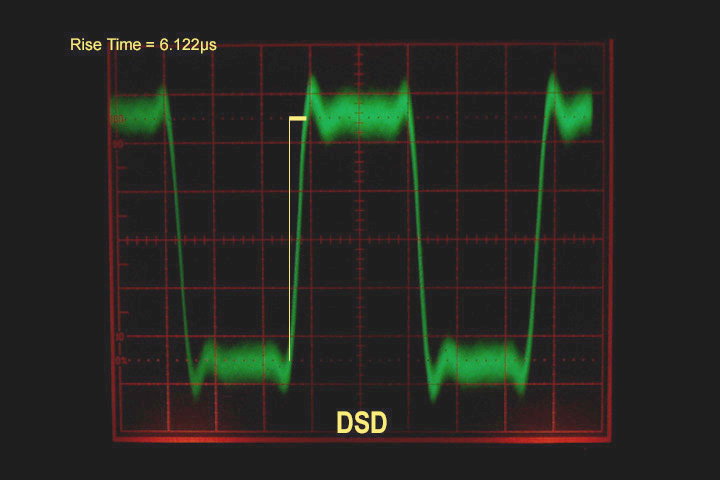
Linear PCM
The analog signal strength is measured at regular intervals according to the sampling rate and quantized as an integer value within a specific number of bits. When simply referring to PCM, it is common to refer to linear PCM, and it is often called linear PCM in the context of contrasting with methods such as DPCM and ADPCM that take the difference from the previous sampled value.
Higher quality data can be obtained by increasing the sampling rate and the number of quantization bits, but the amount of data increases accordingly. For example, a CD records 2 stereo channels of audio at a sampling rate of 44.1 kHz (kilohertz) and 16-bit (2-byte) quantization, with a data volume of 176.4 KB (kilobytes) per second at 44.1 kHz x 2 bytes x 2 channels will be.
If the data obtained by linear PCM is recorded as is, it is converted to uncompressed audio data, which is superior because there is no deterioration in sound quality compared to the lossless compression method, but a large capacity is required. and band for storage and transmission. . .. WAV file (.wav file) of Windows is famous as a file format for storing data in PCM format.