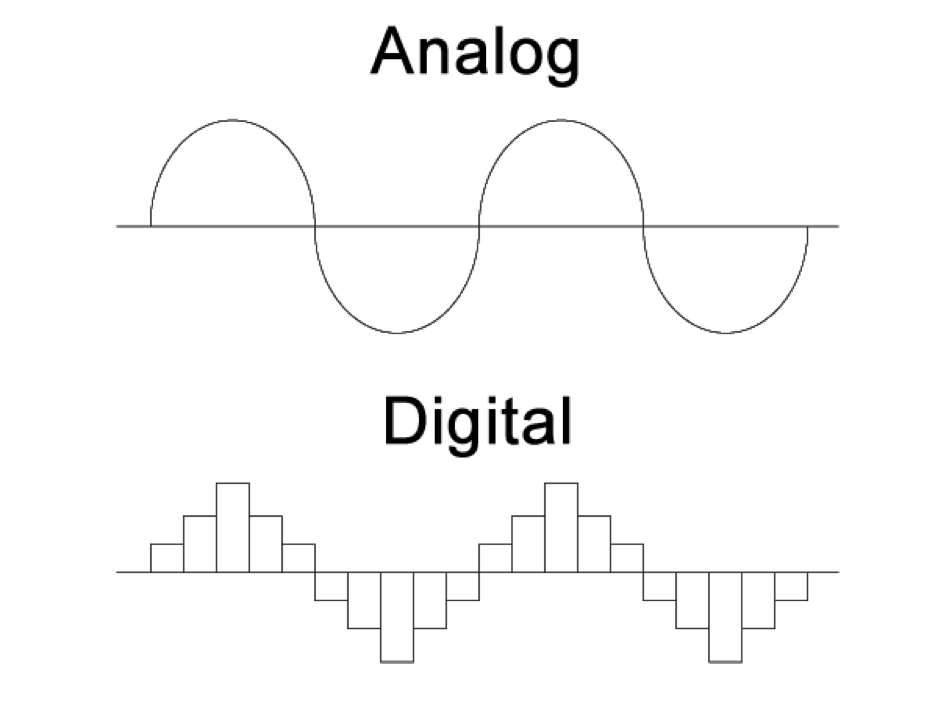
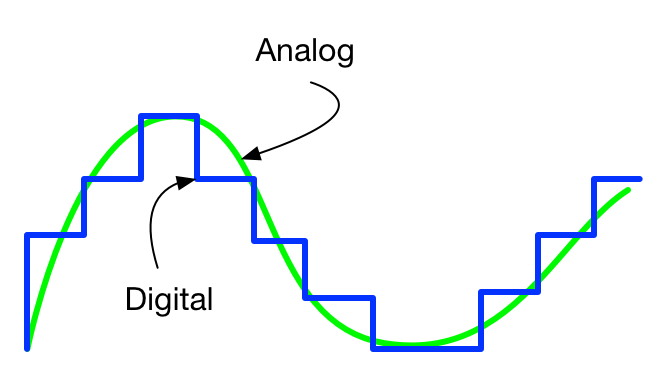
During my training as a sound engineer, I read several times that in analog systems the sound wave, in the form of alternating current, is continuously recorded on the tape, something that does not happen in the digital environment where the sound wave is found. photographed thousands of times per second and reconstructed to some degree of approximation.
“Tape recording is better from this point of view than digital recording”
Obviously I was not the only one to have taken this statement as true, since among technicians and musicians I hear it repeated often, but are we really sure that it is so? Could such outdated technology be better than the current one? Obviously not.

From a technical point of view, analog recording suffers from a number of problems that introduce distortions and artifacts, so comparing the recorded sound with the source, the result is anything but faithful. Don’t you think so? Here are some issues that you may not have been told about analog recording.
–The flutter and the wow are oscillations that are generated during the route of the tape that, stretching between the heads, begins to vibrate like a guitar string, introducing micro-phasing and effects similar to tremolo;
–hysteresis. The metallic particles that cover the surface of the tape are quite slow and do not move from their rest state unless the magnetic field of the recording head is strong enough to polarize them. Therefore, sounds of weaker intensity are not correctly recorded, as well as high frequencies;
–maximum distortion. Transients are very fast, dynamic, and rich in high frequencies, qualities that tape cannot fully satisfy;
Background noise is an intrinsic feature of tape, to which we have tried to bypass filters with pre-emphasis and noise reduction circuitry, which in turn add more distortion;
deterioration of the material that occurs in each step and risk of self-cancellation of the material.
These aspects of analog recording, and they are just a few, are enough to make us understand that, even if we record continuously, our signal suffers many alterations.
Digital technology represents a clear improvement on many fronts, thanks to the low prices and the reliability of the instruments, capable of always guaranteeing the same performance without the need for constant maintenance.
With ever higher sample rates, 144 dB of dynamics (for 24-bit formats), and no background noise, digital audio recording allows you to truly capture sound in all its dynamic and tonal components.
–Yes, but digital is cold, analog is hot!
Seriously, the adjectives hot and cold are not appropriate terms to describe the characteristics of sound and are used incorrectly to express personal preferences and tastes.
What is generally understood by “warm sound” is the sensation of tonal enrichment that analog machines give to the audio signal in which there is less presence of high frequencies, while the adjective “cold” refers to a bare sound , raw, essential and seemingly unbalanced in favor of high frequencies.
If you want to improve the tone, it is better to use more appropriate terms, referring to digital as true copy and analog as artificial.