
How much does the bit rate affect the sound quality in an mp3?
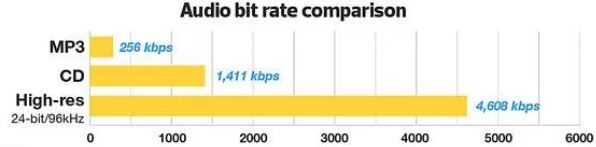
Is the bit rate very important?

The bit rate strictly measures the amount of information per second that an audio file can carry.
What does this mean?
That the greater the number of bits per second, the greater the “detail” and the greater the number of details, the higher the resolution and therefore the quality.
Let us imagine an example that would illustrate the matter very clearly:
You must describe an object, but you can only use ONE word.
You say:
-Car
That doesn’t say much.
Now you can use 2 words:
1.- car 2.- red
We already have more information.
Now you can use 6 words:
1.- car 2.- new 3.- red 4.- convertible 5.- sports car 6.- luxury
Now you have a much more elaborate image, thanks to the fact that you were able to provide more information. If you could now use 20 words or 100, it would be a more precise idea each time that you could convey.
Exactly the same thing happens with music and the bit rate is the amount of information that can be transmitted per second.
An estimate like the following is generally known:
8 Kbps Mono: Telephone Sound.
16 Kbps Mono: Better quality than shortwave.
32 Kbps Mono: Better quality than AM.
64 Kbps Stereo: Better quality than FM.
112 – 128 Kbps: Quality close to CD.
160 Kbps: Quality closer to CD.
192 Kbps: Practically CD quality.
256 Kbps: CD quality virtually indistinguishable from an original CD.
320 Kbps: CD quality.
Mp4Gain can help you make your entire music collection the same bitrate.
In a following article we will give more information about this interesting topic. Very necessary if you want to really have quality in your audio and more if you use Mp4Gain.


