
Audio and video analogic & digital
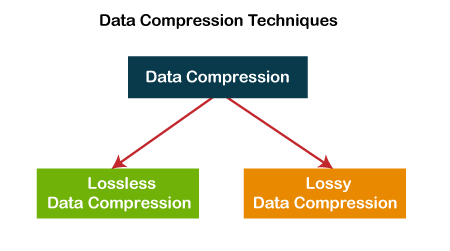
The appearance of multimedia systems, of course, brought about revolutionary changes in areas such as education, computer training, in many areas of professional activity, science, art, computer games, etc. But, you must agree, it is impossible to imagine the modern. multimedia systems without sound or video. In this work, I would like to dwell on the consideration of the fundamental differences in the representation of digital signals from analog, the characteristics of digital audio and video information, their compression algorithms (compression).
2. Differences between the digital representation of analog signals.
The traditional analog representation of signals is based on the similarity (similarity) of electrical signals (current and voltage changes) with the original signals represented by them (sound pressure, temperature, speed, etc.), as well as on the similarity of electrical signals. signal forms at various points in the transmission or amplification path. The shape of the electrical curve that describes (also called transfer) the original signal is as close as possible to the shape of the curve of this signal.
Such a representation is the most accurate, however, the slightest distortion of the shape of the electrical carrier signal will inevitably involve the same distortion of the shape and signal of the carrier. In terms of information theory, the amount of information in the carrier signal is exactly equal to the amount of information in the original signal, and the electrical representation does not contain redundancy that could protect the carried signal from distortion during storage, transmission. and amplification.
The digital representation of electrical signals is designed to add redundancy to avoid unwanted interference. For this, serious restrictions are imposed on the carrier electrical signal: its amplitude can take only two limit values: 0 and 1.
In this case, the entire zone of possible amplitudes is divided into three zones: the lower one represents zero values, the upper one, individual, and the middle one is prohibited, only interferences can enter. Therefore, any interference, the amplitude of which is less than half the amplitude of the carrier signal, does not affect the correct transmission of the values 0 and 1. Interference with a higher amplitude also does not affect whether the duration of the interference pulse is significantly shorter than the duration of the information pulse, and a filter is installed at the pulse noise input of the receiver.
The digital signal formed in this way can carry any useful information that is encoded in the form of a sequence of bits: zeros and ones; Electrical and sound signals are a special case of such information. Here, the amount of information in the digital carrier signal is much greater than in the original encoded signal, so that the carrier signal has some redundancy with respect to the original, and any distortion in the waveform of the carrier signal, which it still retains the ability of the receiver to correctly distinguish between zeros and ones, it does not affect the reliability of the signal transmitted by this information signal. However, in the case of significant interference, the shape of the signal can become so distorted that the precise transmission of the information being carried becomes impossible: errors appear in it, which, with a simple coding method, the receiver does not you can only correct, but also detect. To further increase the resistance of a digital signal to interference and distortion, two types of redundant digital coding are used: verification codes (EDC – Error Detection Code) and correction (ECC – Error Correction Code) . Digital encoding is simply adding extra bits to the original information and / or converting the original bit string into a longer string and other structure. EDC allows you to simply detect the fact of an error: a distortion or loss of a useful one or the appearance of a false digit, but the information transferred in this case is also distorted; ECC allows you to immediately correct detected errors, keeping the information that is transferred unchanged.
Each type of EDC / ECC has its own capacity limit to detect and correct errors, after which undetected errors and distortions of the information being transferred start anew. An increase in the amount of EDC / ECC relative to the amount of initial information generally increases the detection and correction capabilities of these codes.
Like EDC, the popular cyclic redundancy code CRC (Cyclic Redundancy Check), whose essence is the complex mixture of the initial information in the block and the formation of short binary words, whose bits have u


