
What is bit rate (bps)?

Bit rate (bps) is an expression that indicates how many bits of data are processed or transmitted / received per unit of time.
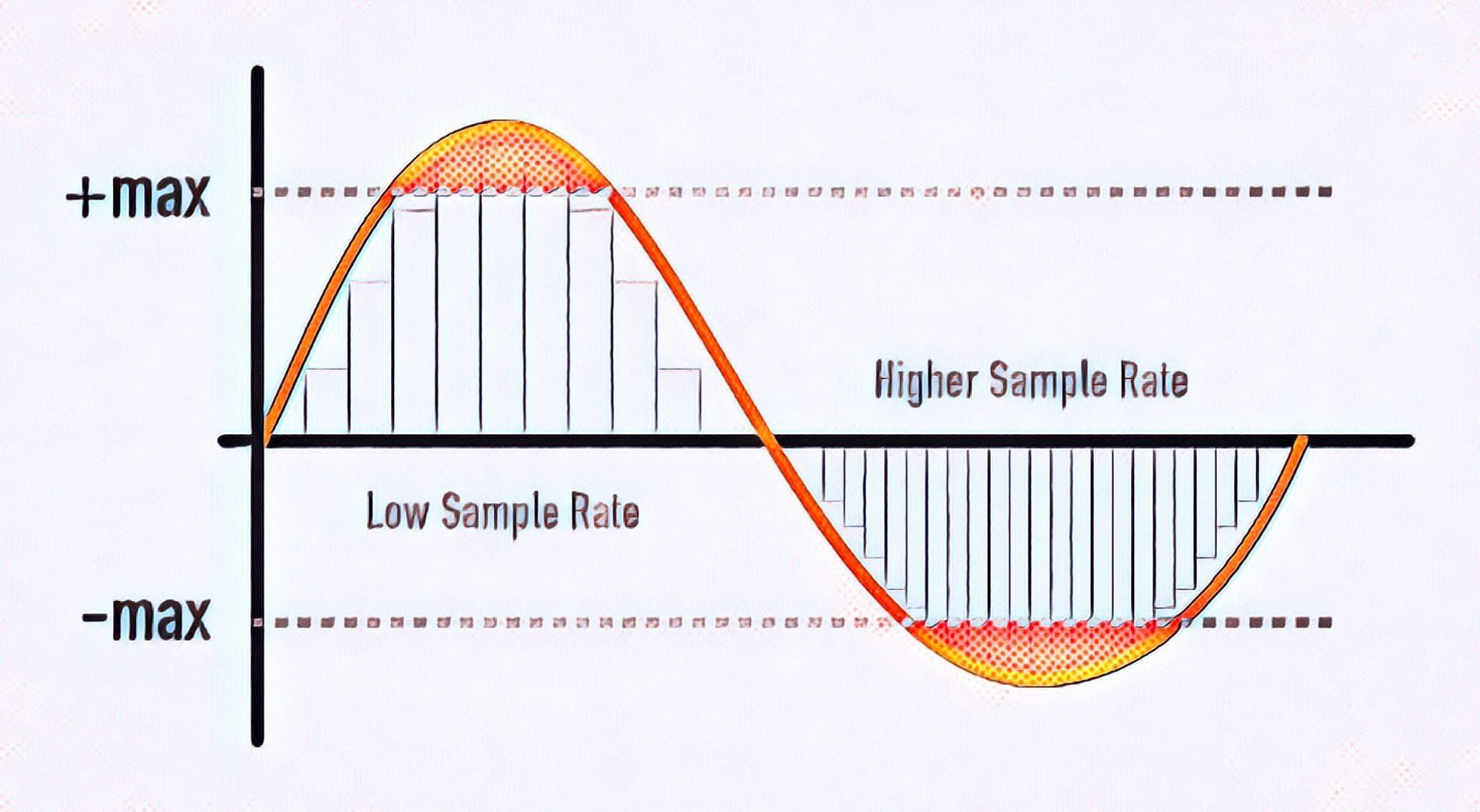
It is common to use “bits per second” (bps) as the unit, and the bit is the smallest unit represented by 0 and 1 in digital (binary).
Defined as the number of bits passed (that is, transferred) to a virtual or physical point on a data transfer path per second, commonly used in digital communication devices such as modems, routers, Serial ATA cables, and LANs.
It is also used to indicate how much information the compressed video and audio data is represented per second, and how much data the communication line can send and receive per second.
In general, increasing the bit rate improves picture and sound quality, but increases file size, and decreasing the bit rate decreases file size but reduces image and sound quality. Also, if you are using a CPU with a slow processing speed or a hard disk with a slow rotational speed, if you play a video created at a high bit rate, the processing may not be in time and the frames will be lose.
Bit rate type (bps)
There are two types of bit rates: constant bit rate (CBR) and variable bit rate (VBR).
All constant bit rates assign the same bit rate everywhere. Set a high bit rate when you want all image files to be high quality, and set a low bit rate when you want to reduce the file size.
It always assigns the same bitrate, so you can easily predict the size of the resulting file. Therefore, it is recommended to use it when there is an upper limit for the file size after encoding or when you want to keep the data transfer rate constant.
Variable bitrate, on the other hand, automatically assigns a high bitrate to fast-moving scenes and a low bitrate to scenes that move little. Since the bit rate is assigned according to the scene, the file size can be reduced while the image quality is relatively high, but the final file size is difficult to predict.
Constant bit rate and variable bit rate
VBR can be divided into two types: s encoding (fixed quality) and 2-step encoding (average bit rate).
1-pass MPEG-2 encoding can shorten processing time for export by analyzing video and encoding while maintaining specified constant quality. However, it is difficult to predict the size of the finished file.
In 2-pass encoding, after analyzing the information from all video data in the 1st pass, the bit rate is assigned and encoded in the 2nd pass based on that information. Although the processing time is long because the processing is performed twice, it is possible to efficiently assign the bit rate, making it possible to create high-quality video. By specifying the average bitrate, you can roughly predict the size of the file.


