Digital sound and analog sound

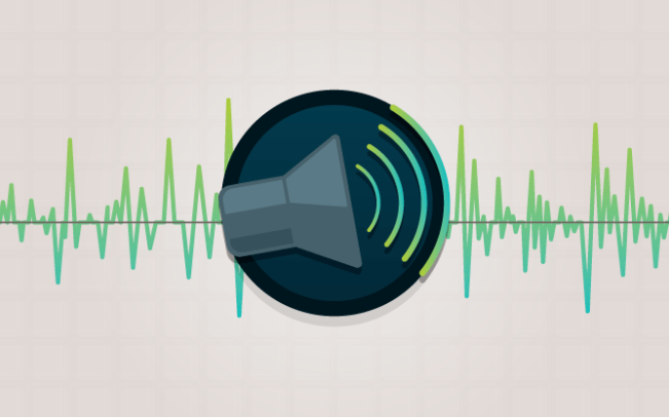
The “sound” can generally be expressed as a “waveform”.

Analog recording is used to store this “waveform” as it is. Since the original waveform is stored as is, the sound quality appears to be good, but the analog data deteriorates in the playback process and the noise is mixed. However, since digital data does not deteriorate much in the playback process, it can be reproduced closer to the original sound without noise.
Also, if you copy an analog recording, the original waveform will gradually collapse and the sound quality will deteriorate. On the other hand, digital recording is recorded by dividing this waveform into small pieces and quantizing them. This value does not change even if you copy it, so the sound quality will not deteriorate. It can also be easily imported to a personal computer for processing.
Digital sound quality can be expressed in “bits” and “kHz”. “Bit” is the pitch of the sound volume. Also, “kHz” is the number of times a second is divided into digital data, and the higher the value, the higher the sound quality.
The must-have PCM recorder for musicians
“Linear PCM Recorder”.
It’s no exaggeration to say that no jazz musician doesn’t. When I go to a jam session or a live concert, I see all the members take out their PCM recorder and set it up.
I think this was MD a while ago, but why did musicians switch to PCM recorders? The first reason is that it is possible to record “good sound”. Let’s take a look at the history of music recorders and high-quality sound.
The Sony “Walkman” is the first most portable recording device.
It was initially used as a play-only cassette player, but after a few years it was equipped with a recording function.
After that, the era of MD arrived, and soon MD recorders were developed, and the clear digital sound quality, albeit compressed, gave a new step to recording. And DAT (Digital Audio Tape) is also a major player in the history of recording. DAT is a tape medium that enables digital recording. Immediately, a recorder using DAT was launched and its high-quality sound was well received. However, due to a copyright issue, DAT disappears.
After that, in the recording market, IC recorders focused on language study, lesson recording and conference proceedings appeared, but music recorders that sought high sound quality were never made.
However, with the recent band boom and the increasing music population, the need for music recorders has increased. In response to that, the PCM recorder appeared and attracted a lot of attention.
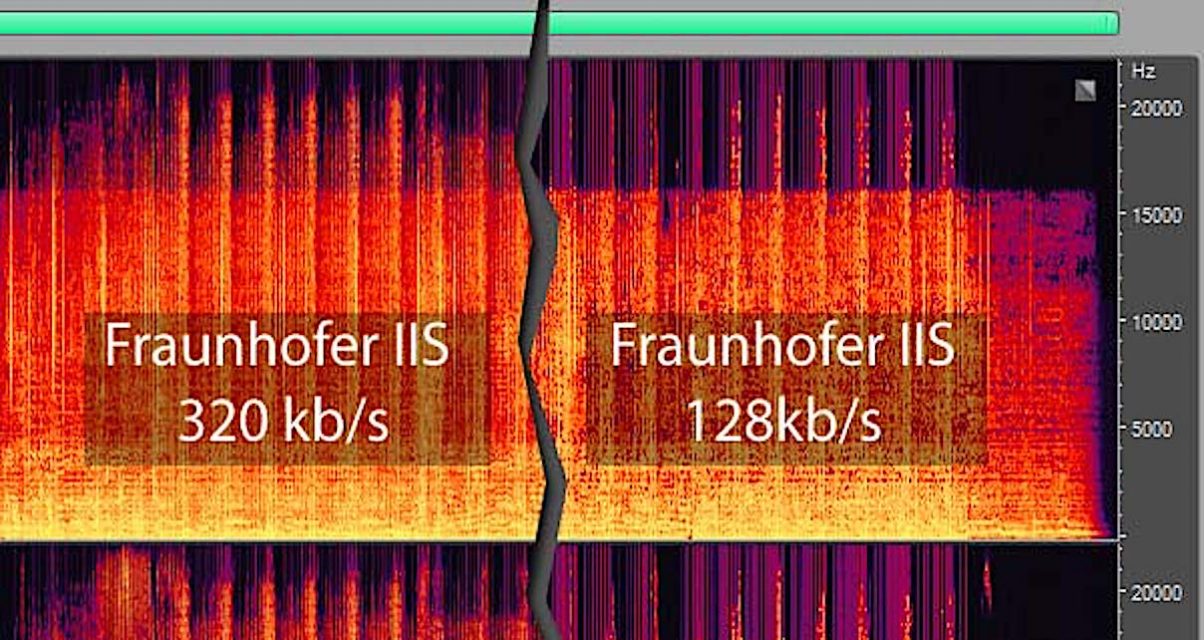
The biggest difference between a PCM recorder and a conventional recorder. It is in compression. Compression is the process of reducing capacity while preserving data content. In the past, most audio media was compressed and recorded. Sound quality deteriorated significantly due to compression, but there was a reason I kept using it.
This is because many semiconductor memories required for long-term recording were still expensive at the time.
However, in recent years, the price of semiconductor memory has fallen to the point that it can be kept at a reasonable price even if memory capacity is increased, leading to the birth of uncompressed linear PCM. By installing a high-capacity semiconductor, it was possible to record with good sound without compression.
24 bit / 96 kHz beyond CD
Some linear PCMs have a sound quality that exceeds that of a CD. That is the “24bit / 96kHz” format.
Of course, general CDs are not compressed. The format is “16 bit / 44 kHz”. What this means is that 16 bits for 44.1 kHz sampling, that is, 1 second is distinguished by 44,000 units, and from small to loud sounds in a unit of time it is a 16-bit gradation, that is, 56,000. It means that it is expressed in gradation. That is a CD.
On the other hand, there are several types of formats for linear PCM, but basically, the higher the sampling frequency and the higher the number of bits, the higher the sound quality and the better the sound can be recorded. It means that 96,000 times they can analyze sound more precisely than 44,000 times, and the analysis allows for more delicate expression of sound in 24-bit than 16-bit. Today, recorders with such amazing functionality have been marketed.