Bluetooth – the most convenient way to listen to music wirelessly.


Free Download Mp4Gain
picture

Bluetooth – the most convenient way to listen to music wirelessly.
Bluetooth

Bluetooth (Bluetooth) is believed to be the most familiar wireless song transmission method.
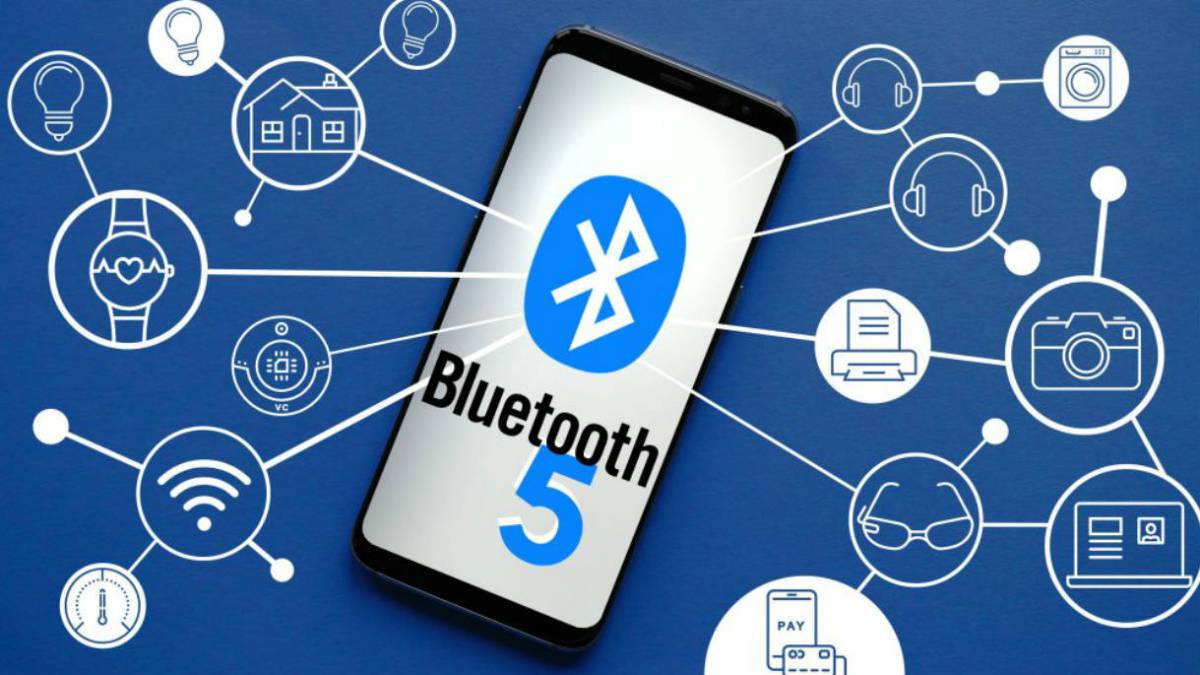
Bluetooth

Although it is quite convenient to connect, it is a bit inferior in terms of sound quality compared to AirPlay, Chromecast, DLNA, Play-Fi, and other technologies that use network methods to stream music. However, with the version upgrade and Bluetooth technology, different codes have been introduced so that this convenient and fast connection method can also provide better and better sound quality.

Chi
Bluetooth (Bluetooth) is believed to be the most familiar wireless way of streaming songs. Although the connection is quite convenient, the sound quality is slightly lower. However, with the version upgrade and Bluetooth technology, different codes have been introduced so that this convenient and fast connection method can also provide better and better sound quality.
Version 1.0 to 5.2: Reduce Power Consumption, Increase Bandwidth, and Increase Features
This technology was developed by the telecommunications company Ericsson in the 1990s. After almost 30 years of development, Bluetooth has undergone many version changes. Bluetooth uses a radio frequency of 2.4GHz, from the initial Bluetooth 1.0 with a slow speed of 723.1kbps, to Bluetooth 3.0, it has increased considerably to 24Mbps, which is enough to transmit more data and higher quality music; the later Bluetooth 4.0, 4.1, 4.2 are It is a very popular version with much improved functions. Among them, version 4.0 adds Bluetooth low energy technology, version 4.1 adds smart connection and supports connection of multiple devices, version 4.2 can connect to the Internet, and even the current Bluetooth-enabled devices are quite similar and part of them they still use Bluetooth version 4.x.

Bluetooth (Bluetooth) is believed to be the most familiar wireless way of streaming songs. Although the connection is quite convenient, the sound quality is slightly lower. However, with the version upgrade and Bluetooth technology, different codes have been introduced so that this convenient and fast connection method can also provide better and better sound quality.
The AVR-X2600H amplifier released by Denon in 2019 still uses Bluetooth version 4.1, which is sufficient to support two-way Bluetooth and other functions.
Other readings:
▸ [Evaluation] Denon AVR-X2600H: Decentralization of real flagship machine technology!
Bluetooth 1.0
The original version of Bluetooth had quite a few compatibility issues, and was prone to crashing when connecting and leaking data. The speed of the later version 1.2 was increased to 723.1kbps, and the transmission distance was only 10 meters.

Bluetooth 2.0
With the incorporation of “skip-free narrow-band channel” (skip-free narrow-band channel) technology, there is no need to exchange feedback signals with each Bluetooth-connected device, so Bluetooth signals and data can be stream to multiple devices.

Bluetooth 3.0
The data transmission speed increases up to 24 Mbps, which is 8 times that of Bluetooth 2.0, which is enough to transmit high-quality music signals. The current conventional Bluetooth transmission speed is probably at this level. In addition, the power control has been improved to significantly reduce power consumption when idle.

Bluetooth 4.0
Although the speed remains the same as in 3.0, the transmission distance has been greatly increased to 50 meters, or even up to 100 meters, and three modes of “Bluetooth Low Energy”, “Traditional Bluetooth” and “Bluetooth” have been incorporated. Of high speed”. 4.2 is the most popular version of Bluetooth.

Bluetooth 5.0
It supports indoor positioning and navigation functions, combined with Wi-Fi to achieve indoor positioning with an accuracy of less than 1 meter. It is possible to receive unmatched data such as advertisements, location information, etc., the transmission speed increases to 48 Mbps, and many underlying optimizations have been made for the Internet of Things.

Bluetooth 5.0, released in 2016, doubles the bandwidth to 48 Mbps and supports features like indoor navigation and positioning. The recently announced Bluetooth 5.2 in 2020 adds LE Audio technology, running on Bluetooth Low Energy, which allows headphones to connect to multiple audios, or multiple sets of headphones to connect to one audio, using the LC3 (Audio Codec). low complexity communication



Free Download Mp4Gain
picture


Mp4Gain Main Window
picture


Mp4Gain Features
picture


Free Download Mp4Gain
picture

How Bluetooth Headphones Work Part 3

How Bluetooth Headphones Work Part 3

aptX BlueTooth

What is aptX, the savior of Bluetooth sound quality

bluetooth aptx


Let’s take a look: if you compare a Bluetooth headset to a person, the Bluetooth chip is like your heart and aptX technology is like your eloquence. Whether the transmitted sound is smooth and clear, so that the listener can know what you mean is an important indicator.

With the chestnuts finished, let’s get back to the topic: What is aptX anyway? Now, let’s take a look at it from a technical point of view.

There is a word involved in Bluetooth transmission technology called “bit rate”, which is the number of bits transmitted per second, and the unit is bps (bits per second). In the case of transmitting the same audio file, the higher the bit rate, the faster the data transmission speed and the shorter the time required. There should be “chestnuts” here, like when Yao Ming was practicing, he had 100 basketballs at A, and he had to throw them into the basket at B. Under the premise of making all the shots, Yao Ming would take more basketballs each . (Bit rate) and the more basketballs (bit rate) you put in, the shorter the total time required.

But for Bluetooth technology, because it is limited by the maximum bandwidth available in transmission, it is not always suitable for transmitting high-quality audio.

For this reason, Bluetooth “guardian angel” -aptX technology was born. It recodes and decodes the audio to be transmitted, significantly reducing the bit rate, without affecting the sound quality and without the transmission delay, which makes the Bluetooth stereo listening experience a revolutionary leap. So with aptX, you can enjoy pure wireless audio with CD-level sound quality anytime, anywhere.

How Bluetooth Headphones Work Part 2

How Bluetooth Headphones Work Part 2

Bluetooth Aptx

Introduction to Common Abbreviations in English

aptX Bluetooth

NFC – Near field communication technology, Bluetooth headphones with this function can be quickly paired and connected by touching the playback device.

AAC: The technology provided by Dolby Laboratories is a high compression encoding algorithm. There is a lot of AAC audio in Apple Music and the sound quality is better than MP3 at the same bit rate. The iPhone will use AAC encoding for Bluetooth streaming. .

AptX – Qualcomm’s leading encoding technology, which is more efficient than traditional Bluetooth encoding and preserves more details in the sound. Most newer Android phones are equipped with AptX, but Bluetooth headsets must also be AptX-compatible to be effective.

LDAC – A Bluetooth transmission technology developed by Sony itself, which can transmit 3 times normal Bluetooth data and perform lossless music playback with Bluetooth, but only Sony devices support this technology.

Simply put, in terms of bit rate, AAC “AptX” LDAC. From the point of view of the audio source, if the player plays lossless music, the actual listening experience is AAC “AptX” LDAC, but since most users use network players such as NetEase Cloud or QQ Music, the source audio is mainly 128K. or 320K MP3, so there is no obvious difference in hearing between these encoding modes.

How to check if the phone supports aptx

Better to check the supported devices on the aptx official website.

APTX is a compressed streaming format that, while also lossy, can stream audio files with higher bit rates.

From a mobile phone point of view, APTX support requires mobile CPU support, but because this technology is paid, not all mobile phones have it. For example, Qualcomm Snapdragon 820 and 835 support APTX, but use Snapdragon 820. Mi 5 is Not Supported. Under normal circumstances, you can check for the APTX logo on the phone’s packaging:

Otherwise, you can call the after-sales consultation.

Of course, the safest way is to log into the APTX official website for inquiries. If submitting a link is not convenient for you, please use the official Baidu website. Go to the upper right corner of the official website and select Chinese, click Product search filter, the first is the brand, the brands in this list are compatible with aptx products (the list is sorted by English AZ , arranged vertically from left to right), the second One is the type of product: computers, mobile phones, headphones, speakers, etc. There are many types of products, the third is the aptx type, there are three types that are used in different fields. Please find your own brand and model of mobile phone, if it is not shown, it is not supported.

How Bluetooth Headphones Work

How Bluetooth Headphones Work

Bluetooth Headphones

The decoder chip of the mobile phone decodes music files such as MP3, generates a digital signal and sends it to the Bluetooth headphones via Bluetooth;

Bluetooth Headphones

The Bluetooth headset receives the digital signal and converts it to an analog signal that the human ear can understand through the digital-to-analog conversion chip inside the Bluetooth headset;

To amplify the analog signal, you must use the signal amplifier chip inside the earphone;

The headphone unit receives the amplified signal and makes a sound, and at this time, the ear hears the sound of music.

Do Bluetooth headphones ring?

However, the sound quality of Bluetooth headphones has long been criticized. The saying “Bluetooth headphones hear a sound” often circulates in the enthusiast circle. There are two main reasons for this:

When Bluetooth transmits audio data, it performs lossy compression on the audio, which loses sound quality;

Digital-to-analog conversion and amplification is done inside the Bluetooth headset. It’s hard to do both at the same time in such a small size, so for the sake of portability and price, sound quality is sacrificed even more.

The second point is the main reason. After understanding the principle of Bluetooth headphones, we know that for Bluetooth headphones to work properly, it is necessary to install batteries, Bluetooth modules, digital to analog conversion circuits, amplifier circuits, headphones. units, etc. in the headphone shell Series components, testing the manufacturer’s product design capabilities and comprehensive technical robustness. However, accomplishing this step only satisfied the need to “express”. If you want good sound, you should also tune in. This link should check the specific sound performance of the headphones with different materials, different diaphragms and different cables. In short, it is a more complicated process and the main R&D cost of the manufacturer.

Simply put, Bluetooth headphones are the product of compromise thinking, in order to get rid of the headphone cable shackles and reduce some of the sound quality. However, from today’s point of view, the sound quality of Bluetooth headphones made by traditional headphone manufacturers is generally better (of course, the price is also more expensive), which can meet the needs of most of users in terms of the appreciation of music, and the low-priced Bluetooth headphones produced by small manufacturers are in fact can only “hear” it.

How to improve the sound quality of your headphones

How to improve the sound quality of your headphones

headphones

Even with a weak sound card or average quality headphones, a significant improvement in sound quality is possible. In smartphones, as in computers, there is special software for this.

headphones

Before you start adjusting the sound settings, check the operation of the headphones themselves:

the cause of the malfunction can be the habitual contamination of the fine metallic mesh that covers the speakers, which can interfere with the passage of sound waves; in this case, you just need to clean it with alcohol;
If the fit is loose, the sound quality may deteriorate; try to move the position of the headphones and check if there has been any change;
check if both work or the sound is coming from a single earphone – the cable may be damaged;
If the veins are loose, a characteristic rustling may appear.
RECOMMENDATIONS:

How to set the equalizer correctly (for headphones)

How to make the sound from headphones louder: on the computer and the phone

Simple and effective ways to increase the bass in your headphones

Set up on a computer
To access the sound settings menu, in most versions of Windows, you must click in the lower left corner of the Start screen – Control Panel. In Windows 8, you need to move the cursor to the lower right corner, wait a few seconds and after the vertical menu appears, select Settings – Control Panel.

1 parametry

In the menu that opens, select the Sound icon.

To get started, double-click the Headphones line and after the window appears, go to the Levels tab, click the Balance button, and adjust the sound volume for each of the headphones.

On the Additional Features tab, check if the “Volume leveling” checkbox is checked. You can try changing the settings on the Advanced tab. Here you can change the bit depth, the frequency of the sound and immediately hear the changes by clicking the “Check” button.

The quality of the sound is highly dependent on the initial settings: for example, the echo will be heard if the effect is used “in the room”. When using headphones, it is worth connecting to surround sound; you may be more comfortable listening with a spatial sound effect.

Also note that if you connected headphones, for example, to the rear panel audio input and a different device is selected for this input in the driver settings, the sound will be distorted. Therefore, be sure to verify that the device is installed correctly.

Changing the equalizer settings
Even the simplest players, including standard Windows Media, have a built-in equalizer in which you can adjust the frequency range. To do this, you need to start the program and right-click on the menu Additional functions – Equalizer.

By experimenting with the engines in the window that opens or using a ready-to-use profile, you can choose the appropriate frequency to play a specific video or audio file. Note that your settings will be used only in this program, but will not affect the sounds played by other sources in any way.

The most popular VLC Player (you need to install it on your computer separately) has a large number of effects and filters. You can equalize the strength of the sound in it by going to Tools – Effects and Filters. Any of the equalizer settings, if desired, can be saved.

filter

To adjust the 10-band equalizer, you must first activate it by checking the box in the upper left corner of the panel (Audio Effects tab). Even if the original file is badly recorded, selecting settings, changing presets, adjusting bass in this program can significantly improve sound quality.
and

To improve the sound, you can download a special plug-in, for example, DFX Audio Enhancer. The program can significantly improve the frequency characteristics of the audio. The program will help and simulate a subwoofer, give a 3D effect, create a special atmosphere while listening, etc.

Set up the sound on your smartphone
They are different on each phone, but the principle is the same:

you can increase the volume in the Settings – Sound section; here you can increase the sound volume separately for the ringtone, alarm clock and multimedia files (video, music, games); more advanced phone models have noise cancellation modes;

The evolution of headphones

The evolution of headphones

Headphones

Headphones have become one of the most popular gadgets that accompany a modern person at home, at work, while playing sports or walking.

Sony Walkman headphones

Today we can see these devices everywhere: in subway cars, on passersby, in professional studios, on radio and television. The market offers thousands of models in a wide variety of modifications: wired and wireless, open and closed, dynamic and electrostatic. By design, the headphones are plug-in, on-ear, on-ear, and full-size. How did the evolution of headphones come about, in what year was the first prototype designed, who created the first model for listening to music, and what technologies are used in modern devices? You will find the answers to these questions in our article.

Early samples
The device for individual listening to sound was first patented in 1891. The device, then called a “bi-telephone”, looked like two interconnected receivers. Ezra Gilliland, an employee of Bella, proposed to fix a 3 kilogram structure on the head in the form of parts of a telephone and a metal rod (to facilitate the work of telephone operators). It was this decision that became the prototype for modern headphones. In the same 1891, the Frenchman Ernest Mercadier proposed his version of the headphones, which were much smaller and had rubber earplugs used for noise cancellation. Thomas Edison also did not stay away from the new trend: his version of the device was called the “kinetophone.” At the heart of this device was a medical stethoscope,

The beginning of mass use
Nathaniel Baldwin presented in 1910 the drawings of the first headphones with an upper arch instead of underneath. The device, which was intended to be used in the military, was twice as sensitive as existing analogs at the time and could be adjusted in height. In the 1920s, the CW-834 headphones were popular in the United States and were sold with a Western Electric radio. In the 30s, the device was actively used to listen to radio broadcasts. At the same time, by adapting well to speech, the device transmitted music in a very distorted form. Also, the design of headphones from those years remained poor, being too massive and uncomfortable for long-term use.

The appearance of models to listen to music
The first headphones suitable for listening to high-quality music were introduced to the market by the Swedish inventor Eugen Bayer. While still very young, he started a company that produced microphones, and in 1937 he proposed a largely revolutionary model of the Beyerdynamic DT 48 headphones. The product gained great popularity only in the mid-1950s: music lovers turned their attention to the device when its stereo version appeared … It is interesting that you can buy DT 48 in the original design and with the original technical characteristics even today.

John Koss Headphones
John Koss, who started his business with the rental of televisions, in the 60s of the last century, together with his partner Martin Lange, began to develop a portable vinyl player. In the context of the mass interest in music production, this project looked quite promising at the time. In order for the product to be radically different from the models offered by the competition, it was decided to equip it with headphones. It was possible to improve the sound of these devices with the help of spare parts for old televisions. The opportunity to hear the sound individually was received with optimism in the market. Headphones were no longer seen as an element of a communication system, but as a musical attribute. The first production model of the Koss & Lange company, the Koss SP-3, operated on the same principle as modern channel devices. The sound was sent to the ear canal, and not to the pinna. Thanks to this, a “presence effect” was created for the listener.

First open headphones
In 1968, Sennheiser came up with another revolutionary idea. A wide range of users were introduced to the world’s first model of Sennheiser HD 414 open-top headphones. Such a device allowed them to follow what was happening while listening to music. At the same time, the discs being played were partially audible to others. The technology, patented by the company, continues to generate revenue in the form of payments from manufacturers that produce open headphones. Subsequently, the Sennheiser brand has repeatedly offered innovative solutions in this area. So in 1977, the company released the world’s first Unipolar 2000 electret hearing aids, distinguished by their fast response and high detail

Bluetooth codecs

Bluetooth codecs

Bluetooth

Today, music playback over the Bluetooth protocol is gaining immense popularity.

Bluetooth

This function is not only integrated into all modern audio systems. This algorithm is based on the operation of portable speakers and most models of wireless headphones. At the same time, the sound quality in practice can vary greatly, and here is why. The secret lies in the use of one or the other codec (not to be confused with profiles) when transmitting the source sound to the playback device. What codecs are there and what properties are they endowed with, let’s find out.

BLUETOOTH CODES

SBC (SubBand Codec) is a codec that is present in all devices without exception and provides basic sound quality, at the level of compressed files of an average bit rate.
AAC (Advanced Audio Codec) is an encoding algorithm based on a complex mathematical model. In terms of sound quality, it beats the SBC, but falls short of the next. It is used massively in Apple technology, which is why today it is the most preferred option for transmitting audio over Bluetooth.
AptX is an algorithm developed by Qualcomm with a sound quality similar to that of a CD. The source signal is compressed in a 4: 1 ratio with a 352 kbps bit rate and a 16 bit / 44.1 kHz bit rate. The AptX LL (low latency) variant with reduced playback delays stands out.
AptX HD is a further development of the AptX algorithm with the ability to transmit a signal with 24-bit / 48 kHz parameters. At the same time, the bit rate increases to 576 kbps. By ear, the differences to plain AptX are palpable, and the higher the class of technique, the more obvious the advantage of AptX HD.
AptX Adaptive is a new version (introduced in 2018) of the AptX codec, the key feature of which is the ability to compress audio with variable bit rate (dynamic quality setting). This is necessary in an environment where there are many “competing” wireless signals. In this case, it is possible to increase the compression of the original data to preserve the stability of the connection and, in the presence of “free air”, the sound quality will be maximum.
LDAC is a Sony creation and one of the highest quality codecs. The bit rate reaches 990 kbps at 24 bit / 96 kHz. By ear, this results in clear and dynamic music reproduction, free of digital artifacts. With the release of Android 8.0 Oreo, the LDAC codec has become part of this operating system as Open Source, but its presence on a particular device depends on the manufacturer of the gadget.
HWA (Hi-Res Wireless Audio) is a competitor of LDAC proposed by Huawei. The technology is based on the LHDC codec, developed by the Chinese Savitech, with a bit rate of up to 900 kbps and a maximum stream parameter of 24 bit / 96 kHz. In terms of sound quality, HWA is similar to LDAC, but so far the latter has a larger number of supported devices.
UAT (Ultra Audio Transmission) is the latest development from Hiby with a maximum bit rate of 1.2 Mbps and transmission parameters of up to 24-bit / 192 kHz. Due to the increase in the volume of data transmitted, UAT requires Bluetooth version 4.2 or higher. In order for the technology to work, any compatible Android smartphone with the Hiby Music app installed and a suitable receiver can be used, for example a compact Hiby W5 Bluetooth receiver.
BT-UHD (Bluetooth Ultra High-Definition Audio) is the next-generation protocol designed for maximum fidelity in high-resolution audio recordings. The maximum bit rate is 2.3 Mbit / s. Implemented for the first time on the Huawei Kirin A1 microprocessor using Bluetooth 5.1.
LC3 is the latest audio codec in the Bluetooth LE Audio specification, theoretically capable of delivering better sound quality than standard SBC at half the bit rate. As stated by the developers of the Bluetooth SIG (Special Interest Group) consortium, devices with LC3 will receive increased operating time (by reducing power consumption) and the ability to transmit the signal to multiple receiving devices at the same time (Broadcast Audio). Support for enhanced sync (multi-stream audio) is also noted. According to experts, the LC3 codec will be more relevant in wireless headphones, where one of the most important indicators is the battery life.

Modification of the Bluetooth stack to improve the sound in headphones without AAC, aptX and LDAC codecs

Modification of the Bluetooth stack to improve the sound in headphones without AAC, aptX and LDAC codecs

Bluetooth

Some wireless headphone users notice poor sound quality and a lack of high frequencies when using the Bluetooth SBC standard codec, which is supported by all audio devices. A common recommendation for improving sound is to buy devices and headphones that support aptX and LDAC codecs. These codecs require license fees, so the devices that support them are more expensive.

Bluetooth

It turns out that the poor quality of the SBC is due to artificial limitations of the Bluetooth stacks and the headphone configuration, and this limitation can be avoided on any existing device by software changes on the smartphone or computer.

SBC codec
The SBC codec has many different parameters that are negotiated during the connection establishment phase. Among them:

Number and type of channels: Joint Stereo, Stereo, Dual Channel, Mono;
Number of frequency bands: 4 or 8;
Number of blocks in a pack: 4, 8, 12, 16;
Quantization Bit Allocation Algorithm: Loudness, SNR;
The maximum and minimum value of the group of bits used for quantization (group of bits): usually 2 to 53.

The decoder MUST support any combination of these parameters. The encoder may not do everything.
Existing Bluetooth stacks generally match the following profile: Stereo set, 8 bands, 16 blocks, Loudness, bitpool 2..53. This profile encodes 44.1 kHz audio at 328 kbps.
The bitpool parameter directly affects the bit rate within a profile: the higher it is, the higher the bit rate and therefore the quality.
However, the bitpool parameter is not tied to a specific profile; Other parameters also significantly affect the bit rate: the type of channels, the number of frequency bands, the number of blocks. You can increase the bitrate indirectly by agreeing on non-standard profiles without changing the bit group.

SBC bit rate calculation formula

For example, dual channel mode encodes channels separately using the full bit set for each channel. By forcing the device to use Dual Channel instead of Joint Stereo, we get almost double the bitrate with the same maximum bitpool value: 617 kbps.
In my opinion, the use of a non-profiled bitpool value in the negotiation stage is a flaw in the A2DP standard, which led to an artificial limitation of the SBC quality. It would be more prudent to agree on the bitrate rather than the bit group.

These fixed Bitpool and Bitrate values ​​originate from the table of recommended values ​​for high quality audio. But the recommendation is no reason to limit yourself to these values.

SBC Bluetooth Profile Table

The A2DP v1.2 specification, which was active from 2007 to 2015, requires all decoding devices to function properly with bit rates up to 512 kbps:

The SNK decoder shall support all possible values ​​of the bit combination that do not exceed the maximum bit rate. This profile limits the maximum bit rate available to 320 kb / s for mono and 512 kb / s for two-channel modes.

In the new version of the specification, there is no bit rate limitation. Modern headphones released after 2015 that support EDR are supposed to be able to support bit rates up to ≈730 kbps.

For whatever reason, the Bluetooth stacks I have tested for Linux (PulseAudio), Android, Blackberry, and macOS have artificial limits on the maximum value of the bitpool parameter, which directly affects the maximum bitrate. But this is not the biggest problem, almost all headphones also limit the maximum bitpool value to 53.
As I’ve already seen, most devices work fine on a modified Bluetooth stack with a 551 kbps bit rate, without any dropouts or crackles. But that bitrate would never be constant under normal circumstances, in normal Bluetooth stacks.

Modify the Bluetooth stack
Any Bluetooth stack that is compatible with the A2DP standard supports dual channel mode, but it cannot be activated from the interface.

Let’s add a switch to the interface! I made patches for Android 8.1 and Android 9 that add full dual channel support to the stack, add mode to the mode switch menu in developer tools, and treat dual channel SBCs as if they were an additional codec like aptX, AAC or LDAC (Android calls it HD Audio) by adding a check mark to the Bluetooth device settings.

Bluetooth problems Part 4

Bluetooth problems Part 4

Bluetooth

AptX is a popular marketing codec

Bluetooth

Often times, in a new market, it is not the one who came up with the best solution that becomes the leader, but the one who came up with their solution first. This was the Apt-X codec, which was developed by Professor Stephen Smith of Britain’s Queen’s University in the 1980s for fast transmission of high-quality sound to various laptops and generally for fast recording. high-quality audio. Subsequently, the rights to the then Apt-X were bought by CSR, which made the codec wireless in 2009 and renamed it AptX. Well, in 2015, Qualcomm bought this company, which now owns the rights to AptX and voluntarily sells it to everyone.

The main idea behind AptX is to offer audio CDs with almost original quality. In fact, we see a 4: 1 compression, that is, the bitrate was up to 352 kbps at 16 bits and 44.1 kHz. Therefore, we are not talking about “almost” here: the maximum lossless compression does not exceed 2: 1, so data is still lost when transmitting sound using AptX. But how strong? We will talk about this below.

Since AptX is a purely mathematical codec that always covers the entire audio range up to 22 kHz; it seems like it should be better compared to the SBC, which often turns off the high frequencies. In fact, sadly, this is not the case. The basic principle of this codec is quantization, that is, the allocation of a certain number of bits for each subband: for example, 8 bits are used to transmit sound from 0 to 5500 Hz, from 5500 to 11000 Hz – 4 bits, 11000 to 16500 Hz and 16500 to 22000 Hz are 2 bits.

Bluetooth problems Part 2

Bluetooth problems Part 2

Bluetooth

As a result, SBC starts to sound even worse in the context of more “advanced” codecs.

Bluetooth

However, there is an interesting point: it can sound even better than AptX HD with a bit rate of 576 kbps. How is that? It’s simple: as I wrote earlier, this codec can be scaled within a very wide range, and its theoretical maximum is just over 1.5 Mbit / s, that is, it can even pass CD Audio without compression! Of course, in fact, in our noisy 2.4 GHz band, that speed is only possible in dreams, and not all headphones support it. However, the vast majority of solutions on the market are capable of working with SBC at a bit rate of 400 to 600 Kbps.

As a result, this is enough for psychoacoustics to stop cutting off frequencies, and in theory SBC starts to introduce even less distortion into the sound than Qualcomm’s newer codecs (yes, AptX belongs to them). But here everything was spoiled by the drivers: neither in Windows, nor macOS, nor iOS, you can in any way change the standard bitrate of 328 kbps upwards. The so-called SBC HD with a higher bit rate is available only for Android with LineageOS custom firmware. So, as I said initially, SBC wasn’t “killed” by a bad implementation – it was killed by bad drivers, and this codec itself is very good.

In 2020, we still cannot hear stereo sound through Bluetooth when we use the headset microphone

I think many users have found that when answering a call with wireless headphones, the sound quality drops significantly. What happens is that the headphones go into headphone mode (HFP, Hands-Free Profile). In this mode, they can transmit sound from the microphone of the headphones to the smartphone, but the sound of the smartphone is output only in mono. Of course, this is enough for a conversation – you don’t need stereo for clear speech understanding. But in 2020, we are often used to talking and listening to music or playing at the same time, and in this case, obviously, flat mono sound with low quality spoils everything.

Therefore, if you want to listen to music in stereo and chat at the same time, you will have to use an external microphone (for example, a smartphone). In this case, the standard profile A2DP (Advanced Audio Distribution Profile) will be used with at least SBC (or other “full” codec). But, of course, you will not have freedom of movement. This limitation was logical in the early 2000s, when Bluetooth sound was in its infancy – headphones were used only for communication, and the weak processors in the headphones were simply not enough to simultaneously work with stereo sound and a microphone.

But in the modern world, where headphones support complex mathematical codecs, such as AAC or LDAC, with noise cancellation and other chips, it was quite possible to expand the A2DP profile to the ability to receive and transmit sound in stereo.