
Bluetooth codecs

Today, music playback over the Bluetooth protocol is gaining immense popularity.
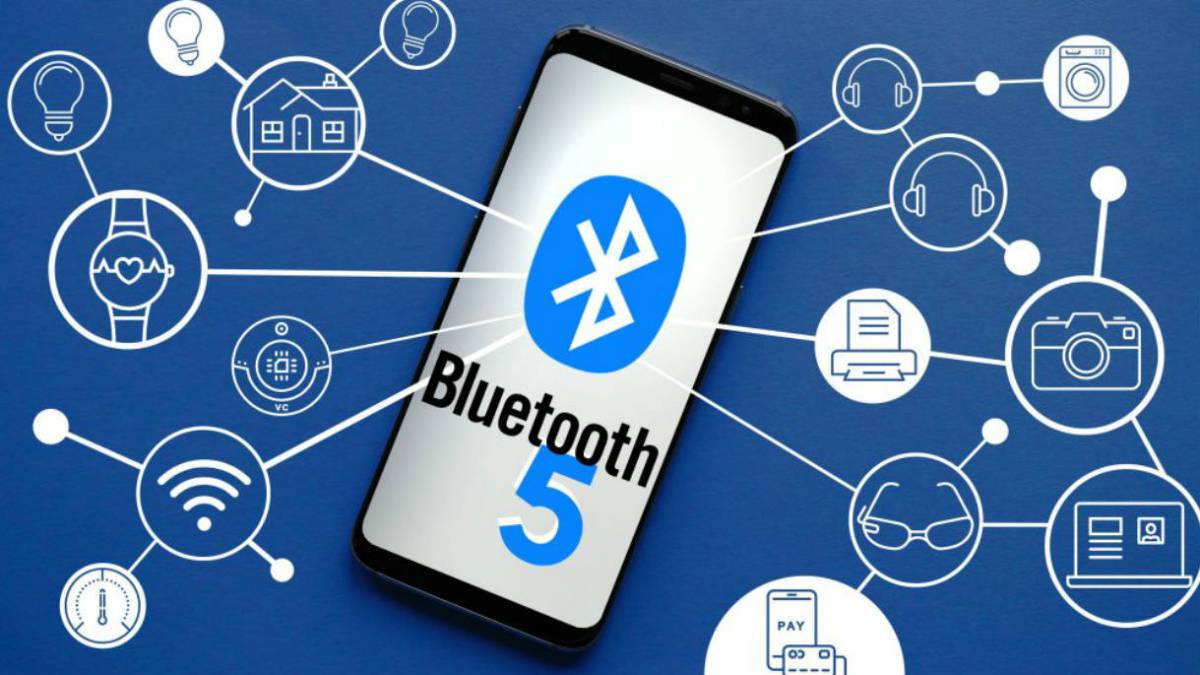
This function is not only integrated into all modern audio systems. This algorithm is based on the operation of portable speakers and most models of wireless headphones. At the same time, the sound quality in practice can vary greatly, and here is why. The secret lies in the use of one or the other codec (not to be confused with profiles) when transmitting the source sound to the playback device. What codecs are there and what properties are they endowed with, let’s find out.
BLUETOOTH CODES
SBC (SubBand Codec) is a codec that is present in all devices without exception and provides basic sound quality, at the level of compressed files of an average bit rate.
AAC (Advanced Audio Codec) is an encoding algorithm based on a complex mathematical model. In terms of sound quality, it beats the SBC, but falls short of the next. It is used massively in Apple technology, which is why today it is the most preferred option for transmitting audio over Bluetooth.
AptX is an algorithm developed by Qualcomm with a sound quality similar to that of a CD. The source signal is compressed in a 4: 1 ratio with a 352 kbps bit rate and a 16 bit / 44.1 kHz bit rate. The AptX LL (low latency) variant with reduced playback delays stands out.
AptX HD is a further development of the AptX algorithm with the ability to transmit a signal with 24-bit / 48 kHz parameters. At the same time, the bit rate increases to 576 kbps. By ear, the differences to plain AptX are palpable, and the higher the class of technique, the more obvious the advantage of AptX HD.
AptX Adaptive is a new version (introduced in 2018) of the AptX codec, the key feature of which is the ability to compress audio with variable bit rate (dynamic quality setting). This is necessary in an environment where there are many “competing” wireless signals. In this case, it is possible to increase the compression of the original data to preserve the stability of the connection and, in the presence of “free air”, the sound quality will be maximum.
LDAC is a Sony creation and one of the highest quality codecs. The bit rate reaches 990 kbps at 24 bit / 96 kHz. By ear, this results in clear and dynamic music reproduction, free of digital artifacts. With the release of Android 8.0 Oreo, the LDAC codec has become part of this operating system as Open Source, but its presence on a particular device depends on the manufacturer of the gadget.
HWA (Hi-Res Wireless Audio) is a competitor of LDAC proposed by Huawei. The technology is based on the LHDC codec, developed by the Chinese Savitech, with a bit rate of up to 900 kbps and a maximum stream parameter of 24 bit / 96 kHz. In terms of sound quality, HWA is similar to LDAC, but so far the latter has a larger number of supported devices.
UAT (Ultra Audio Transmission) is the latest development from Hiby with a maximum bit rate of 1.2 Mbps and transmission parameters of up to 24-bit / 192 kHz. Due to the increase in the volume of data transmitted, UAT requires Bluetooth version 4.2 or higher. In order for the technology to work, any compatible Android smartphone with the Hiby Music app installed and a suitable receiver can be used, for example a compact Hiby W5 Bluetooth receiver.
BT-UHD (Bluetooth Ultra High-Definition Audio) is the next-generation protocol designed for maximum fidelity in high-resolution audio recordings. The maximum bit rate is 2.3 Mbit / s. Implemented for the first time on the Huawei Kirin A1 microprocessor using Bluetooth 5.1.
LC3 is the latest audio codec in the Bluetooth LE Audio specification, theoretically capable of delivering better sound quality than standard SBC at half the bit rate. As stated by the developers of the Bluetooth SIG (Special Interest Group) consortium, devices with LC3 will receive increased operating time (by reducing power consumption) and the ability to transmit the signal to multiple receiving devices at the same time (Broadcast Audio). Support for enhanced sync (multi-stream audio) is also noted. According to experts, the LC3 codec will be more relevant in wireless headphones, where one of the most important indicators is the battery life.


