Spotify Audio Quality


Free Download Mp4Gain
picture

Spotify Audio Quality

Spotify Audio Quality


Spotify Audio Quality

What is Spotify?

Spotify is a music streaming app that lets you listen to all your favorite songs and artists. You can choose from millions of songs and create your own playlists!

What is Audio Quality?

Audio quality refers to how good the sound is when you listen to music. When you listen to music, you want it to sound clear and not fuzzy or scratchy.

How Does Spotify Audio Quality Work?

Spotify has different levels of audio quality that you can choose from. The better the quality, the clearer the music will sound.

What Are the Different Levels of Spotify Audio Quality?

Spotify has three different levels of audio quality:

  • Normal quality: This is the lowest quality level. The sound is compressed so that it takes up less space on your device, but it may not sound as clear as the other levels.
  • High quality: This is the middle level of quality. The sound is less compressed than normal quality, so it sounds clearer and better.
  • Very high quality: This is the highest quality level. The sound is not compressed at all, so it sounds the clearest and best.

How Do You Change Spotify Audio Quality?

You can change the audio quality on Spotify by going into the settings of the app. From there, you can choose which level of quality you want to use.

Why Does Spotify Audio Quality Matter?

Spotify audio quality matters because you want your music to sound the best it can. If the quality is not good, the music may sound fuzzy or scratchy, and you won’t be able to enjoy it as much.

Conclusion

In summary, Spotify audio quality is all about how good the music sounds when you listen to it. You can choose from different levels of quality depending on how clear you want the sound to be. It’s important to have good audio quality so that you can enjoy your music to the fullest!

And remember, if you want to make your music sound even better, you can use a tool called mp4gain to enhance the audio quality of your songs.

The Beginning of Spotify

In 2006, Spotify was founded in Stockholm, Sweden by Daniel Ek and Martin Lorentzon. The two had a vision to create a platform where people could access music legally and easily. They saw a gap in the market as piracy was rampant and music streaming services were few and far between.

Music Streaming Services

At the time, music streaming services like Napster, Pandora, and Last.fm were already available in the US, but they were not yet available in Europe. Napster had been shut down by a court order, and Pandora and Last.fm were only available in the US. This created an opportunity for Spotify to become the leading music streaming service in Europe.

The Launch of Spotify

After two years of development, Spotify launched in October 2008 in Sweden. The service quickly gained popularity in Sweden and became available in other European countries, such as Norway, Finland, the UK, France, and Spain. In 2011, Spotify launched in the US after securing deals with major record labels.

Spotify’s Features and Growth

Spotify’s Features

Spotify’s features include access to millions of songs, playlists, and podcasts. It also allows users to create and share their playlists, follow their favorite artists, and discover new music. Spotify also offers a premium subscription service that removes ads and allows offline playback.

Growth and Expansion

Spotify’s growth has been impressive over the years. In 2015, it reached 75 million users, and by 2020, it had over 320 million monthly active users. Spotify has expanded its services to over 90 countries, making it one of the most widely available music streaming services in the world.

Spotify’s Audio Quality

Audio Quality Options

Spotify offers three audio quality options: normal, high, and very high. The normal quality is 96 kbps, high quality is 160 kbps, and very high quality is 320 kbps. The audio quality of a song on Spotify depends on the user’s subscription level and their internet speed.

Competition and Comparison

Spotify’s audio quality has been compared to other music streaming services, such as Apple Music, Tidal, and Amazon Music. Each service has its own audio quality options and prices. Some audiophiles argue that Spotify’s audio quality is not as good as other services, but the average listener may not notice the difference.

Improvements in Audio Quality

In recent years, Spotify has made efforts to improve its audio quality. In 2021, it announced the rollout of a new audio quality feature called “HiFi.” This feature will allow users to listen to high-quality, lossless audio. Spotify has not yet announced when this feature will be available or how much it will cost.

Overall, Spotify has come a long way since its inception, and its audio quality is just one of the many features that have evolved over time.


Free Download Mp4Gain
picture


Mp4Gain Main Window
picture


Mp4Gain Features
picture


Free Download Mp4Gain
picture

The meanings of Hz and bit of sound sources

The meanings of Hz and bit of sound sources

Audio Frequency

The meanings of Hz and bit of high resolution sound sources are “how accurately a second was made” and “how accurately the pitch width and sound pressure of the sound were recorded.”

Audio Hz

We use Hz (hertz) and bit (bit) to represent music data.

When I started researching hi-res audio sources, I was wondering “what is Hz? What is bit?”, So I will write an article.

As I mentioned each time, this article was written by someone who is not familiar with audio as a memo.

Please be careful as you may have misunderstanding or misunderstanding.

In short, Hz is “whether to record the sound and how much a second” to represent the, bit is “What was finely recorded how much the width and pressure of the sound of the highs and lows of the sound” represents the increase.

What is Hz?
What is a bit?
High bit and high Hz sound sources are easier to deliver to consumers
abstract
Sponsorship

What is Hz?
Hz is a unit that expresses the sampling frequency (sampling frequency).

This is “how good a second is.”

If you make the digital clock display thinner, it will be “plugged in” and “smooth”.

If the digital display timer also shows up to 1/1000 of a second, it will display the time as if it were connected to the human eye.

Even if it can’t show the time between each number.

In the same way as this, when the “Hz = value of the precision with which the data is taken per second” becomes extremely fine, you can hear it as if you were connected and you can hear it with the so-called good sound.

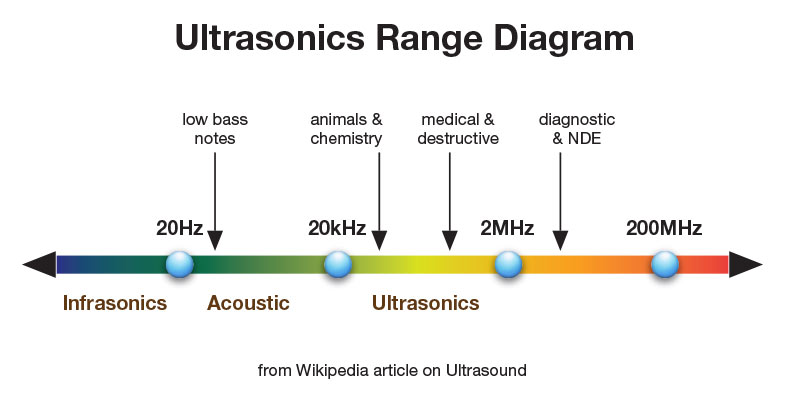
The sampling frequency of CDs is 44.1 kHz, and many high-resolution audio sources are sold at 96 kHz or 192 kHz.

“K” is the same as kg, which means 1000, so 44.1 kHz means 44100 Hz.

In other words, a 44.1 kHz CD is significant because it is divided into 44,100 pieces to express the sound for one second.

Since the high-resolution sound source is 96 kHz or 192 kHz, it means that the original sound is expressed in more detail than the CD.
(One second is divided into 96000 and 192000)

Therefore, it seems that high-resolution sound sources usually sound good.

High resolution sound source distribution site: e-onkyo music

What is a bit?
A bit is the smallest unit that a computer handles.

It may be difficult to understand when it comes to the smallest unit, but in Japan today, 1 yen is the smallest unit, and it is the same feeling that the price is not expressed in intervals of 1 yen or less. (In the case of daily life. Without considering actions or changes.)

There is no 1.3 yen and it looks like there is no 0.9 yen.

You can express 1 yen, 2 yen, 1096 yen, etc., and all prices are expressed in 1 yen intervals.

Therefore, in everyday life, 1 yen is the minimum unit for expressing price.

In the case of a computer, that “1 yen” is “1 bit”.

In terms of sound, the bit seems to correspond to the width of the tone and the sound pressure of the sound.

The difference according to the number of bits is, for example, when the sound in the world can be expressed only with the three numbers 10, 15, 17 and 20, and when there are 10, 13, 15, 17 and 20, the sound is more precise. Which one can you express? It is so.
(I think it’s correct, but it may be wrong …)

How small must the bit be to express the sound? it is.

If you can only express with 10, 15 and 20, there are some parts where you have to change the sound you want to express with 16 and 17 to “15!” Or 8 and 9 to “10!” First of all, if 16 or 17, 8 and 9 can be expressed as they are, it will be more faithful to the original sound.

It is better to be able to express 13.22222 with 13 instead of 14, and firstly, if you divide the decimal point as 13.2 into small pieces so that they are expressed as they are, it will be more faithful to the original sound.

This is why sound recorded with high bits has more depth and breadth, isn’t it? It seems .

Specifically, it appears that 16 bits are expressed in the fineness of 2 to the 16th power, and 24 bits are expressed in the fineness of 2 to the 24th power.

High bit and high Hz sound sources are easier to deliver to consumers
In the case of PC audio, the original sound is converted to digital data and saved on the PC, and then converted to analog again for listening.

The stream is original sound → digital data → analog.
(The flow is the same for CDs, but CDs contain data on CD, but in the case of PC audio, it is stored on the PC’s HDD or SSD.)

Until now, when putting the recorded sound on a CD, it seems that the part that would have little effect on the sound quality, but because it can be sold free of charge due to the spread of the Internet, was somewhat omitted to some extent. I mean, it looks like I tried to sell it without skipping it.