Spotify Audio Quality


Free Download Mp4Gain
picture

Spotify Audio Quality

Spotify Audio Quality


Spotify Audio Quality

What is Spotify?

Spotify is a music streaming app that lets you listen to all your favorite songs and artists. You can choose from millions of songs and create your own playlists!

What is Audio Quality?

Audio quality refers to how good the sound is when you listen to music. When you listen to music, you want it to sound clear and not fuzzy or scratchy.

How Does Spotify Audio Quality Work?

Spotify has different levels of audio quality that you can choose from. The better the quality, the clearer the music will sound.

What Are the Different Levels of Spotify Audio Quality?

Spotify has three different levels of audio quality:

  • Normal quality: This is the lowest quality level. The sound is compressed so that it takes up less space on your device, but it may not sound as clear as the other levels.
  • High quality: This is the middle level of quality. The sound is less compressed than normal quality, so it sounds clearer and better.
  • Very high quality: This is the highest quality level. The sound is not compressed at all, so it sounds the clearest and best.

How Do You Change Spotify Audio Quality?

You can change the audio quality on Spotify by going into the settings of the app. From there, you can choose which level of quality you want to use.

Why Does Spotify Audio Quality Matter?

Spotify audio quality matters because you want your music to sound the best it can. If the quality is not good, the music may sound fuzzy or scratchy, and you won’t be able to enjoy it as much.

Conclusion

In summary, Spotify audio quality is all about how good the music sounds when you listen to it. You can choose from different levels of quality depending on how clear you want the sound to be. It’s important to have good audio quality so that you can enjoy your music to the fullest!

And remember, if you want to make your music sound even better, you can use a tool called mp4gain to enhance the audio quality of your songs.

The Beginning of Spotify

In 2006, Spotify was founded in Stockholm, Sweden by Daniel Ek and Martin Lorentzon. The two had a vision to create a platform where people could access music legally and easily. They saw a gap in the market as piracy was rampant and music streaming services were few and far between.

Music Streaming Services

At the time, music streaming services like Napster, Pandora, and Last.fm were already available in the US, but they were not yet available in Europe. Napster had been shut down by a court order, and Pandora and Last.fm were only available in the US. This created an opportunity for Spotify to become the leading music streaming service in Europe.

The Launch of Spotify

After two years of development, Spotify launched in October 2008 in Sweden. The service quickly gained popularity in Sweden and became available in other European countries, such as Norway, Finland, the UK, France, and Spain. In 2011, Spotify launched in the US after securing deals with major record labels.

Spotify’s Features and Growth

Spotify’s Features

Spotify’s features include access to millions of songs, playlists, and podcasts. It also allows users to create and share their playlists, follow their favorite artists, and discover new music. Spotify also offers a premium subscription service that removes ads and allows offline playback.

Growth and Expansion

Spotify’s growth has been impressive over the years. In 2015, it reached 75 million users, and by 2020, it had over 320 million monthly active users. Spotify has expanded its services to over 90 countries, making it one of the most widely available music streaming services in the world.

Spotify’s Audio Quality

Audio Quality Options

Spotify offers three audio quality options: normal, high, and very high. The normal quality is 96 kbps, high quality is 160 kbps, and very high quality is 320 kbps. The audio quality of a song on Spotify depends on the user’s subscription level and their internet speed.

Competition and Comparison

Spotify’s audio quality has been compared to other music streaming services, such as Apple Music, Tidal, and Amazon Music. Each service has its own audio quality options and prices. Some audiophiles argue that Spotify’s audio quality is not as good as other services, but the average listener may not notice the difference.

Improvements in Audio Quality

In recent years, Spotify has made efforts to improve its audio quality. In 2021, it announced the rollout of a new audio quality feature called “HiFi.” This feature will allow users to listen to high-quality, lossless audio. Spotify has not yet announced when this feature will be available or how much it will cost.

Overall, Spotify has come a long way since its inception, and its audio quality is just one of the many features that have evolved over time.


Free Download Mp4Gain
picture


Mp4Gain Main Window
picture


Mp4Gain Features
picture


Free Download Mp4Gain
picture

Can you notice the difference between a high resolution audio source and a CD?

Can you notice the difference between a high resolution audio source and a CD?

Hi-Res Audio

· Hard to distinguish with human ears from
Made, it is so difficult to distinguish with human ears that there are statistics that most people do not understand the difference between high resolution audio sources and CDs.

Higher Resolution Audio

The reason is that it depends on the sound range that humans can listen, and the CD itself is already done at 20 kHz or less, which is inaudible to human ears.

The largest point of sale of high resolution audio sources is that they can record and reproduce high resolution audio that far exceeds 20 kHz, but since it is an “inaudible” range first, the number of people who can Benefit from high-resolution of audio sources can be very limited. ..

High resolution can enjoy the atmosphere of a live concert or a concert hall
· High resolution audio removal / compression minimizes.
The greatest difference between high resolution audio and the CD is the “deletion / compression of sound”. The CD eliminates and compresses the unnecessary sounds so that everyone can hear the sounds recorded on average.

On the other hand, high resolution has minimal sound elimination and compression, so you can experience a three-dimensional sound quality close to the original sound recorded in a live performance or a concert hall.

It is high resolution that you can enjoy the feeling of presence and atmosphere instead of sound tone.

High resolution is recommended for people who want to enjoy immersive music!
It is difficult to understand the difference between a high resolution audio source and a CD, but it is very important to be able to experience the “closeness to the original sound” which is a high resolution audio feature. If you want to enjoy immersive music as if you were in a live place, why not test Hi-Res?

Can you notice the difference between high resolution and CD?

Can you notice the difference between high resolution and CD?

Hi Res Audio

High resolution is a hot topic due to its good sound quality, but can you distinguish between high resolution and cd? Here, we will present the difference between high resolution and CD.

Hi-Res

1. What is high resolution? What is different from a CD?
─ 1-1 High resolution can reproduce a more delicate and three-dimensional sound
─ 1-2 is a bit difficult to hear the difference between high resolution and CD
2. What is needed to admit high resolution?
─ 2-1 five elements needed to listen high resolution audio sources
3. Can you distinguish high resolution audio sources from the CDs?
─ 3-1 difficult to distinguish with the human ear
4. High resolution gives you a feeling of air like a live concert or a concert hall
─ 4-1 High resolution minimizes removal / compression of sound
What is high resolution? What is different from a CD?

· High resolution is an abbreviation of “high resolution” and translates as high resolution, which can reproduce a more delicate and three-dimensional sound. It is easy to understand if you imagine the number of pixels of the camera. If the number of pixels is large, it is possible to represent even finer parts, so the sound source can also reproduce a more delicate and three-dimensional sound.

Example]
500 000 pixels ⇒ CD sound source
10 million pixels ⇒ High resolution sound source

· It is a bit difficult to hear the difference between high resolution and CD
Sound that was extracted or compressed on a CD is reproduced as in high resolution it seems that it costs a little to notice the difference because it enters a delicate area.

What is necessary for high-resolution support?
· Five elements needed to listen to high audio sources
Resolution To listen to high resolution audio sources, it is necessary to prepare elements compatible with high resolution. All you need are the following elements. Headphones are mainly used when listening high resolution on a smartphone. You can enjoy the direct feeling surrounded by more detailed sounds.

1. Speaker
2. Headphones 3.
USB-DAC.
4. Amplifier
5. Cable.

Do you understand the difference between a high resolution audio source and a CD?

Do you understand the difference between a high resolution audio source and a CD?

Hi-Res Audio

It is said that the “high resolution” has a sound quality higher than that of the CDs. In recent years, not only audiophiles but also many of you may be familiar with him.

Hi Res Audio

High resolution has more information than the sound sources of CD and sound sources such as AAC / MP3, and it is said to have a sound quality closest to “original sound”. The feature is that you can realistically reproduce the details of the sound, such as the breath of the voices and the sensation of air in the sound.

Headphones and music players have also introduced products that support high resolution playback one after another, which makes it easy for anyone to listen to high resolution audio. However, when I really hear it, the difference is very delicate.

If you listen to it as “this is a high resolution sound source,” you will feel that it is a “good sound”, but can you notice the “difference in sound” when you listen to it without knowing anything?

Verification of whether people selling high resolution teams can understand the “high resolution sound”
Then, I actually tried to verify if I can distinguish between a high resolution sound source and a non-high resolution sound source.

It was Radius, which manufactures and sells high resolution equipment, who cooperated in a project that can be said that it is contraindicated for audio manufacturers, such as listening and comparing high resolution audio sources.

Mr. HOTTA from the sales department assumed the challenge. They have spoken to me before the high resolution on AppBank!

Of course, if you sell high resolution audio equipment, should you understand the “difference in sound” …?

MP3 or AAC to encode high resolution sound source

MP3 or AAC to encode high resolution sound source

Hi-Res Digital Audio

As I introduced on my blog last time, I introduced an MP3 encoder in VinylStudio, so if you want to encode a hi-res (hi-res) sound source, compare the correlation coefficient sound quality to see which one is better, MP3 or AAC, which is a lossy compression format.

DIGITAL HI-RES AUDIO

1 About MP3 and AAC
2 About high resolution (high resolution) sound source to encode
3 MP3 and AAC specifications after encoding
4 Analysis/evaluation by frequency analysis and correlation coefficient
5 Graph and evaluation of the correlation coefficient

About MP3 and AAC
Various information about whether MP3 is good or AAC is good such as the sound quality of lossy compression encoders have been introduced on the net. Among them, “MP3 vs AAC Sound Quality Comparison” (URL: http://kobo-aok. jp) I quoted the data of bitrate and upper limit frequency (high cutoff frequency) from ) and made a graphic.

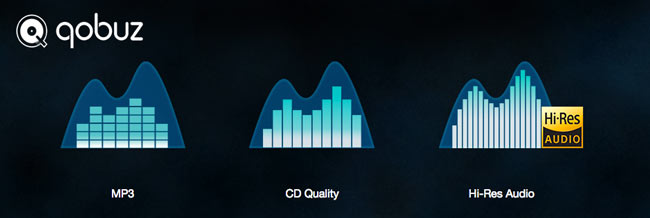
Conceptually, the higher the bitrate, the higher the upper frequency limit and the higher the sound quality. On the other hand, file size increases with bitrate. Looking at this graph, 160kbps is the limit between MP3 and AAC sound quality, and MP3 is higher than 160kbps, and AAC is higher than 160kbps, so it shows that the sound quality is higher.

About Hi-Res (Hi-Res) sound source for encoding
Recorded in 1966 for the LONDON label, conducted by Bernstein Mozart Piano Concerto No. 15 in B flat major, K.450, 2nd movement, in which Bernstein himself plays piano with the Vienna Philharmonic.

Bernstein’s piano playing is so good that he can be mistaken for a pianist, especially in the second movement.

This album was recorded with FLAC on Vinyl Studio at a sample rate of 96khz and a bit depth of 24bit.

Difference Between Hi-Res and MP3

Difference Between Hi-Res and MP3

Hir-Res vs Mp3

When I tried to listen to Hi-Res (lossless) and MP3 on a site called “TIDAL”, only 2 out of 5 questions were correct…

Hi-res Audio vs Mp3

It was quite shocking to make a mistake on the James Blake song. ..

* It is written that it is not possible to distinguish between PC speaker output and cheap headphones, so please try a good quality sound card or headphones.
To test you need to connect your audio system via Airplay or DAC or use good headphones. The test will not give accurate results through the computer’s built-in speakers or through low-quality headphones.

There are 5 songs in total. After each song is loaded, press A and B to listen and compare. When you’re done listening, select the one you think is lossless (when you select it, playback will start over) and press the “THIS IS HIFI” button below. Go to the next song and repeat, and when you finish the fifth song, the answer page will be displayed.

What is the best format?

The answer is hi-res when it comes to which is better, hi-res (lossless) sound source or compressed sound source (MP3/AAC, etc.). But I think 320kbps MP3s are enough.

The problem with Hi-Res Audio sources is capacity, about 50MB for WAV (CD format) for about 5 minute songs, and about 35MB for FLAC. But a 320k MP3 will shrink to about 10MB. It’s only 3.5 times (WAV is 5 times), but 3.5 times, FLAC consumes 350MB for 10 songs, 35GB for 1000 songs and 350GB for 10000 songs! This puts a heavy load on the internal HDD and external HDD. Also, the smaller the capacity, the faster the transfer to the portable music player.

The number of portable music players stored is just 3.5 times higher with MP3, but I don’t think it is necessary to put a lot of songs in the portable music player (500 songs is enough). I can’t listen to it even though it carries thousands of songs, and I feel that the style of listening to the seasonal songs at that time is a better way to listen. It’s the same as the idea of ​​doing.
So I’d like to have 32GB for hi-res portable music players, and if it’s 128GB or half the capacity, I’d like them to put up to 1TB of storage capacity that beats the iPod Classic (320GB) (can be big). from).

It is not the case that MP3s are chosen for capacity alone. Capacity is a functional issue, and the number one reason I feel good about MP3s is limited to “differences in sound quality”. As with the previous test, few people can usually tell the difference between high resolution and compression.

Convert a vinyl record to HiRes

Convert a vinyl record to HiRes

Vinyl Record

In modern terms, it is a digital archive of analog records. .. (bitter smile)
If you burn an analog disc with the same settings but different sample rates and bit depths, you can achieve “almost the same sound source”, “same device settings” and “different formats”, so I tried it.
I mean, half the reason I bought a used FA-66 was “record dubbing,” so I experienced that a long time ago. (Hahaha)

Vinyl Vs. Digital

From this moment on, we are in the world of
“individual opinions”
“there are individual differences in how we feel the effects” and
“compared to our company”
.
(Since we haven’t confirmed the similarity between various devices, please speak half-heartedly.)

I certainly felt the difference in sound when I changed the sample rate, but I felt the difference when I changed the bit depth was greater than that.
In words, raising the sample rate made it feel smooth and courteous, and lowering it made it sound punchier and thicker.
The 24-bit bit depth is more realistic and I felt the sense of location and space became clearer.

By the way, when dubbing analog records, I feel like I prefer 48kHz/24bit to the higher spec of 192kHz/24bit.
So today, in analog record archiving (for playback purposes on NW players, etc.), the recording is done at 48kHz/24bit, and the level is not altered and is saved only by adjusting the read in/out.
In order to be put on a CD, it is recorded at 44.1 kHz/24 bits, and after adjusting the level, etc., it is converted to 16 bits.

In any case, the flavor is different from the “Oh! Weird” feeling you get when you switch from the CD version of the same song on sale to the hi-res version, and the difference is very small.

The
44.1 kHz/16-bit PCM has a signal frequency of up to 22 kHz and a dynamic range of 96 dB.
96kHz/24bit PCM has a signal frequency of 48kHz and a dynamic range of 144dB.
On the other hand, human hearing varies greatly from person to person, but the frequency is said to be up to about 20 kHz (for young people only) and the dynamic range is up to about 120 dB (20-bit equivalent) (superhuman level ) .
If you just think it has performance at first glance, it is normal for people not to feel the difference whether it is hi-res or CD in the direction of frequency characteristics, but since the dynamic range has the ability to exceed 16 bits , is is 16 bit You can feel the difference between 24 bit.

Note 1
It seems that there are times when you dare to limit yourself to the conversion without manipulating the sound.
There are also little “habits” that depend on the format conversion tool (converter, encoder), so I heard from the engineers that it is quite difficult to select only that.