
Psychoacoustics is the study of a person’s subjective perception of sounds. Today, it is used in computer engineering, acoustic engineering, education, medicine, marketing and, of course, it is used in music.

Musicians try to create a new acoustic atmosphere by distancing themselves from real sound perception, while scientists and engineers emphasize the features of auditory perception and truly audible components for analyzing and designing acoustic instruments and equipment.
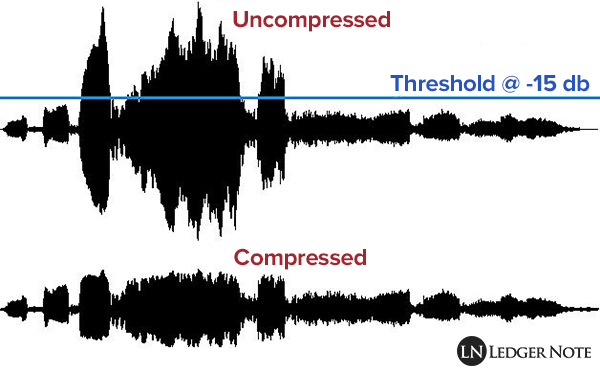
Sound is made up of pressure waves propagating through the air, but how are these waves received and converted into thoughts in our brains? In fact, what we hear depends not only on the physiological properties associated with ear formation, but also has psychological consequences. In the psychoacoustic model, dismissal and insignificance are the two “key” concepts that describe the reasons why a certain amount of audio data is considered insignificant, that is, they can be removed without compromising sound quality.
There is a threshold beyond which the human ear does not perceive the frequency of sound, sounds exceeding this threshold create a release effect. Obviously, trained ears will tend to perceive more complex sounds and higher frequencies.
This makes the redundancy threshold a subjective point of reference within certain limits, which means that a certain redundancy effect will have to be maintained in order to guarantee quality sound, so digital information inevitably exists. Once a high-quality redundancy threshold is set, it will be possible to remove frequencies and sound waves above this threshold, and sound perception will not change. When released, a number of sound elements remain important in reproducing the complexity of the sound and are beneficial to perception and quality, but non-compliance is a more radical criterion for sound units that are completely invisible and therefore useless and completely removable.
In practice, this simplifies the process of recording and storing sound. Lost audio compression is based on redundancy and non-compliance criteria, allowing you to remove most audio signals without compromising audio quality.
Unreasonable compression is based on the fact that, depending on the context of the sound, the same sound element may become very appropriate or may be completely ignored. For example, if a cell phone rings in the church during a silent prayer, those involved will clearly perceive the sound, and at the disco the same sound will be confused with the main context of the sound.
As a result, L ‘psychoacoustic analysis makes it possible to drastically reduce a high-quality file (10 or 12 times smaller) and therefore compressions, which significantly reduce the quality. These cuts are typical of MP3s. Thus, the psychoacoustic model shows that low-frequency waves are not noticeable in high-frequency waves because they are covered by higher-intensity waves.
This effect, called masking, tends to focus more on certain sounds depending on the context, and is based on the ear’s ability to adapt to background noise. In addition, there is a special masking associated with the reception time of low and high frequency sounds. Although a low-frequency sound is obtained, if it is immediately followed by a high-frequency sound, the first sound will be canceled by the second sound, so this effect is called reverse masking.
In contrast, masking forward features the elimination of low-frequency sound after high-frequency sound. The difference between the first two MPEG formats (Moving Picture Esperts Group: International Audio and Video Coding Code) and the MP3 format is based on these two masking effects.
In fact, in early MPEG formats, only frequency masking (1 audio and 2 audio layers) was taken into account, while MP3 also takes into account the third level of forward and backward masking (3 audio levels). The peculiarity of the MP3 model there is that it is the most perfect way to remove sound. From the initial recording, it extracts sounds and frequencies, extracting tones and time to eliminate unnecessary.


