
How is the audio compressed?
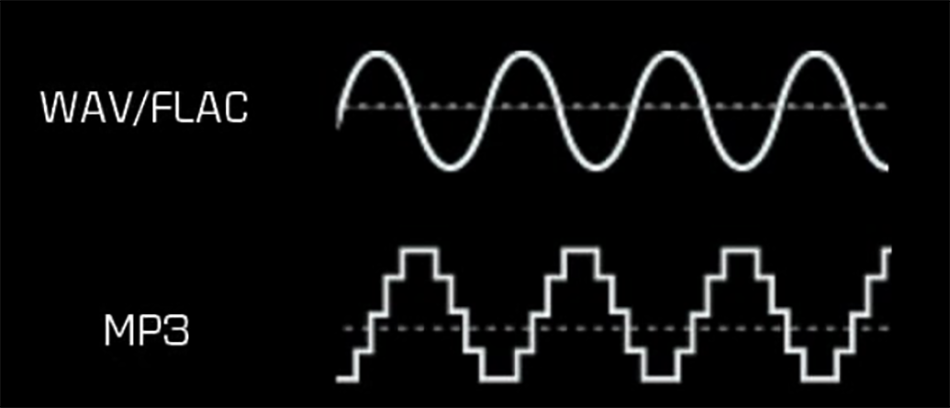
How was it achieved that the mp3 occupies much less disk space?
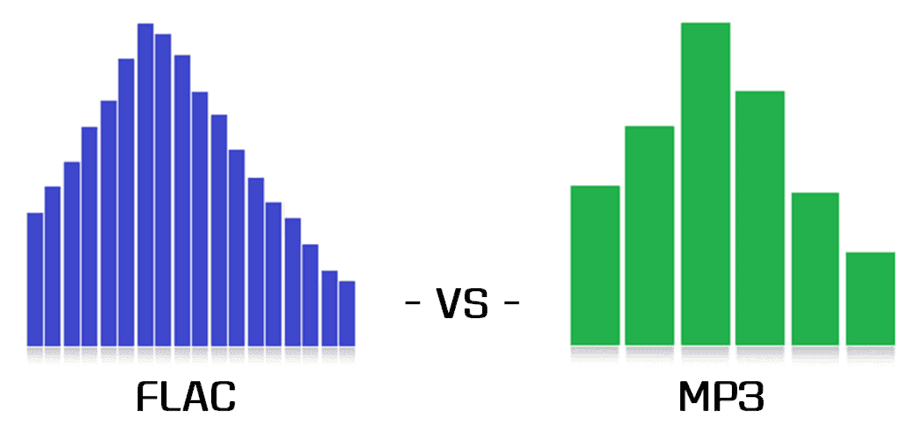
We explained in a previous article that when talking about quality in audio files (wav, flac, ogg, mp3, etc) we must be careful, because we are not interested in a neutral “quality”, but one that is related to human hatred.
For example, if we only talk about dry quality, we could think that a file that detects and saves all the frequencies has better quality.
But if we refer specifically to the human ear, then we would not be interested in it being able to detect and store frequencies that the human ear cannot hear. It would be useless and unusable and would only take up space on the hard drive.
Some animals can hear frequencies that the human ear cannot and it is useless for us as humans to have a format that can store those frequencies and, as we said, it is just a waste of space.
Therefore, when talking about quality and formats, we must avoid falling into the situation of talking about audio at a neutral level.
Because it becomes a sterile and quite fundamentalist discussion.
In that sense, the information that necessarily in FLAC format (any lossless format) necessarily has better quality than an mp3 that has a high bitrate and a samplerate of at least 44100, is inaccurate.
In general terms, it will be enough for an mnp3 to have 192 kbps and 44100 so that not even people with auditory training can distinguish the difference.
There are people who only rely on data they read, or who are audio fundamentalists, who as if it were a religious belief, definitely assert that lossless formats are superior to mp3 and that is not so true.
Perhaps if we use specific software we can see that those lossless files captured frequencies that the mp3 did not capture, but that is something that we will see in that software but we will hardly hear it and in the end the audio is to be heard.
In a following article we will continue with the topic.

