Methods used to compress digital audio.


Free Download Mp4Gain
picture

Methods used to compress digital audio.
Audio Encoding

Information compression methods when working with sound.

Audio Encoding

The larger the memory capacity of the WT card, the more realistic the sound will be (as more samples are stored in memory, they are recorded at a higher resolution). The General MIDI standard describes more than 200 instruments; To store your sound samples (tables), at least 8 MB of memory is required (at least 20 KB for each sample).

Known WF (Wave Form) method of sound generation, based on the transformation of sounds into complex mathematical formulas and the subsequent application of these formulas to control a powerful processor in order to reproduce the sound; from WF synthesis expect an even better reality (relative to FM and WT technologies) of musical instruments playing with limited volumes of sound files.

To reduce data flow, other analog (non-PCM) encoding methods are used. For example, a coding technique based on known characteristics of an analog signal is known to significantly reduce the amount of data stored; with the so-called -The encoding of the analog signal is converted into a digital code determined by the logarithm of the magnitude of the signal (and not by its linear transformation). The disadvantage of this method is the need to have a priori information about the characteristics of the original signal.

Conversion methods are known that do not require a priori information about the original signal. When differential pulse code modulation (DPCM, Differential Pulse Code Modulation) persists single signal difference between current and previous levels (the difference requires a digital representation of fewer bits than the full amplitude value). With delta modulation (DM, delta modulation), each sample consists of a single bit, which determines the sign of the change in the original signal (increase or decrease); Delta modulation requires a higher sample rate. Differential PCM technologies involve the accumulation of errors over time, so special measures are taken to periodically calibrate the ADC.

The most common when recording received audio is adaptive pulse code modulation (ADPCM, Adaptive Pulse Code Modulation), using 8- or 4-bit coding for the difference signals. The technology was first applied by Creative Labs and provides data compression up to 4: 1.

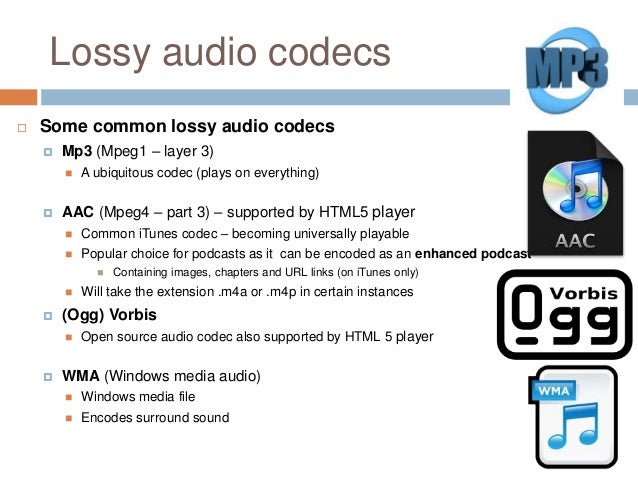
However, other audio information compression / decompression methods (software) are often used; Among them, the most popular lately is the MP3 format developed by Fraunhofer IIS (Fraunhofer Institute Integrierte Schaltungen, www.iis.fhg.de) and by THOMSON (the full specification of the MP3 format is published on the website www.mp3tech.org ). The full name of the MP3 standard sounds like MPEG-Audio Layer-3 (where MPEG is the essence of the Moving Picture Expert Group, not to be confused with the MPEG-3 standard designed for use in high definition television).

MP3 encoding of data occurs through the allocation of independent independent data blocks: frames. To do this, the original signal during encoding is divided into equal length parts, called frames, and encoded separately (to further reduce the amount of data, compression is applied using the Huffman algorithm); When decoding, the signal is formed from a sequence of decoded frames. The encoding process takes a significant amount of time; decoding (during playback) is done on the fly.

The MP3 format provides the best sound quality with the smallest file size. This is achieved by taking into account the peculiarities of human hearing, including the effect of masking a weak signal from one frequency range with a stronger signal from an adjacent range (when it occurs) or a strong signal from the previous frame, causing a temporary decrease in the ear’s sensitivity to the signal of the current frame (in other words, minor sounds are eliminated, which are not heard by the human ear due to the presence at this / previous moment of another – louder sound). It also takes into account the inability of most people to distinguish signals that are below a certain power level, different for different frequency ranges. This process is called adaptive coding, and it saves at least sound details that are meaningful from the point of view of human perception. The compression ratio (hence the quality) is not determined by the MP3 format, but by the width of the data stream during encoding.


Free Download Mp4Gain
picture


Mp4Gain Main Window
picture


Mp4Gain Features
picture


Free Download Mp4Gain
picture

Audio encoding and processing. Audio encoding

Audio encoding and processing. Audio encoding

Audio encoding

There are three main types of audio digits:

lossless & lossy audio encoding

format – no compression;
format (lossy) – lossy compression;
format (lossless): lossless compression.
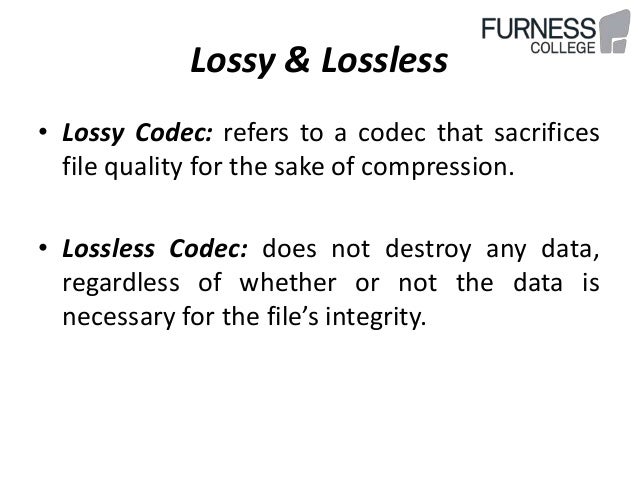
Lossy compression: technology in which there is a significant reduction of the encoded file compared to the original, due to the removal of information that is not perceived by the human ear.

The downside of this technology is the fact that the compressed file will never be identical to the original.

Lossless – Lossless compressed audio formats, including:

FLAC (Free Lossless Audio Codec)
APE (mono audio)
WV (WavPack)
These formats are capable of converting CD to digital format while maintaining quality. As an example, you can take a CD, convert it to WAV, then WAV to FLAC, then go back from FLAC to WAV, and then burn it to a blank CD and you have an absolutely identical copy of your source.

What format does the music sound with the best quality?
The most popular is the lossless FLAC format, and one of the most widely used CD to FLAC conversion programs is EAC (Exact Audio Copy).

Of all the parameters of digital audio, it is necessary to pay attention first of all to the following indicators:

sampling rate (precision of digitizing an analog signal in time),
bit rate (the amount of information contained in the file in terms of one second).

The sample rate is the frequency at which digital audio is processed. The most common sample rate for quality audio formats is 44.1 kHz.

It is generally accepted that a high bit rate guarantees the best quality; this is true, but only if the source file is of good quality. A high-quality MP3 should have a bit rate of 320 kbps, but a high-quality FLAC format generally has a bit rate of 900 kbps or more.

What is the best quality music format?
In addition to the audio formats themselves, for high-quality music sound, high-quality reproduction equipment is also needed: speakers, amplifiers, headphones. In other words, if you use cheap desktop speakers and headphones, you won’t be able to fully enjoy high-quality sound and unleash the full potential of lossless formats.

Without going into technical details, the following formats can be recommended:

For listening at home, I recommend the best FLAC format in my opinion. For an audio player, the MP3 format with a bit rate of at least 320 kbps is a good solution. Personally, I only use the FLAC format on all devices, since the volume of the microSD cards allows you to store a sufficient amount of data on the player.

As for the equipment for high-quality music playback, I advise you to pay attention to the following brands:

If inexpensive acoustics do not suit you and you are a fan of high-quality sound equipment (Hi-Fi or Hi-End), then everything is in your hands and you are limited only by your budget, I will not give recommendations.

Audio encoding and processing. Audio encoding

There are three main types of audio digits:

format – no compression;
format (lossy) – lossy compression;
format (lossless): lossless compression.
Lossy compression: technology in which there is a significant reduction of the encoded file compared to the original, due to the removal of information that is not perceived by the human ear.

The downside of this technology is the fact that the compressed file will never be identical to the original.

Lossless – Lossless compressed audio formats, including:

FLAC (Free Lossless Audio Codec)
APE (mono audio)
WV (WavPack)
These formats are capable of converting CD to digital format while maintaining quality. As an example, you can take a CD, convert it to WAV, then WAV to FLAC, then go back from FLAC to WAV, and then burn it to a blank CD and you have an absolutely identical copy of your source.

What format does the music sound with the best quality?
The most popular is the lossless FLAC format, and one of the most widely used CD to FLAC conversion programs is EAC (Exact Audio Copy).

Of all the parameters of digital audio, it is necessary to pay attention first of all to the following indicators:

sampling rate (precision of digitizing an analog signal in time),
bit rate (the amount of information contained in the file in terms of one second).

The sample rate is the frequency at which digital audio is processed. The most common sample rate for quality audio formats is 44.1 kHz.

It is generally accepted that a high bit rate guarantees the best quality; this is true, but only if the source file is of good quality.