What is a “FLAC file”? Part 2

He appeared there, compression without losses.
Humans are greedy creatures.
While recognizing the excellent technology of MP3, if you still want to return to the original Wave file, you want to compress it in a format that can be reversed exactly.
Unlined compression is a compression method that allows you to return to the original form if you wish, even if it compresses it.
Unfortunately, MP3s have an “irreversible” cross, so they can not play that role.
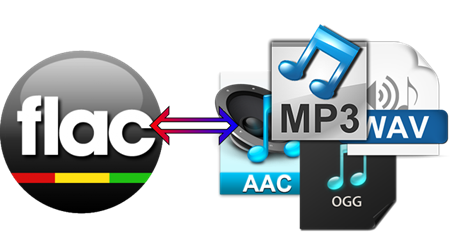
Here comes the “compressed file without loss” for music as “FLAC file”. There are other formats for “compression without loss” files such as “Apel Archive”, “WMA Lossless” and “Apple Lossless”, but from my point of view, the “FLAC file” seems to be the most widespread.
This “FLAC file” is much less popular than the “MP3 file”.
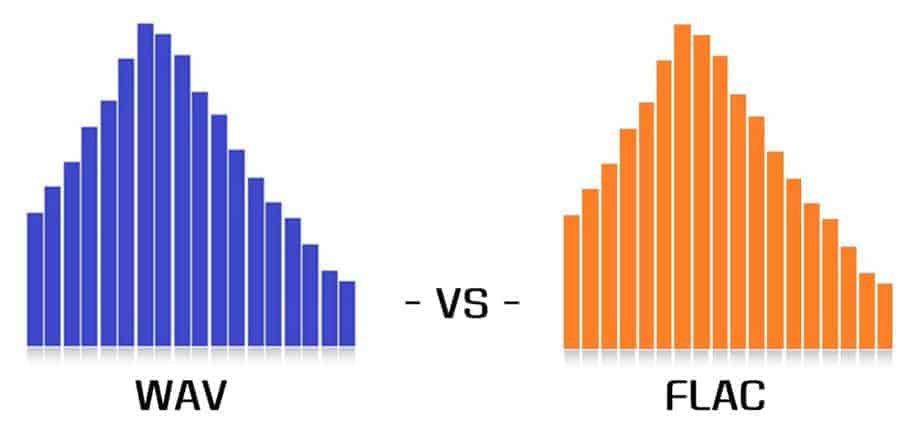
However, if you want to reverse a “FLAC file” to a “Wave file”, you can revert to the original “Wave” exactly without a 1-bit error.
Oh, you might think that a good file format could be more popular.
I also believe it.
But everything in the world is barter. Not all are satisfied unilaterally. If you get one, you must sacrifice one.
The “lossless compressed files” represented by “FLAC files” are sacrificed to obtain the wonderful property of “non-loss compression”.
That is the “compression rate”.
“MP3” compressed the original “Wave” file at 1/10, but the “FLAC file” is limited to the maximum compression.
In other words, in the case of “MP3 file”, a small element of about 5 minutes compressed to “5MB”, and even in a 1 hour box office success symphony, but in the case of “Flac File”, a small element of about 5 minutes. A symphony of box office of an hour of “25 MB” can only be compressed at about “300 MB”.
This is really subtle.
Probably “NG” in the era of telephone lines through modems.
However, in the ADSL era, this also reached the level of “Is there one?”
And when the optical lines are generalized, it is probably “yes”.
With current optical lines, you should be able to download “FLAC files” more comfortably than downloading MP3 files in the telephone line era.
In other words, the low “compression rate” that was sacrificed to perform a “compression without losses” is not necessarily a “sacrifice” due to the generalization of the optical lines. In that case, the mainstream of music files on the Internet can be replaced with “loss compression files” represented by “MP3 files” to “FLAC files” of “non-loss compression”.
The establishment of the “FLAC file database” this time was due to I wanted to lead that trend.
Basically, download and then decodify a wave file
So, how is the downloaded “FLAC file” played? Unfortunately, it can not be reproduced with important software as “iTunes” and “WMP”.
At the moment, the “FLAC files” can be reproduced without problems.
However, I do not recommend playing “FLAC files” as they are.
The greatest merit of the “FLAC file” is “reversibility”. Then, the way to take full advantage of merit is to decode the “FLAC file”, restore it to the original “Wave” file and then play it.
The increase in capacity and reduction in the price of hard drives are also a wind in favor of this trend.
In addition, even those that have not yet entered the Audio of the PC can record a “Wave file” on a CD and play it on a CD player. Since it is a “lossless compression” without deterioration of sound quality, the quality of CD created in this way is exactly the same as that of the market.
Well, how are you?
If you have read up here and are interested in “FLAC files”, go to “FLAC file database” and download it.
Next time, I will explain how to decode a “FLAC file” and restore it to “Wave File” as a first step to use the “FLAC file”.