What is ADC and DAC?


Free Download Mp4Gain
picture

What is ADC and DAC?

ADC DAC

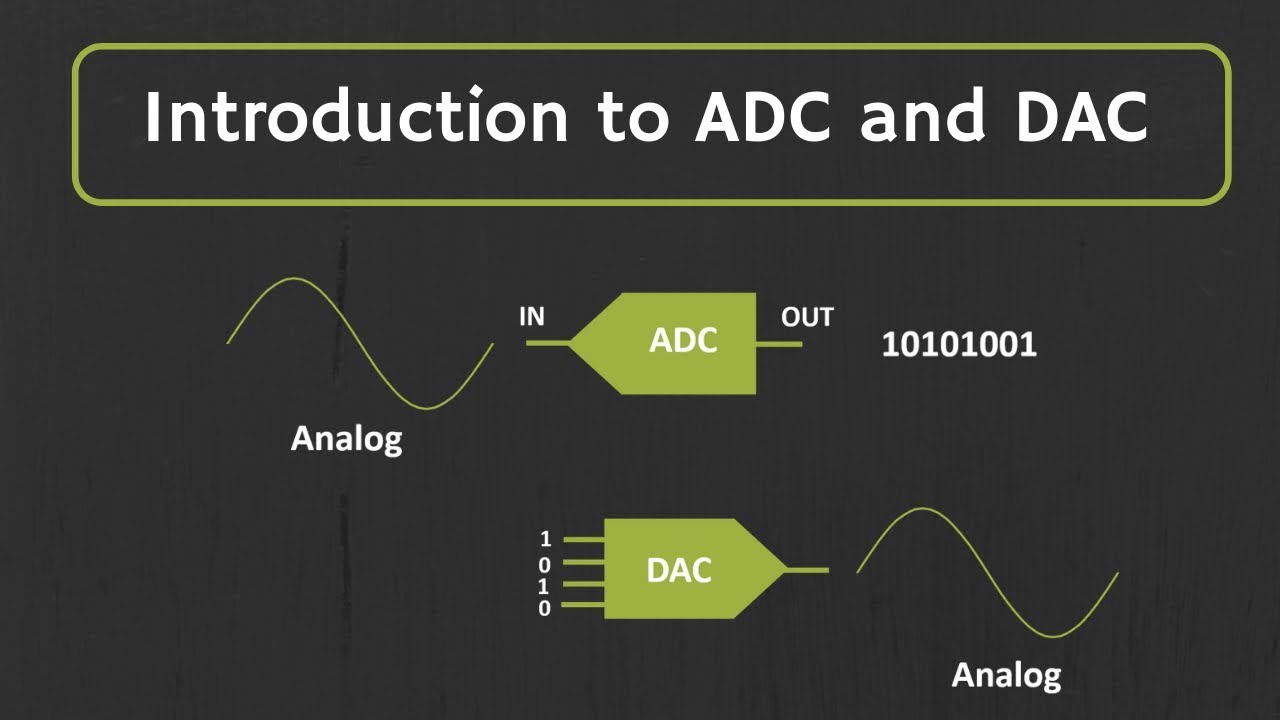
Analog-to-digital and digital-to-analog converters.

ADC DAC

The first conversion
converts an analog signal to a digital amplitude value, the second performs
inverse transformation. In English-language literature, the terms are used
ADC and DAC, and the combined converter is called codec
(codec).

The working principle of the ADC is to measure the level of the input signal and the output
The result in digital form. As a result of the ADC operation, a continuous
an analog signal is converted to a pulse, with simultaneous measurement
The amplitude of each pulse. The DAC receives a digital value at the input
amplitude and outputs voltage or current pulses of the required magnitude at the output
is located behind the integrator (analog filter)
it becomes a continuous analog signal.

For proper ADC operation, the input signal must not change during
conversion time, so your input is usually placed
a sample hold circuit that captures instantaneous signal level and stores
hurt him throughout the transformation time. DAC output
A similar circuit can also be installed, suppressing the influence of
execute processes inside the DAC to the parameters of the output signal.

With time sampling, the spectrum of the received pulse signal in
its lower part 0..Fa repeats the spectrum of the original signal, and above
contains a series of reflections (aka, specular spectra), which are found
they are placed around the sample rate Fd and its harmonics (sidebands).
In this case, the first reflection of the spectrum of the frequency Fd in the case of Fd = 2Fa is
is based directly behind the original signal bandwidth and requires
your anti-alias filter with a high
the thickness of the cut. In the ADC, this filter is installed at the input to exclude
overlapping spectra and their interference, and in the DAC – at the output, which
supra-tonal noise introduced by time in the output signal
resampling.


Free Download Mp4Gain
picture


Mp4Gain Main Window
picture


Mp4Gain Features
picture


Free Download Mp4Gain
picture

How do ADCs and DACs work and function?

How do ADCs and DACs work and function?

ADC and DAC

There are mainly three ADC designs:

ADC DAC

Parallel – The input signal is simultaneously compared to the reference levels by a set of comparison circuits (comparators), which form a binary value at the output. In such ADC, the number of comparators is equal to (2 to the power N) – 1, where N is the digit capacity of the digital code (for an eight-bit code – 255), which does not allow to increase the capacity of digits above 10-12.
Successive approximation: The converter using an auxiliary DAC generates a reference signal that is compared to the input signal. The reference signal is changed sequentially according to the principle of mean division (dichotomy), which is used in many convergent search methods in applied mathematics. This makes it possible to complete the conversion in a number of clock cycles equal to the length of the word, regardless of the size of the input signal.
with time interval measurement: a large group of ADCs that use various principles of converting levels into proportional time intervals to measure the input signal, the duration of which is measured by a high frequency clock generator. This is sometimes called ADC counting.
Among ADCs with time interval measurement, the following three types prevail:

Sequential Count or Single Slope – In each conversion cycle, a linearly increasing voltage generator is started, which is compared to the input voltage. Typically this voltage is obtained from an auxiliary DAC, similar to a successive approximation ADC.
Dual Slope: In each conversion cycle, the input signal charges a capacitor, which is then discharged to a reference voltage with the duration of discharge measured.
tracking – A variant of the sequential counting ADC, in which the reference voltage generator does not reset on each cycle, but instead changes it from the previous value to the current one.
The most popular version of the tracking ADC is sigma-delta, which operates at a frequency Fs, which is significantly (64 times or more) higher than the sampling frequency Fd of the digital output signal. The comparator of such an ADC produces values ​​of reduced bit depth (generally a bit – 0/1), the sum of which in the sampling interval Fd is proportional to the value of the sample. A sequence of low bit values ​​is digitally filtered and decimated, resulting in a series of samples with a given bit depth and sample rate Fd.

To improve the signal-to-noise ratio and reduce the effect of quantization errors, which in the case of a one-bit converter turns out to be quite high, a noise shaping method is used through digital filtering and feedback circuits. error. As a result of applying this method, the shape of the noise spectrum changes so that the main noise energy is shifted to the region above the middle of the frequency Fs, a small part remains in the lower half, and almost all the noise it is removed from the original analog signal band.

DACs are based primarily on three principles:

weighting: with the sum of the weighted currents or voltages, when each bit of the input word makes a contribution corresponding to its binary weight to the total value of the received analog signal; These DACs are also called parallel or multibit (multibit).
sigma-delta, with preliminary digital oversampling and delivery of low-bit (usually one-bit) values ​​to the reference charge-shaping circuit, which are added to the output signal with the same high frequency. These DACs are also called bit streams.
Pulse Width Modulation (PWM), when pulses of constant amplitude and variable duration are sent to the analog sample and hold signal, controlling the dosage of the load discharged at the output. Matsushita’s MASH (Multi-stAge Noise Shaping) converters work with this principle. These DACs got their name due to the use of various sequential noise shapers in them.
When using oversampling by a factor of tens (typically – 64x..512x), it is possible to reduce the DAC capacity without noticeable loss of signal quality; DACs with fewer bits also have better linearity. At the limit, the number of downloads can be reduced to one. The output waveform of such DACs is a useful signal surrounded by a significant amount of high frequency noise, which, however, is effectively suppressed by a uniform medium quality analog filter.

DACs are “straightforward” devices where conversion is easier and faster than ADCs, which are mostly slower and serial devices.

DAC and all the most important things to know about it
DAC and all the most important things to know about it

DAC

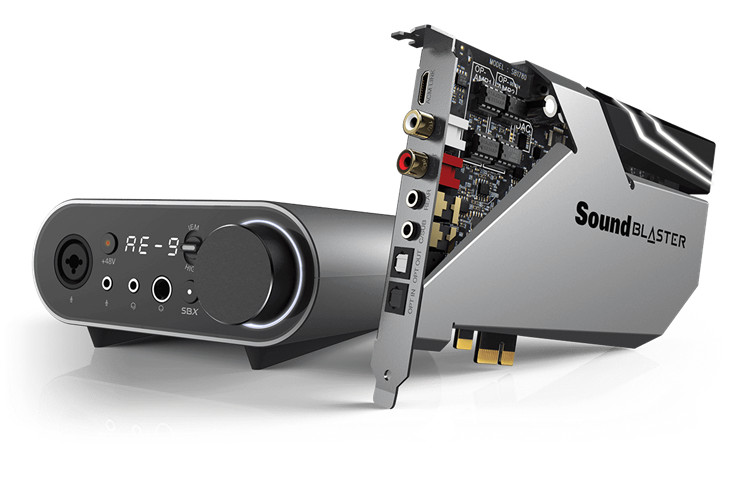
Without a DAC, there is no music if your music files are stored digitally. You may not know how they work, but most of us use at least one digital-to-analog converter on a daily basis, better known as a DAC or DAC (digital-to-analog converter).
DAC

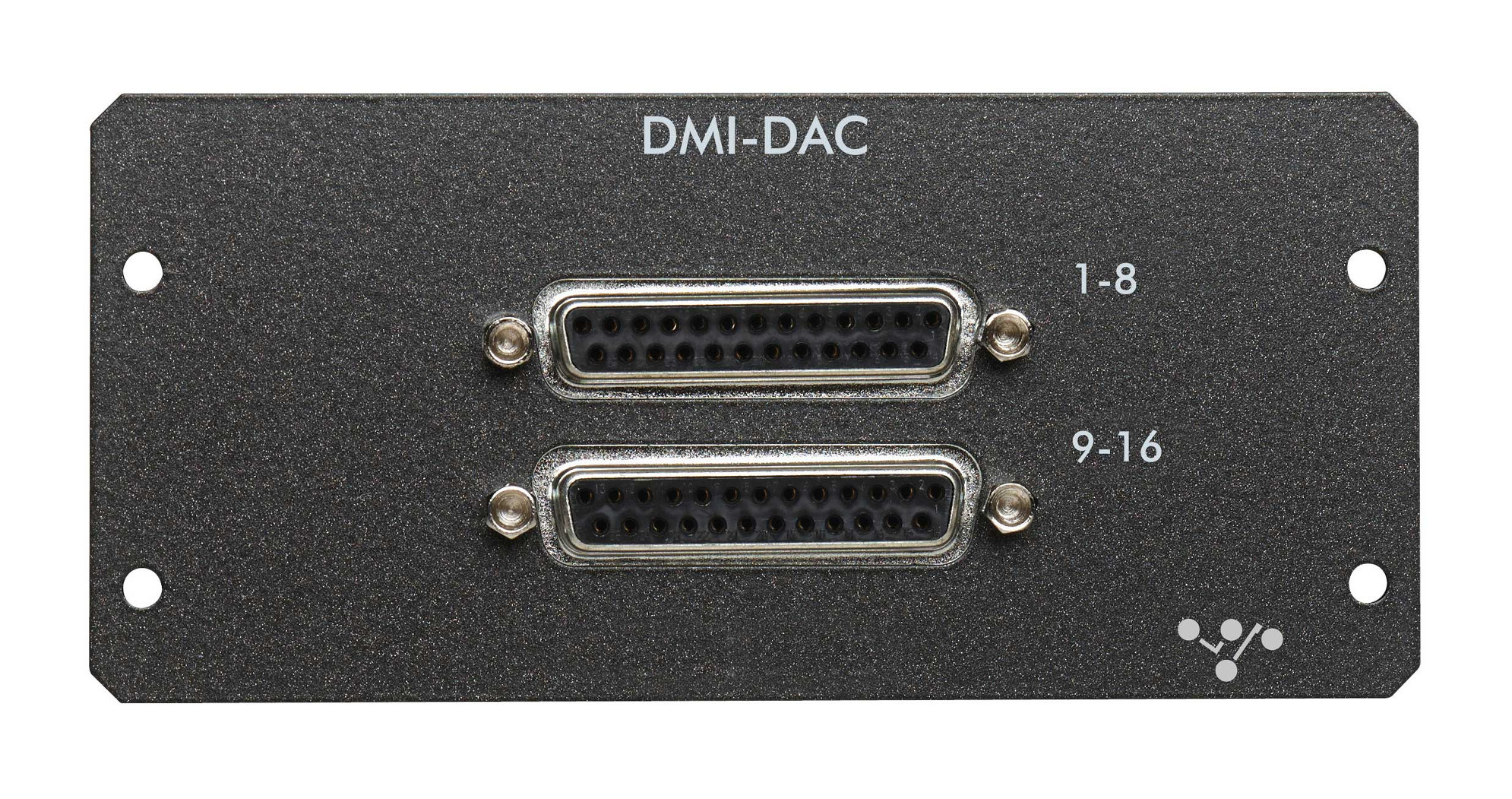
They are embedded in devices such as computers, tablets, smartphones. DAC is the fundamental basis for decoding familiar digital music, converting it back to an analog signal that the human ear can hear.

Any digital signal source device, be it a CD or Blu-ray player, DAB (digital radio), TV box, game console, or music player, needs a DAC to convert the sequence of ones and zeros into a analog signal before sending it. for playback.

Traditional amplifiers do not amplify and the speakers do not reproduce the digital signal and your ears cannot hear it. They only perceive sound waves. Without a DAC, your digital music collection is useless. This is a simple set of “0” and “1”, which is necessary only for the operation of digital devices. In short, DACs play an important role in digital music playback.

However, a serious problem is that the DAC microcircuits built into most of the devices presented above may not often be of a high enough level and cannot always provide the highest possible quality of the digital original. In this sense, the idea arises of the need to replace the DAC to transform the digital music file and make the most of its audio system.

The sounds we hear every day, whether it be music, speech, the noise of a big city or the murmur of a stream, are transmitted as sound waves and reach our ears as a continuously changing analog signal.

One of the first ways to store analog recordings was the prototypes of today’s vinyl records, and later there were tapes, but the unwanted noise during playback and the fragility of these formats demanded something new. And this innovation was the compact disc (CD), invented by Sony and Philips in the 1980s and revolutionizing the digital storage of music discs.

Digital audio is very different from analog audio. Digital music files are typically created using Pulse Code Modulation (PCM) or PCM in English, and are created by continuously measuring the amplitude of an analog signal at a constant rate.

The amplitude value is then encoded as a binary number (set of ones and zeros), and the length of this number is often called the bit depth. The time interval between measurements is determined by the sampling frequency.

With a standard CD, measurements are taken 44,100 times per second (44.1 kHz). Each measurement is recorded for storage in binary format with 16-bit precision. High-resolution audio tracks are recorded at up to 24-bit, 192 kHz or higher.

Generally speaking, digital audio data can be encoded at different bit depths and sample rates, and then into different file formats with different compression rates to reduce size. But no matter how they are created, the DAC’s job is to recognize all of this and translate it from the binary as accurately as possible to get as close as possible (as much as possible) to the analog original.

Why do I need a separate DAC?

All about DAC

In fact, almost all modern digital audio devices have a built-in DAC, but not all DACs are the same. Low-grade converters can introduce unwanted noise due to the limited capabilities of the microcircuit used. They cannot support all data rates, not to mention the added distortion due to loss of sync (jitter or jitter).

Loss of synchronization is defined as a time delay. Precise time intervals (timings) are extremely important in the process of receiving a digital music stream and if they are not maintained (usually due to poorly designed digital clock circuitry) the sound quality suffers.

Loss of synchronization problems can occur with the transmission of digital signals and are especially dangerous when transmitting a signal between two devices. Therefore, in recent years, asynchronous DACs, using their own clock source, have become widespread.

Clock generators in higher quality DACs tend to be more stable than those found in mid-range PCs, so the sound will be correspondingly better (all things being equal).