
Mp3 – Subjective perception of sound: timbre
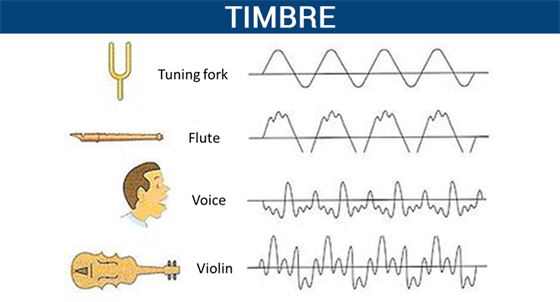
Tone is a concept that we often come into contact with in our daily lives, and it can even be said that it is an essential concept.

In high school physics textbooks, timbre, along with pitch and volume, are considered the three basic attributes of sound. Although we often deal with the word doorbell, and doorbell has more mature applications in many respects, doorbell is actually a very vague concept. What physical phenomenon determines the timbre? Why can we only use vague words like light and shadow, thickness and warmth to describe timbre?
Pitch and volume are well understood and correspond to physical phenomena: pitch corresponds to the vibrational frequency of an object, and volume corresponds to the object’s vibrational amplitude. However, we were unable to find a physical phenomenon that corresponds to the timbre. There are also no precise words to describe the timbre in our language.
We can create great music by precisely controlling the combination of pitch, duration, and volume. So can we control timbre like we control pitch and duration?
What exactly is pitch? What physical processes are involved in the timbre?
This is something that many people have been exploring and researching for the last few hundred years. But to this day, there is still no perfect answer.
In this article, I have classified some of the research results of my predecessors and presented some of my own thoughts. I hope that it can give everyone a systematic understanding of timbre, and I hope to inspire those who are interested in studying timbre in the future.
This article will start with the definition of timbre, discuss what timbre is, the subjective perception of timbre, the main factors that affect timbre, the description of timbre in language, the application of timbre in music, and personal perspectives for timbre. doorbell investigation. This article also proposes a sound classifier model for the timbre. At the same time, there are some conjectures that I have not been able to study in the article. I will check them out in the future.
The definition of sound
There are many definitions of timbre.
The word timbre comes from the French . In old French it referred to the sounds produced by different musical instruments.
In his music textbook “Fundamentals of Music Theory,” Li Chongguang noted that “timbres are different due to the nature, shape, and number of harmonics of the sounding body.”
The American Standards Association (ASA) defines ringing from the opposite perspective. It does not define what timbre is, but what timbre it is not: “timbre is any other difference between sounds of the same loudness, pitch, and duration.”
All the above definitions tell us what tone it is. But none of these definitions is as clearly linked to the corresponding physical laws as other physical properties.
Like pitch and frequency of vibration, like speed and time and displacement, like color and wavelength.
Why can’t the word timbre clearly correspond to a certain physical phenomenon? I think this is due to the complexity of the timbre.


