
With the “death” of MP3, formats like FLAC and AAC gain more space.
Music consumption on current devices may involve the use of non-MP3 files, as the creators of the format are abandoning their licensing program. Among the new types of audio files that have gained space are FLAC and AAC. With different proposals, they serve broader but conflicting usage and consumption profiles: FLAC is for those who demand the highest quality, giving up space, since the files tend to be large. AAC can be seen as a more conventional option: small file sizes, but with better sound quality than the previous MP3.
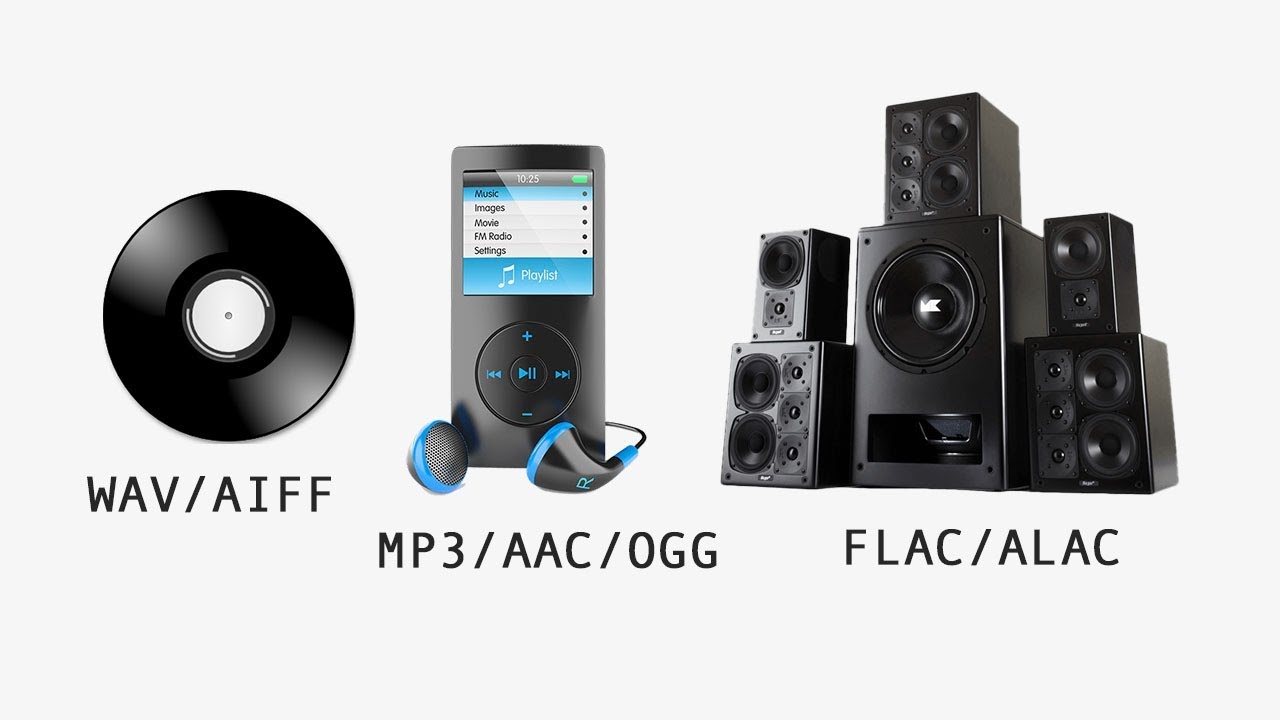
Audio formats are divided between lossless (maximum quality) and loss, compact quality and lower
Understand the points that differentiate between FLAC and AAC files to find out which format best suits your needs.
Lossless and lossy audio
Digital audio file formats are divided into two types: lossless (lossless) and lossy (where, conversely, there is loss).

The main characteristic of a lossless file, such as WAV or FLAC, is the fact that the sound stored in the package is faithful to the original: that is, in the process of converting the CD track, all the information has been preserved sound related to the song. completely, without any loss, ensuring high fidelity to the file. The problem with this is that the result is a large file – a WAV track can be over 40MB.
Lossy format refers to an approach in which the conversion of the original audio to the final file (MP3, AAC and etc.) goes through a compression process in which a variable amount is removed (depending on the chosen bit rate ) information to ensure a smaller file size. In the case of MP3, the ratio is 10 to 1: a 40 MB WAV returns a 4 MB MP3, at 128 kbps.
This information, removed in lossy type conversions, is generally automatically defined by the conversion software based on theoretical precepts related to the frequencies that our ears can identify. The problem with this approach is that there are ears and ears, there are sound devices and devices, and there are songs and songs: some details of the songs can be removed in an MP3 or AAC because the conversion ignores them.
And what is bitrate?
Not all AACs and MP3s are created equal: a low bitrate file will be of much lower quality than a higher bitrate version.
Simply put, it is the amount of information that is executed in a certain period of time when you listen to music. If the file is 128 Kbps, it means that 128 kilobits of information are executed every second. If the file is 320 kbps, it is 320 kilobits per second. The higher the value, the larger the sample, and generally the higher the sound quality of the file.
FLAC: lossless audio
FLAC-type sound files are converted to original using a compression process called lossless. This testifies that the compression of the music on a CD, for example, does not represent loss of information: the sound quality faithfully represents the experience of listening to the same track from a medium.
The point is that the FLAC format ends up “charging a high price” for all that quality. First, files get bigger (a single song can be over 20MB in size), which restricts the number of tracks you can store in a player and makes it difficult for anyone who consumes music to stream with Tidal: The weight of the file It can consume your plan and represent a bad experience, if your connection is slow and it is necessary to interrupt the playback to load the song.
Also, in general, the user does not have sound reproduction equipment that really takes advantage of the high quality of the FLAC without losses. Using low-quality headphones, along with inferior media players, can eliminate the benefits of higher quality lossless files compared to MP3 or AAC.
Which is better, after all?
If you value sound fidelity, you have good audio equipment and disk space is not a problem, lossless format is the best alternative: FLAC, ALAC and APE guarantee the highest audio quality. In this scenario, the discussion about AAC loses its meaning, since the gain will only be in the file size, but with loss of quality.
However, the AAC is a good option for those who don’t have high-quality headphones or sound systems. AAC is even a great format for users who have amassed a large, low-bit-rate MP3 library at 128 kbps. If you don’t have good equipment and good headphones, the FLAC is superior.


