
Understand sample rate

This “sample rate” is always involved when creating a new project or when exporting audio.
The sampling rate seems to be difficult… Which one should I choose after all?
Of the various options, which sampling rate should be selected as the “correct answer”?
If you make a mistake when choosing the sample rate first, the song you made may be ruined, so today I will learn the basics about this sample rate and use it for everyday music production.
After reading this article, you will find that:
Knowledge of sampling rate required for DTM
Which sample rate to choose
Differences in sound quality depending on the sample rate and advantages/disadvantages
How to check the sample rate
Aside from difficult stories like “aliasing” and “Nyquist frequency”, I have summarized only the knowledge that is absolutely necessary to do DTM, so even those who say “It’s a pain to talk about numbers…” should definitely use this . knowledge Let’s remember!
Now, let’s start with the basics of sample rate.
Table of Contents
What is the sampling rate?
Let’s hear the difference in sound quality depending on the sample rate
The higher the sample rate, the better?
The reason why the change in sound quality is difficult to understand above 44.1 kHz
Three reasons why a 44.1 kHz sample rate is enough
The higher the sample rate, the higher the CPU load.
After all, the standard sample rate in the music industry is 44.1 kHz.
You can also request mastering if you have a minimum of 44.1kHz.
Two ways to check the sample rate
For audio files, right click to check
How to check from your DAW preferences
resume
What is the sampling rate?
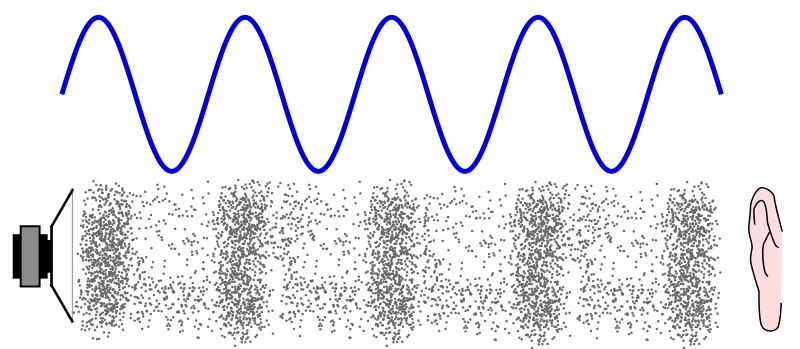
Sound is represented by such a waveform.
You can see a similar waveform even if you zoom in on the audio file in your DAW, but first let’s make this the waveform of the sound in the real world (analog world).
We take this to a computer and listen to it on a speaker and edit it, so we have to bring the sound as data into the digital world. (Convert DA)
At that point, a process called “sampling” is required, but this is not a particularly difficult story, and it is necessary to cut a cross section of sound tens of thousands of times per second and digitize analog data. .
And this “how many times per second do you sample?” it is expressed by the number “sampling rate”.
Old man
If the sample rate is 1 Hz, it means sample once per second.
So at 44.1kHz (44,100hz) CD sound quality, you’re sampling 44,100 times per second.
Next, let’s take a look at the waveform of sound reproduced in the digital world.
This part is the sampled part, and the more points there are, the more accurately the original sound can be reproduced.
In the figure above, the points are connected by a straight line, but a relatively smooth curve is still maintained at this point.
So what happens to the waveform if this point (sample rate) is low?


