
Think about it … how many musicians really understand what decibels are?
Not many, right? And there is no surprise.
The truth is that decibels are confusing.
You could spend days reading about it in some college textbook and not even understand a concept.
The upside is that anyway … for audio recording, you need nothing more than the basics.
So, in today’s post, we will talk about the KEY points that all musicians should know.
I hope you find it useful.
First, let’s dispel a widespread myth:
Decibel is NOT a unit of measure for volume
It is not a unit of anything. It is a REPORT, and compares the value of one number with the value of another.
And although these numbers usually measure the sound level, it is not always the case. In music, decibels are also used to measure the voltage and power of instrumentation.

Decibel is not a LINEAR measurement
Most units are LINEAR. For example, 2 meters is twice 1 meter long, and 4 meters is twice 2 meters long. Translating these numbers into a graph, they would form a straight line.
But decibels don’t work that way. Decibels are LOGARITHMIC units. If you’ve forgotten what you knew about high school logarithms, here is a very simple review:
With logarithmic numbers, each additional unit multiplies the number’s value exponentially. For example:
+ 3dB = power increases 2 times
+ 10dB = power increases 10 times
+ 60dB = power increases 1,000,000 times
It is empty? Well. That is why you need to understand this concept well:
The relationship between Decibel, Music and Sound
In music, decibels are a measure of the sound pressure level (SPL). For example, if at a rock concert the speakers are playing at 110dB, what it really means is that they are playing at 110dB SPL.
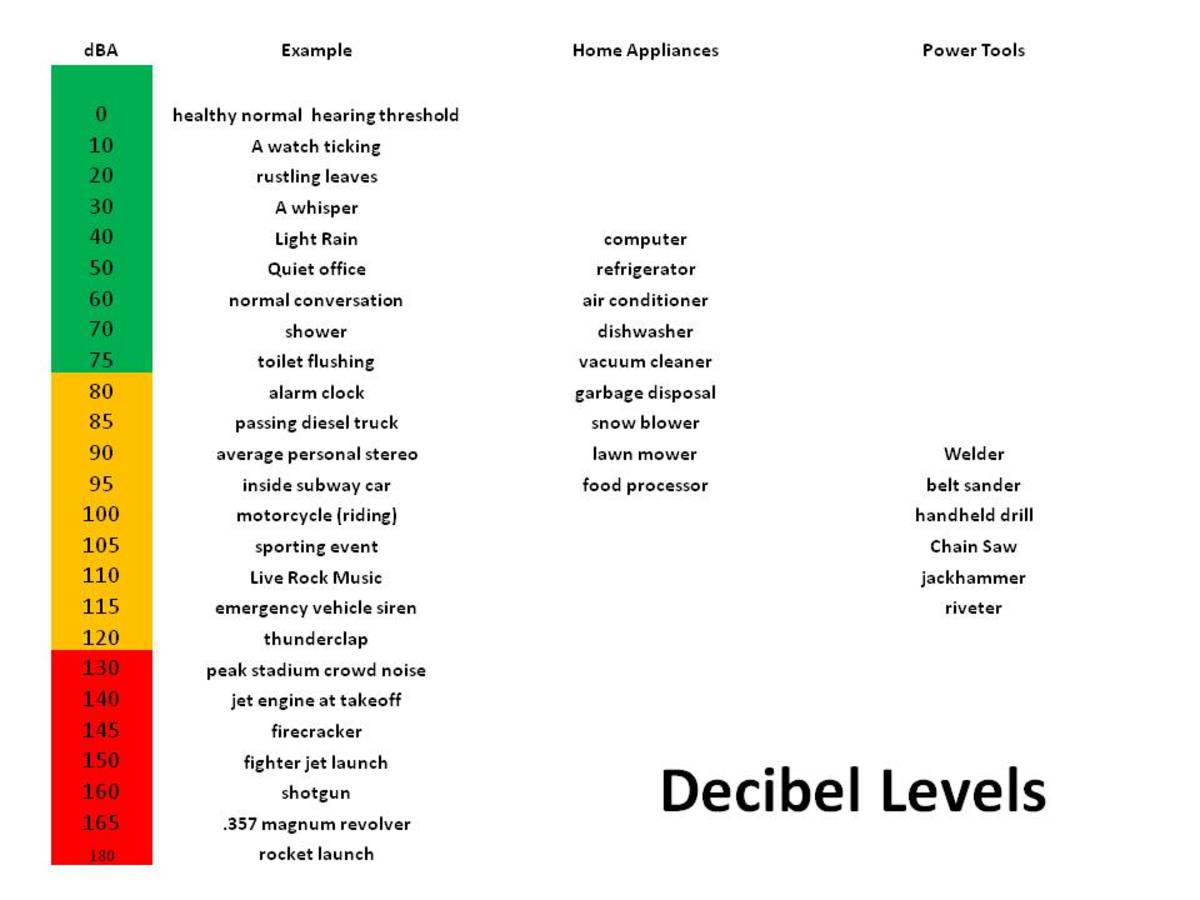
Since decibels are just a ratio, 110dB should be read compared to another number: 0 SPL.
0 SPL is the standard level of atmospheric air pressure (20 micropascals). It is generally accepted as the lowest limit of human hearing, and is the benchmark for comparing sounds.
How decibels are used in recording equipment
The most common instrument you will deal with decibels in a recording studio is the sound level meter …
Present on various devices within a studio, such as DAW, audio interface, and others.
At the upper limit of the sound level meter, you will notice the wording 0 dBFS (short for “0dB full scale”). This is the highest possible signal level that the instrument can withstand before clipping or distortion.
Below this value, you will see increasing negative dBFS values, down to -∞ dBFS.
Depending on who will give you the advice, some may tell you to choose a value between -15dB and -6dB when setting the input values for a recording. I consider -10dB a good compromise


