WHEN MUSIC CAN BE HARMFUL


Free Download Mp4Gain
picture

The number of children seeking help from hospitals’ otolaryngology department is increasing: whistling, ringing in the ears, partial hearing loss; The problem of excessive exposure to sound and noise sources continues to be underestimated.

decibels allowed

A single rock concert or a single game in the stadium could be enough to cause permanent hearing damage: a new line of studies supports it according to which a single exposure to loud, but not necessarily deafening, noises can kill some terminations nerve fibers that connect the inner ear to the brain.

This is the message of a new line of research: “A single exposure to loud but not deafening noise could be enough to cause irreparable damage to the nerves of the auditory system.”

noise decibels

Previously it was believed that the only undesirable effect of noise exposure, like those of a disco night, was the annoying but temporary sensation of having the ears covered.
The idea was that it would take years, if not decades, of trauma to the sensitive niches of the inner ear to kill the tiny hair cells, where the vibrations of the sound waves are converted into electrical signals and then processed within the brain. . Only the death of hair cells is believed to compromise the ability to hear clearly in the confusion of noise during the day.

The study in mice, guinea pigs and chinchillas has confirmed what has been said previously, that is, a single exposure to a loud sound can kill some endings of the nerve fibers that connect the inner ear to the brain.

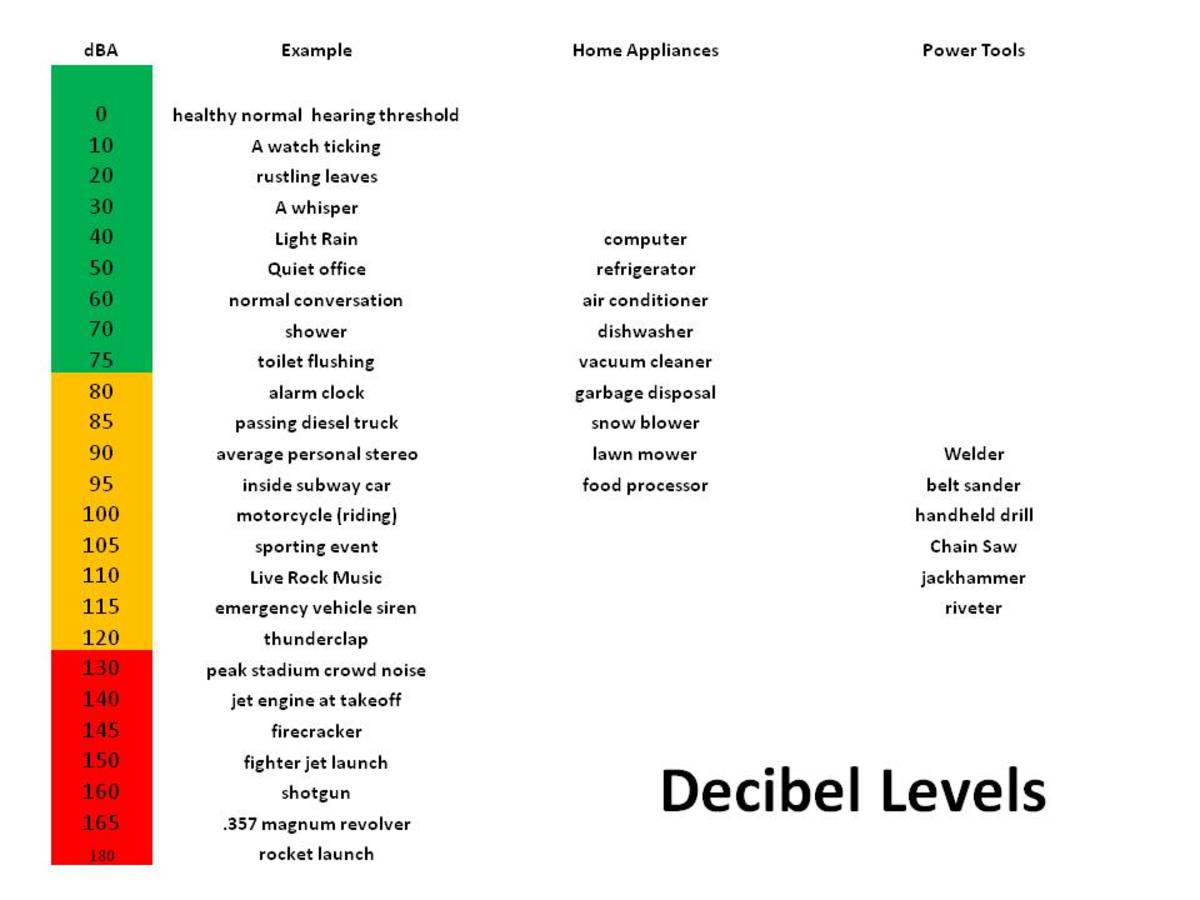
According to an American investigation that already has 60 dB (decibels: the unit of measurement of sound pressure) can induce psychic consequences. At 85 dB the danger threshold begins, at 95 decibels you are at risk of damage if you listen to music for more than 4 hours, at 105 if you stand in front of the speakers for more than an hour, but if the decibels are 115, 15 minutes are enough, and 120 the immediate pain threshold is exceeded with permanent damage. Well, the decibels reach 110 in the disco. Rock, house or electronic music are the biggest killers of the ear. They cause the hole effect that, at high frequencies, weakens hearing.

In summary, the price to pay for listening to music at full volume can be really expensive.

Worse still, you can only make a long horn, a jackhammer that beats continuously, a firecracker that explodes at close range, an airplane engine taking off.

Ludwig Van Beethoven did not go to the disco, but because of the music he became completely deaf: it is the cells of the eyelashes, species of ultra-sensitive microphones, that face increasingly heavy injuries when the ear is besieged for a long time by vibrations too high and when the damage is done there is nothing you can do to regenerate your hearing.

Galeotta is not just the disco. Risk can also lurk in the headphones (if not padded) or in the headphones of an I-pod, which reach 105-110 decibels; p25er listening to music in the office through headphones: be careful!

HERE IS WHAT THE WHO RECOMMENDS:

To prevent a pleasant hobby, such as listening to music, from being dangerous to our health, it is sufficient to take simple precautions. The slogan is to keep the decibels under control. In fact, mp3 players and smartphones are often used at very high volumes for long periods of time, when instead they should not exceed 60 minutes a day. Listening to music with headphones at a volume of 95 decibels, even for half an hour a day, means irreparably damaging your hearing in a couple of years.
The higher the volume, the faster the damage will appear and its extension. So listening times considered safe vary with decibels:

– 8 hours at 85 decibels (noise in the passenger compartment of a car);

– 2 and a half hours at 90dB (meter);

– 47 minutes at 95dB, a quarter of an hour at 100dB (train in transit);

– 4 minutes at 105 dB (an mp3 player with the maximum volume);

– 28 seconds at 115dB (a rock concert);

– 9 seconds at 120 dB (a siren).

If facility managers don’t follow the limits set by the noise law, the advice is to stay away from cash registers.


Free Download Mp4Gain
picture


Mp4Gain Main Window
picture


Mp4Gain Features
picture


Free Download Mp4Gain
picture

The musicians’ guide to understanding decibels

Think about it … how many musicians really understand what decibels are?

Not many, right? And there is no surprise.

The truth is that decibels are confusing.

You could spend days reading about it in some college textbook and not even understand a concept.

The upside is that anyway … for audio recording, you need nothing more than the basics.

So, in today’s post, we will talk about the KEY points that all musicians should know.

I hope you find it useful.

First, let’s dispel a widespread myth:

Decibel is NOT a unit of measure for volume

It is not a unit of anything. It is a REPORT, and compares the value of one number with the value of another.

And although these numbers usually measure the sound level, it is not always the case. In music, decibels are also used to measure the voltage and power of instrumentation.

Decibels

Decibel is not a LINEAR measurement

Most units are LINEAR. For example, 2 meters is twice 1 meter long, and 4 meters is twice 2 meters long. Translating these numbers into a graph, they would form a straight line.

But decibels don’t work that way. Decibels are LOGARITHMIC units. If you’ve forgotten what you knew about high school logarithms, here is a very simple review:

With logarithmic numbers, each additional unit multiplies the number’s value exponentially. For example:

+ 3dB = power increases 2 times
+ 10dB = power increases 10 times
+ 60dB = power increases 1,000,000 times
It is empty? Well. That is why you need to understand this concept well:

The relationship between Decibel, Music and Sound

In music, decibels are a measure of the sound pressure level (SPL). For example, if at a rock concert the speakers are playing at 110dB, what it really means is that they are playing at 110dB SPL.

Decibels

Since decibels are just a ratio, 110dB should be read compared to another number: 0 SPL.

0 SPL is the standard level of atmospheric air pressure (20 micropascals). It is generally accepted as the lowest limit of human hearing, and is the benchmark for comparing sounds.

How decibels are used in recording equipment

The most common instrument you will deal with decibels in a recording studio is the sound level meter …

Present on various devices within a studio, such as DAW, audio interface, and others.

At the upper limit of the sound level meter, you will notice the wording 0 dBFS (short for “0dB full scale”). This is the highest possible signal level that the instrument can withstand before clipping or distortion.

Below this value, you will see increasing negative dBFS values, down to -∞ dBFS.

Depending on who will give you the advice, some may tell you to choose a value between -15dB and -6dB when setting the input values ​​for a recording. I consider -10dB a good compromise

Understanding decibels (part 1)

What does the decibel or db measure?

Decibels are widely used in audio and are often misinterpreted. These articles provide a practical understanding of the use of decibels in audio work. But first, some basic questions and answers about decibels.

What is a decibel?

A decibel is a tenth of a Bel, a level unit, named after Alexander Graham Bell. A Bel is a very large unit, so the prefix deci (one tenth) is used. A decibel uses a logarithmic scale, not a linear scale like volts or watts, see below.

There is no absolute level called the decibel. A decibel expresses a relationship. It is related to something. Unfortunately, what is related is often not mentioned when claiming a decibel reading. For example, the line out of the mixer may be -10dB, which generally means it is 10dB below 0dB.

Why decibels?

So why use a decibel? You may have noticed that the volume control on most hi-fi amps is marked in decibels, just like the marks on the mixer level controls. This is because our hearing range is so vast that, to use a linear scale, we must use numbers between 0 and 1,000,000!

Decibels are not linear

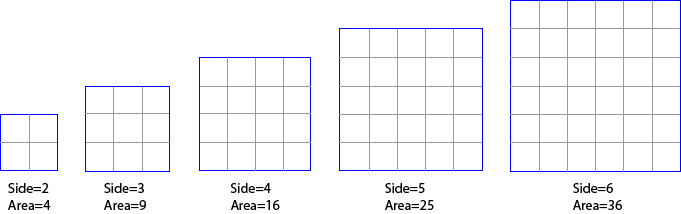
A secret to understanding decibels is to note that decibels are not linear. Another example of a nonlinear relationship is between the side of a square and the area of ​​a square.

decibels

divisible is not linear like square side and area In this example, you can see that increasing the lateral measurement does not have an equivalent increase in area, but a larger increase. Also, doubling the length of the side does not double the area, it is much more than double! This is an example of a nonlinear relationship: in this case, a small increase in the side refers to a different increase in the area. Decibels are similar. A small variation in decibels refers to a different variation in the relationship between the two levels compared.

Decibels express a relationship

When we talk about audio levels, we observe voltages or amplitudes of sound waves. (Note: Power measurements (such as power differences in an amplifier) ​​use a similar but different formula.) But without going into formulas, etc., we must accept the following summary of the linear relations of tensions and decibels. (I’m not showing formulas or calculations because I think most people skip them anyway, and if you like formulas any search engine will give you as many as you want)