What is the difference between 16 bit and 24 bit?

Relationship between the number of recording bits and noise
Tips and production methods
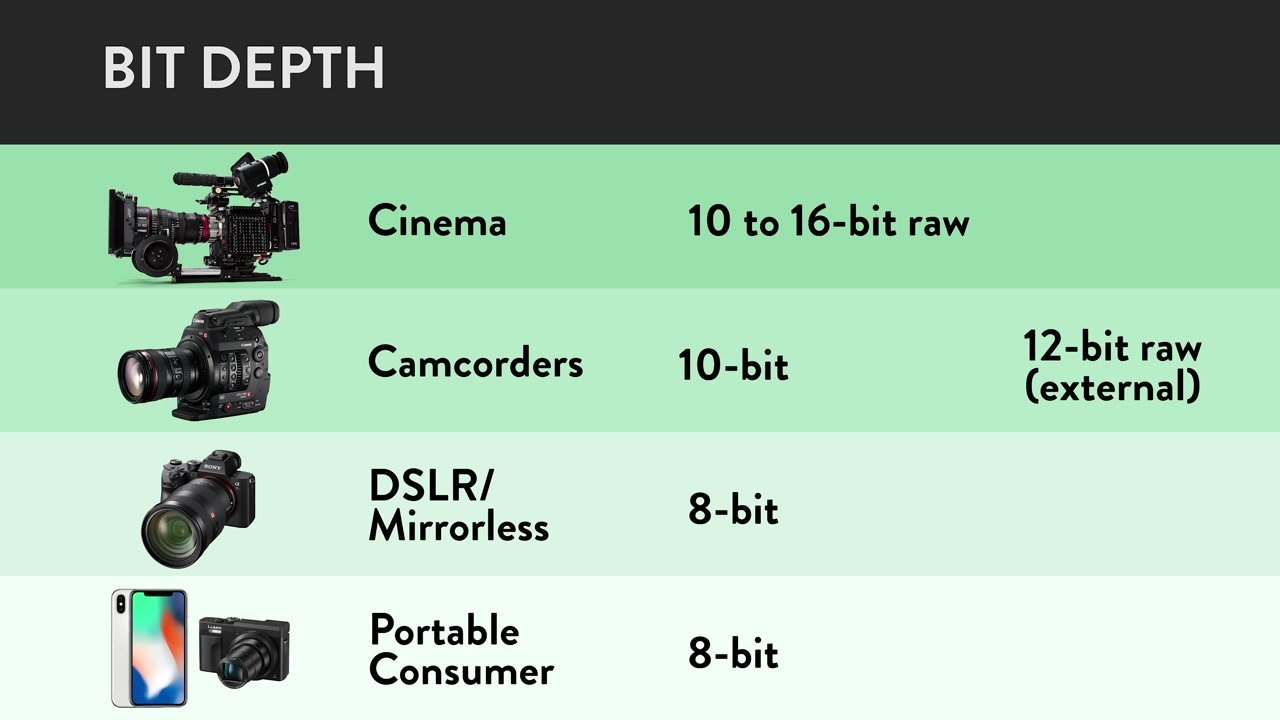
I’m not sure if I should choose 16-bit or 24-bit when creating a new DAW session! What are the benefits and what are you looking for? Let’s take a look at how bit count is handled in recording in relation to the concept of “gain staging” which is indispensable to music production.
The larger the s/n, the clearer and more faithful the recording will be.
You may have often seen the expression “the s/n ratio is…” in computer reviews. s/n means “signal to noise ratio” and is read as “s/n ratio” in Japanese. Every time you record, you need to consider the effect of noise, but simply put, s/n is an index of how noise sounds, and the higher this number, the more noticeable the noise is to essential audio. that will disappear
In terms of sound quality, the first step in sound is recording. Therefore, if you want to achieve the clearest possible sound quality that is faithful to the original sound, it is desirable to achieve as high a s/n (discrete noise) ratio as possible from this stage. The question of “Which is better, 16bit or 24bit”, which is the topic of this time, is actually deeply related to this concept of y/n.
Relationship between dynamic range and background noise
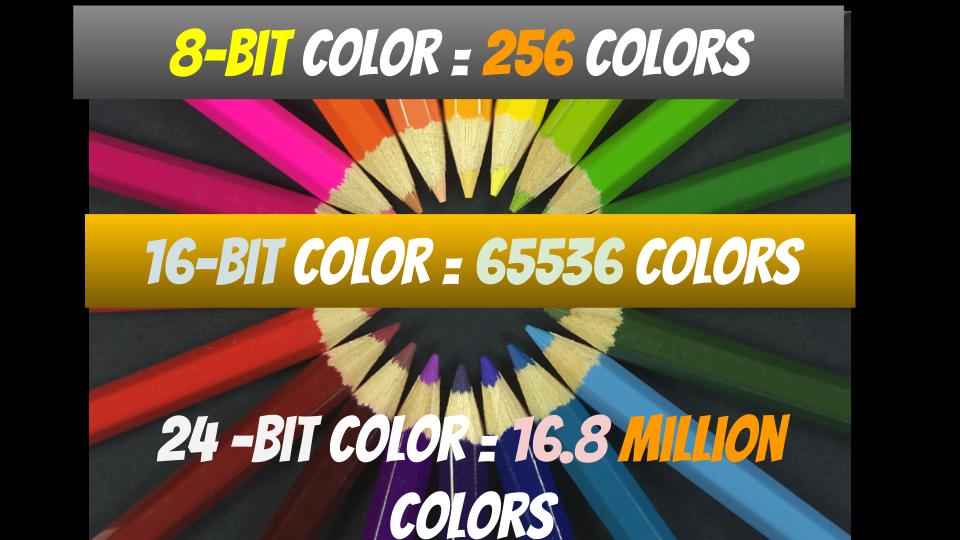
The biggest difference in sound quality between 16-bit and 24-bit is the difference in dynamic range.
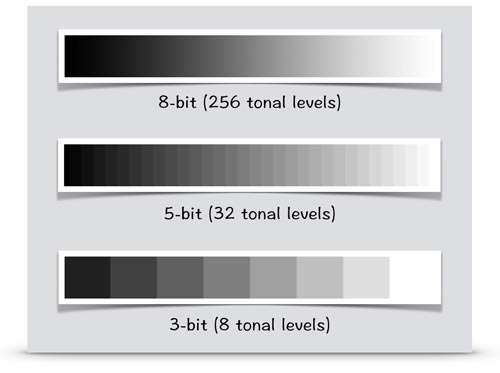
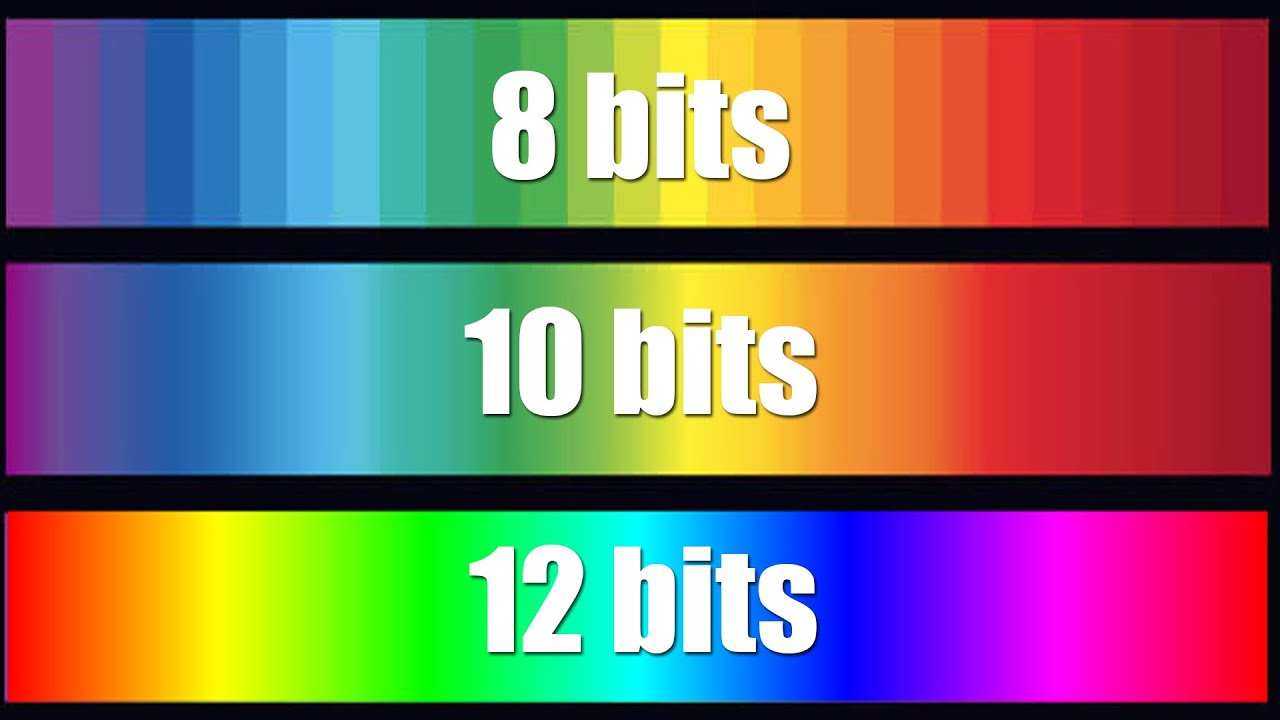
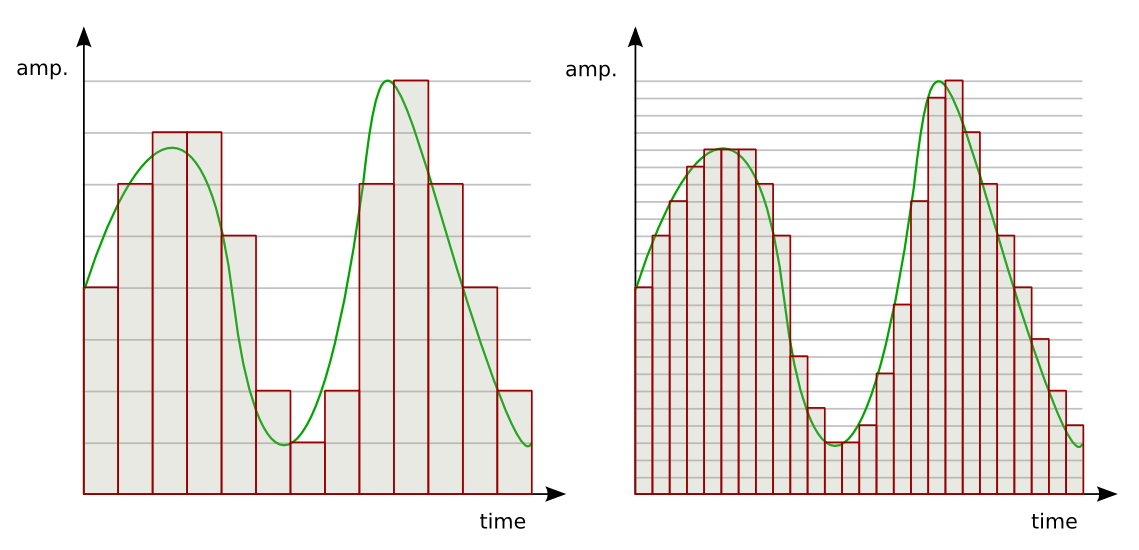
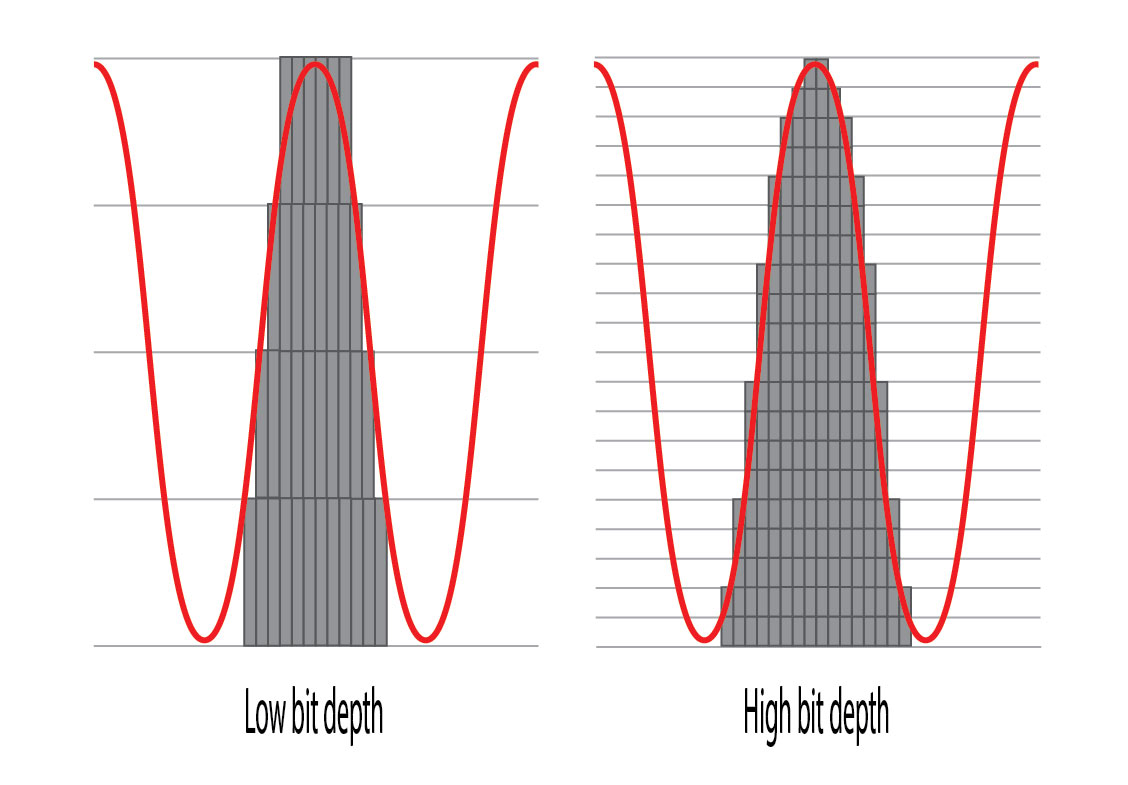
Dynamic range is an expression that expresses the difference between the smallest sound and the loudest sound, but when you think of dynamic range in terms of the number of overlay bits, you think of it as “audio resolution”, and in a great I feel that it is almost no problem.
The 16-bit dynamic range is 96 dB, while the 24-bit dynamic range is 144 dB, which is quite a difference. High-resolution audio is especially important in terms of “noise countermeasures” as well as being able to reproduce the fineness of sound more faithfully.
Relationship Between Dynamic Range and Background NoiseAn example showing the relationship between noise and dynamic range in a 24-bit recording. The red waveform represents noise and the green waveform represents audio. In general, the higher the dynamic range, the better the s/n ratio.
The “noise floor” in the figure above represents the range occupied by the background noise generated by the equipment. The wider the dynamic range, the lower the noise ratio (increases s/n). In the figure, the standard noise floor for 24-bit recording is set to -120 dB, but the actual effective dynamic range in this case is about 120 dB.
By the way, the human audible range is said to be only about 120 dB, and this is why it is generally said that “it is not necessary to record with a bit count of 24 bits or more”. part being used. Occasionally I see jokes that assume they don’t exist, saying “32 bit audio interface is for cats”, but that’s the reason behind it.