
This is the question of the century: is it really worth buying an original album, downloading songs from a band’s official websites (i.e. not listening to YouTube or Spotify) and having good headphones?

To answer, you first need to understand if the quality differences have just been flaunted or if they are really worth the price they charge.
But above all: what are the differences in simple words?
First, the format: On YouTube and Spotify we tend to find compressed formats of various types, while on CDs we find music in WAV format. The difference between a more compressed and a less compressed format is that certain intermediate information is discarded for storing memory: Among the examples of high-quality formats for listening to music, we can mention the WAV or the FLAC, while the less well-known one is the famous MP3 .
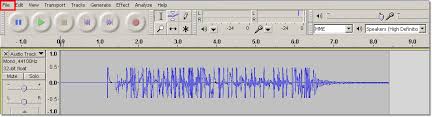
Digital sampling of an analog waveform involves the following parameters: The maximum frequency that the signal reaches (which determines how quickly I need to sample a bit based on a formula, and when you consider that Hz is the inverse of Is seconds, all return) and the number of bits used to encode the deflection range of the signal in relation to the sound intensity (the dynamics of the signal).
The WAV format takes these parameters into account and carries out the coding via the analog digital converter, while MP3 takes into account some psychoacoustic considerations, in particular the fact that certain frequencies are not perceived by the human ear and can therefore break off completely. from the file; There are also points where some sounds are louder and prevent the weaker ones from being heard, which also removes them. Last trick: Since some frequencies are perceived better and others worse, their levels are adjusted to store the most perceived. Once this selection is made, the signal that has been selected for storage is compressed.
It is not an insignificant detail to state that MP3s are not all the same, there are different formats for the sound playback speed: MP3 with 320 kbps or 256 kbps corresponds more to the uncompressed quality of CDs (1/4 of the information) of the CD in 256 kbps) while MP3 at 128 kbps or 96 kbps occupies an insignificant space per song, but we notice the difference because they make up 1/15 of the information (at 96 kbps) than that of a CD.
48000 Hz per second are sampled on a CD, with a likely excess of information that the ear does not even perceive. However, if you have a system that can reproduce these nuances, you will undoubtedly perceive a greater naturalness (depending on the device you are listening to).
When you talk about the type of headphones you use to listen to a song, it also has a big impact on the quality of the sound that reaches the ear. Take common headphones as an example: These act as digital-to-analog converters with a signal path that is exactly the opposite of analog-to-digital. Since the human ear cannot distinguish digital sounds, but inevitably requires a converter that converts them into sound waves, all previous work is lost on headphones of poor quality.
Even from the point of view of simple mechanics, the cones (the part of the headphones for reproduction that we find under the upholstery) have a soft part in the middle that offers space for air movement: by reducing this cone, the available air becomes much less and they cannot reproduce the sound wave perfectly. It goes without saying that inferior “headphones” are made from materials that, for example, cannot withstand certain pressures because they cannot reproduce a wide dynamic range – they are compressed accordingly.
Compression is the process of dropping signals too high and vice versa to make them all “in one band”. If the headphones are compressed, this means that the high signals are reduced and therefore distorted and the low signals are amplified and therefore imperfections are perceived more: the dynamics are lost. For example, a low signal that had a nice sound due to a precise intensity after amplification is likely to be almost annoying.
From all of this, we would like to conclude that if we do not allow ourselves to listen to a piece exactly as it was intended, we do not only deprive ourselves of acoustic feedback of the effects, but also the time for the production (to be consistent)

