Sound digitization


Free Download Mp4Gain
picture

Sound digitization

Sound

Recently, the capabilities of multimedia equipment have grown significantly, but for some reason this area has not received enough attention.

Sound Perception

The average user suffers from a lack of information and is forced to learn only from his own experience and mistakes. With this article we will try to eliminate this annoying misunderstanding. This article is aimed at a common user and aims to help you understand the theoretical and practical foundations of digital sound, to identify the basic possibilities and techniques of its use.

What exactly do we know about the sound capabilities of a computer, other than the fact that our home computer has a sound card and two speakers? Unfortunately, probably due to insufficient literature or for some other reason, but the user is, in most cases, unfamiliar with anything other than Windows’ built-in audio input / output mixer and recorder. The only use of a sound card that a common user encounters is to play sound in games and listen to a collection of audio. And after all, even the simplest sound card installed in almost every computer can do much more: it opens up wide possibilities for everyone who loves and is interested in music and sound, and for those who want to create your own music, a sound. The card can become an omnipotent tool. To find out what the computer can do in the field of sound, you just need to take an interest and you will be presented with opportunities that, perhaps, you did not even know about. And all this is not as difficult as it might seem at first glance.

Some facts and concepts that are difficult to do without:

According to the theory of the Fourier mathematician, a sound wave can be represented as a spectrum of frequencies included in it.

The frequency components of the spectrum are sinusoidal oscillations (so-called pure tones), each of which has its own amplitude and frequency. Therefore, any vibration, even the most complex shape (for example, a human voice), can be represented as the sum of the simplest sinusoidal vibrations of certain frequencies and amplitudes. On the contrary, by generating different vibrations and superimposing them on each other (mixing, mixing), you can get different sounds.
Note: The hearing aid / human brain is capable of distinguishing between 20 Hz and ~ 20 kHz frequency components (upper limit may vary based on age and other factors). Also, the lower limit fluctuates a lot depending on the intensity of the sound.

Digitize sound and store it on digital media
“Normal” analog sound is represented on analog equipment as a continuous electrical signal. The computer operates with data in digital form. This means that the sound on the computer is also represented in digital form. How does the conversion of an analog signal to digital occur?
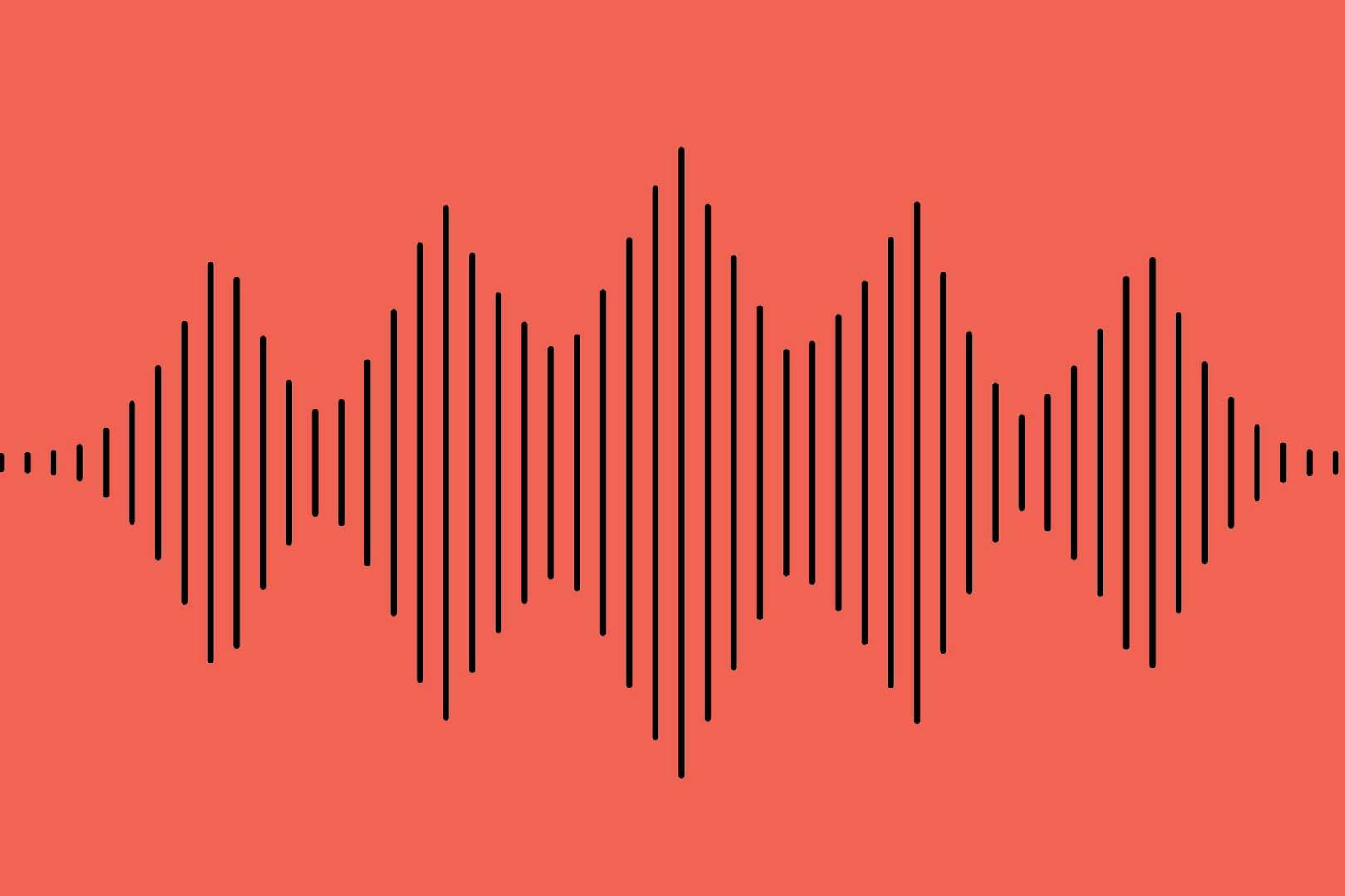
Digital sound is a way of representing an electrical signal using discrete numerical values ​​of its amplitude. Let’s say we have a good quality analog audio track (by saying “good quality” we will assume a silent recording that contains spectral components from the entire audible frequency range, roughly 20 Hz to 20 KHz) and we want to “input” into a computer (ie digitize) without loss of quality. How to achieve this and how is digitization carried out? A sound wave is a kind of complex function, the dependence of the amplitude of a sound wave on time. It would seem that since it is a function, you can write it to a computer “as is,” that is, describe the mathematical form of the function and store it in the computer’s memory. However, this is practically impossible, since sound vibrations cannot be represented by an analytical formula (like y = x2, for example). There is only one way left: to describe the function by storing its discrete values ​​at certain points. In other words, at each moment, you can measure the value of the amplitude of the signal and write it as numbers. However, this method also has its drawbacks, as we cannot record the amplitude values ​​of the signal with infinite precision and we are forced to round them. In other words, we will approximate this function along two coordinate axes: amplitude and time (approximate in points means, in simple terms, taking the values ​​of the function in points and writing them with finite precision). Therefore, signal digitization involves two processes: a sampling process (sampling) and a quantization process. Sampling process is the process of obtaining the values ​​of the converted signal at certain intervals.

Quantization is the process of replacing the actual values ​​of the signal


Free Download Mp4Gain
picture


Mp4Gain Main Window
picture


Mp4Gain Features
picture


Free Download Mp4Gain
picture

Sound – Part 3

Sound – Part 3

Sound

The phenomenon of resonance plays an important role in the conduction of sound, in which the sound wave of a vibrating object causes the vibratory movements of another (resonator).

sound perception

The resonance can be sharp, if the natural oscillation period of the resonator coincides with the period of the acting force, and muffled, if the oscillation periods do not coincide. With a sharp resonance, the oscillations decay slowly, dull, quickly. It is important to note that the vibrations of the structures of the ear that conduct the sounds decay rapidly; This eliminates external sound distortion, so that a person can receive more and more sound signals quickly and steadily. Some structures of the cochlea have a sharp resonance, which helps to distinguish between two closely spaced frequencies. The main properties of the hearing analyzer. The main properties of the hearing analyzer include its ability to distinguish between the pitch (frequency concept) of sound, its volume (intensity concept) and the timbre, which includes the main tone and harmonics. As is common in classical physiological acoustics, the human ear perceives a band of sound frequencies from 16 to 20,000 Hz (12-24 to 18,000-24,000 Hz). The greater the amplitude of the sound, the better the audibility. However, up to a known limit, beyond which sound overload begins. Vibrations with a frequency of less than 16 Hz are called infrasound and above the upper limit of auditory perception (that is, more than 20,000 Hz) – ultrasound. Under normal conditions, the human ear does not pick up infrared and ultrasound, but with a special study these frequencies are also perceived, hearing gradually deteriorates with age. it moves towards the perception of low frequencies and the area of ​​greatest sensitivity. So if at age 20-40 it is in the 3000 Hz region, then at age 60 and older it shifts to the 1000 Hz region. The upper and lower limits of hearing can change with disease. of the auditory organ, as a result of which the area of ​​auditory perception is reduced. In children, the upper limit of sound perception reaches 22,000 Hz, in older people it is lower and usually does not exceed 10,000-15,000 Hz. In all mammals, the upper limit is higher than in humans: for For example, in dogs it reaches 38,000 Hz, in cats – 70,000 Hz, in bats – 200,000 Hz or more. As studies carried out in our country have shown, a person is capable of perceiving ultrasounds with a frequency of up to 200-225 kHz, but only with bone conduction.

+ The entire range of frequencies perceived by the human ear is divided into several parts: tones up to 500 Hz are called low frequency, 500 to 3000 Hz – medium frequency, 3000 to 8000 Hz – high frequency. Different parts of the range are perceived by the ear differently. It is most sensitive to sounds in the 1000-4000 Hz range, which is important for the perception of the human voice. The sensitivity (excitability) of the ear at frequencies below 1000 and above 4000 Hz is significantly reduced. Therefore, for a frequency of 10,000 Hz, the threshold sound intensity is 1000 times greater than for the optimal sensitivity zone of 1000-4000 Hz. The different sensitivity to low and high frequency sounds is largely due to to the resonant properties of the external auditory canal. The corresponding properties of the sensitive cells of the individual snail curls also play a role.

Sound – Part 2

Sound – Part 2

Sound perception

Physiological characteristics of sound perception

The identical states of a sound wave (areas of thickening or rarefaction) are called phases. The distance between the same phases is called the wavelength. Low sounds, in which the phases are far from each other, are characterized by a long wavelength, high sounds with a close phase position – small (short).

Phase and wavelength are important in the physiology of hearing. Thus, one of the conditions for optimal hearing is the arrival of a sound wave at the windows of the vestibule and cochlea in different phases (anatomically, this is provided by the sound conduction system of the middle ear). High sounds with a short wavelength cause vibrations of a low column of labyrinthine fluid (perilymph) at the base of the cochlea, low, with a longer wavelength, propagating to its apex. This circumstance is important for understanding modern theories of hearing.

The physical characteristics of sound also include the frequency and amplitude of sound vibrations. The unit of measurement for vibration frequency is 1 hertz (Hz), which is the number of vibrations per second. Amplitude of vibrations: the distance between the middle and extreme positions of the vibrating body. The amplitude of the vibrations (intensity) of the sound body largely determines the perception of sound. By the nature of vibratory movements, sounds are divided into three groups: pure tones, complex tones, and noise. Harmonic (rhythmic) sinusoidal vibrations create a clean and simple sound tone (that is, a tone of the same frequency sounds), like the sound of a tuning fork. An inharmonious sound that differs from simple tonal sounds in a complex structure is called noise. The noise spectrum consists of a variety of vibrations, the frequencies of which are chaotically related to the pitch frequency, like different fractional numbers. The perception of noise is often accompanied by unpleasant subjective sensations. Complex tones are characterized by an orderly relationship of their frequencies to the frequency of the main tone, and the ear has the ability to analyze complex sounds. In general, the ear decomposes each complex sound into simple sinusoidal components (Ohm’s law), that is, what happens in physics is called “Fourier’s theorem (series)”.

The ability of a sound wave to bend around obstacles is called diffraction. Low-frequency sounds with a long wavelength have better diffraction than high-pitched sounds with a short wavelength. The phenomenon of reflection of a sound wave from obstacles in its path is called an echo. The multiple reflection of sound in closed rooms from various objects is called “reverberation”. With good sound insulation of rooms, the reverberation is weak, for example, in a theater, cinema, etc., with poor sound insulation, it is strong. The phenomenon of superposition of the reflected sound wave on the primary sound wave is called “interference”. With this phenomenon, an increase or decrease in sound waves can be observed. When sound passes through the external auditory canal, its interference takes place and the sound wave is amplified.

Sound perception mechanism

Sound perception mechanism

The perception of sound

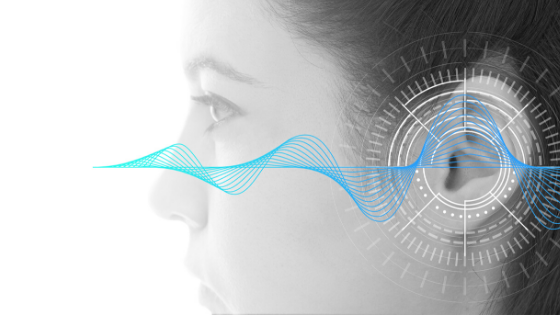
The sound vibrations of the air, passing through the external auditory canal, cause vibrations of the tympanic membrane and, through the auditory ossicles, are transmitted in an enhanced form to the membrane of the oval window leading to the vestibule of the cochlea.

SOUND PERCEPTION

The resulting vibration sets the perilymph and endolymph of the inner ear in motion and is sensed by the fibers of the main membrane, which carries the cells of the organ of Corti. The vibration of the hair cells of the organ of Corti causes the hairs to come into contact with the integumentary membrane. The hairs bend, causing a change in the membrane potential of these cells and the appearance of excitation in the nerve fibers that braid the hair cells. Through the nerve fibers of the auditory nerve, the excitation is transmitted to the auditory analyzer of the cerebral cortex.

The human ear can perceive sounds with a frequency of 20 to 20,000 Hz. Physically, sounds are characterized by frequency (number of periodic vibrations per second) and force (amplitude of vibrations). Physiologically, this corresponds to tone and volume. The third important characteristic is the sound spectrum, that is, a composition of additional periodic oscillations (harmonics) that arise together with the fundamental frequency and exceed it. The sound spectrum is expressed by the timbre of the sound. This is how the sounds of different musical instruments and the human voice are distinguished.

The distinction between sounds is based on the phenomenon of resonance that occurs in the fibers of the main membrane.

The width of the main membrane, that is, the length of its fibers is not the same: the fibers are longer at the apex of the cochlea and shorter at its base, although the cochlear canal is wider here. Its natural vibration frequency depends on the length of the fibers: the shorter the fiber, the more sound it resonates. When a high-frequency sound enters the ear, the short fibers of the main membrane located at the base of the cochlea resonate in it and the sensitive cells located in them are excited. In this case, not all cells are excited, but only those that are in fibers of a certain length. Low sounds are heard by the sensitive cells of the organ of Corti, located in the long fibers of the main membrane at the apex of the cochlea.

+ At the same time, the speed of the signal’s passage through the structures of the auditory organ and its entry into the cortex requires some reserves. Therefore, it is known that initially the hearing organ simply assesses the arrival of the signal and then adjusts to the level of best audibility. This means that the first stage takes between 35 and 175 milliseconds and the second between 180 and 500. At the same time, the maximum number of distinguishable sounds depends on the frequency of vibration and the functional state of the organ, and is set at 3 – 4 thousand shades.

Therefore, the primary analysis of sound signals begins already in the organ of Corti, from where the excitation is transmitted along the fibers of the auditory nerve to the auditory center of the cerebral cortex in the temporal lobe, where they are evaluated. qualitatively.