
What is the Nyquist Frequency?

Nyquist Frequency: Understanding the Basics
When it comes to digital signal processing, one of the most important concepts is the Nyquist Frequency. Simply put, the Nyquist Frequency is the highest frequency that can be accurately represented in a digital signal. But what exactly does that mean? Let’s break it down.
Imagine you are listening to a song on a CD. The CD player reads the music as a series of 0s and 1s, which are then converted into electrical signals that can be played through speakers. But how does the CD player know what the music sounds like? It uses a process called sampling, which involves taking a snapshot of the music at regular intervals.
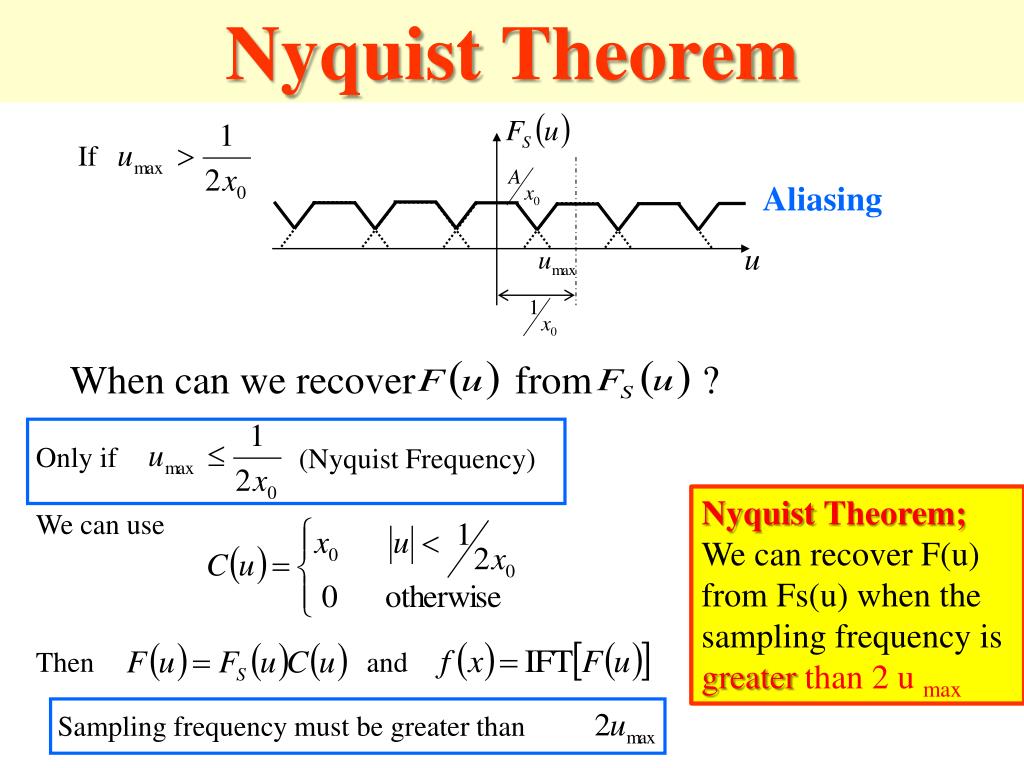
The Nyquist Frequency comes into play because of this sampling process. According to the Nyquist-Shannon sampling theorem, in order to accurately represent a signal in digital form, you need to sample it at least twice as fast as the highest frequency you want to represent. This means that if you want to accurately represent a signal that contains frequencies up to 20kHz (which is the upper limit of human hearing), you need to sample it at least 40,000 times per second.
Nyquist Rate: What You Need to Know
The Nyquist Rate is the minimum rate at which a signal must be sampled to accurately represent it in digital form. It is calculated by multiplying the highest frequency you want to represent by two. For example, if you want to represent a signal that contains frequencies up to 10kHz, the Nyquist Rate would be 20,000 samples per second.
It’s important to note that sampling a signal at a rate that is too low can result in a phenomenon called aliasing. Aliasing occurs when a higher frequency signal is incorrectly represented as a lower frequency signal. This can cause distortion and other unwanted effects in the digital signal.
To avoid aliasing and accurately represent a signal, it’s crucial to sample at or above the Nyquist Rate. In fact, many digital audio devices sample at rates much higher than the Nyquist Rate to ensure high-quality audio reproduction.
Analog-to-Digital Conversion: The Role of the Nyquist Frequency
Analog-to-digital conversion is the process of converting an analog signal (such as an audio waveform) into a digital signal that can be processed by a computer. This process involves sampling the analog signal at regular intervals and converting each sample into a digital value.
The Nyquist Frequency plays a crucial role in analog-to-digital conversion because it determines the minimum sampling rate required to accurately represent the analog signal in digital form. If the sampling rate is too low, the resulting digital signal will be inaccurate and distorted.
To ensure high-quality analog-to-digital conversion, it’s important to sample the analog signal at or above the Nyquist Rate. This will result in a digital signal that accurately represents the original analog signal and can be processed and manipulated with high precision.
As the famous engineer and inventor, Nikola Tesla said, “The day science begins to study non-physical phenomena, it will make more progress in one decade than in all the previous centuries of its existence.” The Nyquist Frequency is a prime example of the intersection of science and engineering, and its importance cannot be overstated.
Final Words
In conclusion, the Nyquist Frequency is a fundamental concept in digital signal processing that plays a crucial role in accurately representing analog signals in digital form. By understanding the Nyquist Frequency and its relationship to sampling


