MPEG-1 Audio Layer II


Free Download Mp4Gain
picture

MPEG-1 Audio Layer II

MP3 (MPEG-1 Audio Layer III

MPEG-1 Audio Layer II or MPEG-2 Audio Layer II (MP2, sometimes incorrectly called Musicam or MUSICAM), is a lossy audio compression format defined by ISO / IEC 11172-3 in conjunction with MPEG-1 Audio Layer I and MPEG Audio Layer -1 III (MP3). While MP3 is much more popular for PC and Internet applications, MP2 is still the dominant standard for streaming audio.

MP3

Development history from MP2 to MP3

The MPEG-1 Audio Layer 2 encoding was derived from MUSICAM (masking pattern adapted by Universal Subgroup Integrated Coding And Multiplexing), an audio codec developed by the Center commun d’études de télévision et télécommunications (CCETT), Philips and Institut für Rundfunktechnik (IRTfunktechnik) in 1989 as part of the EURECA 147 pan-European intergovernmental research initiative for the development of an audio and data transmission system to fixed, portable or mobile receivers (established in 1987).

MPEG audio

In the late 1980s, ISO’s Moving Picture Experts Group (MPEG) began an effort to standardize digital video and audio encoding, which is expected to have a wide range of applications in digital radio and television broadcasting ( later TOUCH, DMB, DVB) and use on CD-ROM (later Video CD). The MUSICAM audio encoding was one of 14 proposals for the MPEG-1 audio standard that were shipped to ISO in 1989.

The MPEG-1 audio standard was based on the existing MUSICAM and ASPEC audio formats.

The MPEG-1 audio standard included three audio “layers” (encoding techniques) now known as Layer I (MP1), Layer II (MP2), and Layer III (MP3).

All algorithms for MPEG-1 Audio Layer I, II, and III were approved as draft in 1991 by the ISO 11172 committee and completed in 1992 as part of MPEG-1, the first set of MPEG standards that led to the international ISO standard. / IEC 11172-3 (also known as Audio MPEG-1 or Part 3, MPEG-1) published in 1993. Additional work on MPEG audio was completed in 1994 as part of the second set of MPEG standards, MPEG-2, more formally known as International Standard ISO / IEC 13818-3 (also known as MPEG-2 Part 3 or MPEG-2 Audio backward compatible or MPEG-2 BC Audio), originally published in 1995. MPEG-2 Part 3 (ISO / IEC 13818 -3) defined additional bit rates and sample rates for MPEG-1 Audio Layer I, II and III. The new sample rates are exactly half of those originally specified for MPEG-1 Audio. MPEG-2 Part 3 also expanded MPEG-1 audio, allowing audio programs with more than two channels to be encoded in 5.1 multichannel.

Component Layer III (MP3) uses a lossy compression algorithm that has been designed to dramatically reduce the amount of data required to present an audio recording and be like a decent reproduction of the original uncompressed audio for most listeners.


Free Download Mp4Gain
picture


Mp4Gain Main Window
picture


Mp4Gain Features
picture


Free Download Mp4Gain
picture

Why is Mp3 the most common format?

MP3, or MPEG1 layer III as a whole, has certainly become the most widely used and qualitatively least promising music carrier since CD, and on a global scale. This is just a seemingly simple trick: as much music as possible in the least possible (storage) space; and, by extension, the shortest possible transmission time (for downloading and uploading). With that MP3, he killed two birds with one stone and that combination became a source of income.

Mp3

It is about data reduction, nothing more and nothing less, which required a technical approach different from the conventional method, which is based on sampling amplitudes, the precision of which is determined by the number of bits used to capture that amplitude. The bandwidth (“memory”) that the audio signal consumes is determined by three factors: 1. the number of samples taken per second (frequency); 2. the number of bits to record the amplitude (the so-called bit depth) and finally the length of the signal (time). From these three data the following calculation formula is established:

MP3

Memory = frequency x bit depth x time (per channel)

For the 16-bit audio CD, we already read about it in part I, the sample rate is 44.1 kHz. If we now put the previous formula aside, the result is:

Memory (CD) = 44,100 x 16 x 60 x 2 (channels, stereo) = 84,672,000 bits

or a little over 10 mb per minute. For a symphony with a play time of about an hour, this results in over 600MB in total. If we then look at the transmission speed of a standard modem (56 kb / s), it takes about half an hour to download music. By Eroica this would take 25 hours. Nobody wants to do that, aside from the increasing risk of signal outages during that absurdly long period. A good ADSL connection should take at least 2 hours, with an emphasis on the minimum, because the transmission speed depends on how busy the lines are and can be a fraction of what is specified. In any case, under very favorable conditions for Wagner’s Götterdämmerung, no less than one working day can be allocated. In short, another solution had to be found and it came in MP3 form.

Matter of algorithm

MP3 was developed in Germany in the late 1980s by the Fraunhofer Institute, which also owns the patents for that system. The original commission was to develop a high-quality audio system suitable for routing through the existing telephone network. So good sound through the phone. With its 2 x 64 kb / s bandwidth in duplex mode, ISDN seemed to be ideal as a starting point for such an audio concept. Fraunhofer succeeded with great success, but therefore the task was not to develop MP3, as it is now used all over the world in the field of music reproduction.

MP3 or MPEG-1 Layer III, is part of the MPEG, or Moving Picture Coding Experts Group as a whole, which was created to develop a standard for the encoded release of feature films, documentaries and audio. Audio, of course, was part of this, if only because an encoded movie without sound, of course, couldn’t. From its humble beginnings, the MPEG group grew to 350 experts representing no less than 250 companies and organizations in 20 countries. It also follows that the parties quickly agreed on a uniform approach and method of work, and thus the global standard to be used. But to prevent everyone from going their own way in MP3 development based on their own principles, an ISO standard was soon established on the basis of commonly formulated directives. Furthermore, the Internet has contributed greatly to the efficient work of the various groups within the MPEG model: technicians have the opportunity to easily exchange their findings and proposals through the MPEG ftp site. When a meeting takes place, the participants (mainly academics with technical backgrounds) are already well informed in advance. technicians have the opportunity to easily share their findings and proposals via the MPEG ftp site. When a meeting takes place, the participants (mainly academics with technical backgrounds) are already well informed in advance. technicians have the opportunity to easily share their findings and proposals via the MPEG ftp site. When a meeting takes place, the participants (mainly academics with technical backgrounds) are already well informed in advance.

World standards

MP3 is part of MPEG, or Moving Picture Coding Experts Group as a whole, which was created to develop a standard for the encoded release of feature films, documentaries, and audio.

How a Suzanne Vega song was used to develop the MP3

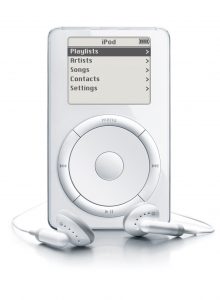
The triumphant advancement of MP3 music began with the first iPod, which was introduced by Apple on October 23, 2001.

The First iPod

German researchers invented the revolutionary MP3 format two decades ago. Now engineers are working on the audio technology of the future. Now they are being honored for their pioneering work.

Suzanne Vega - Tom's Diner

The MP3 music format is one of Germany’s most successful innovations. It is used around the world to store, transfer, and play music, audio books, and other digital audio products.

Three engineers who participated in the development of MP3 were awarded the Eduard Rhein Prize for Technology in Munich. Karlheinz Brandenburg, Bernhard Grill and Jürgen Herre share the prize, which is endowed with 30,000 euros.

Why the song “Tom’s Diner” was important to the development of MP3 and what innovations in audio technology can be expected, explains Professor Brandenburg, director of the Fraunhofer Institute for Digital Media Technology in Ilmenau.

Die Welt: Suzanne Vega’s song “Tom’s Diner” plays a special role in your career. Do you still have the song in your ears?

Karlheinz Brandenburg: Of course (hums the tune). As a doctoral student, he had developed a new method for storing music at a very low data rate. When I started writing all this, I read in a hi-fi magazine that “Tom’s Diner” is used to test high-quality music systems. I was curious what my algorithm, the forerunner of MP3, would do with this music. The result was amazing. Suzanne Vega’s voice sounded very husky and she seemed to be singing duet with herself. Very bad.

Die Welt: What consequences did that have for your doctoral thesis?

Brandenburg: I ​​wrote it down anyway and mentioned that the “Tom’s Diner” algorithm doesn’t work. It took years to understand what was happening. However, with a few tricks it was possible to encode this song to sound perfect.

Die Welt: Several researchers participated in the development of MP3. What was your most important contribution?

Brandenburg: I ​​am often credited with introducing a model of the psychoacoustic properties of the sense of hearing. But that already existed. My contribution was more technical – the way I converted various voice, image and video encoding algorithms and combined them in such a way that the integration of the psychoacoustic model was very easy and low bit rates were achieved for the circumstances. could.

Die Welt: How did the name MP3 come about?

Brandenburg: The official name of this data compression method is “MPEG Audio Layer 3”, a standard that has been defined by Moving Pictures Experts Group. Layer 3 is one of the three modes. Layer 2 was used in DAB digital radio, for example. Our team at the Fraunhofer Institute for Integrated Circuits (IIS) in Erlangen relied on the Internet from the beginning. The compressed music was saved on the hard drives of the PC. The Windows 3.1 operating system expected files to have three-digit extensions. So after a short consultation on July 14, 1995, we decided to add the final mp3 to the compressed audio files. There is a reference to MPEG and also to Layer 3.

Die Welt: A few years later, you could see people everywhere listening to music with MP3 players.

Brandenburg: Exactly. At first I shrugged off the name of the MP3 player, because mp3 was actually a final file. But I quickly realized that MP3 players are a good name for these devices.