MP3 File Structure: Understanding the Building Blocks

MP3 files are one of the most popular audio formats in the world. They are used to store music, audiobooks, and other audio recordings. MP3 files are compressed, which means that they take up less space than uncompressed audio files. This makes them ideal for storing and sharing music.
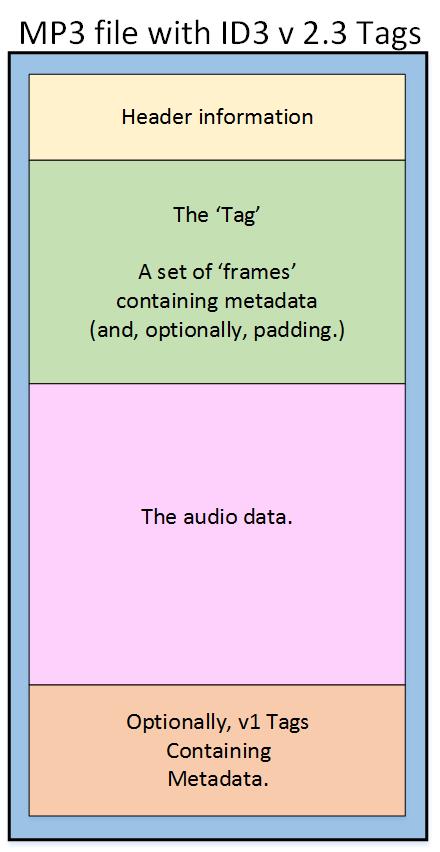
MP3 files are made up of a number of different parts. These parts are called frames, headers, and tags.
Frames
Frames are the basic building blocks of MP3 files. They contain the actual audio data for a small portion of the song. Each frame is 1152 bytes long.
Frames are divided into two parts: the header and the data block.
Header
The header is 4 bytes long. It contains information about the frame, such as the sample rate, the bit rate, and the stereo mode.
Data Block
The data block is 1150 bytes long. It contains the actual audio data for the frame. The data block is compressed using a lossy compression algorithm. This means that some of the data is removed from the audio signal in order to reduce the file size. However, the lossy compression algorithm used in MP3 files is very good at preserving the quality of the audio signal.
Headers
There are two types of headers in MP3 files: the sync word and the frame header.
Sync Word
The sync word is 12 bits long. It is used to identify the beginning of a frame. The sync word is always the same, so it is easy for a decoder to find the beginning of a frame.
Frame Header
The frame header is 4 bytes long. It contains information about the frame, such as the sample rate, the bit rate, and the stereo mode.
Tags
Tags are used to store information about the MP3 file, such as the title, artist, and album. Tags are stored in a separate section of the MP3 file.
Tags are not essential for playing an MP3 file, but they can be useful for organizing and identifying your music collection.
Conclusion
MP3 files are a popular and versatile audio format. They are compressed, which makes them ideal for storing and sharing music. MP3 files are made up of frames, headers, and tags. Frames contain the actual audio data, headers contain information about the frame, and tags store information about the MP3 file.