HD sound guide

When it comes to HD (high definition) audio, Blu-ray player playback on computer, many people tend to think that the presence of the HDMI interface on the motherboard or video card allows it to automatically play on your TV and home theater system high definition audio formats such as Dolby. Digital Plus, High Resolution DTS-HD, Dolby TrueHD and DTS-HD Master Audio.

However, with the exception of some interesting possibilities, in most cases this is not the case at all. Even relatively new high-end HDMI-equipped motherboards, video cards, and sound cards may not be able to handle such large audio streams on their own. Ultimately it all comes down to what kind of input signal they can receive and what kind of signal they can output.
In this review, we’ll take a look at all HD audio formats, their bitrate (streaming), and delivery requirements to the playback medium. In Part 2, we will continue to explore how digital audio streams can (or cannot) be handled in typical PC components. After reading both articles, you will need to understand in depth why so many home theater users use a variety of analog cables (three for 5.1 channel and four for 7.1) instead of HDMI to deliver multi-channel audio where you need it. We’ll also talk about some of the workarounds associated with converting a digital to analog signal on a computer, rather than a receiver or preamplifier – this option is often the most affordable option for optimal HD sound quality. And finally, you can see why buying a Blu-ray player for your home theater is worth waiting a little longer; This will allow you to take advantage of some of the new benefits that should appear before the end of 2008, but are not ready yet (at least they are not ready at the time of writing this article).
In the first part we will cover the following points:
The bit rate (or stream) associated with each format, as well as the number of channels, sample rates (sampling), and bit depths used to encode the formats.
Whether the SPDIF connector can provide the required stream for each format and what types of HDMI interfaces each format works with.
In Part Two, we’ll look at PC software codecs to find out what formats they work with, as well as the types of interfaces that HDMI-equipped motherboards, video cards, and sound cards can support. And since new chipsets and interfaces are available recently (or will be available relatively soon), we’ll also explain how new and future hardware can provide simpler solutions for high-definition audio for PCs that are currently in dire straits.
High Definition Audio Formats (HD Audio)
Blu-ray discs can contain movie soundtracks in one of the following formats:
PCM (linear PCM or LPCM);
Dolby Digital;
DTS;
Dolby Digital Plus;
High resolution DTS-HD;
Dolby TrueHD;
DTS-HD master audio.
Before diving into the above formats in detail, Dolby technologies originated from Dolby Laboratories, a recognized provider of professional, semi-professional and consumer multi-channel surround sound and noise reduction technologies. The DTS format (also called Digital Theater Systems) is in turn derived from DTS, Inc. is also a well-known provider of digital audio technology that competes with Dolby Labs.
PCM (linear PCM or LPCM)
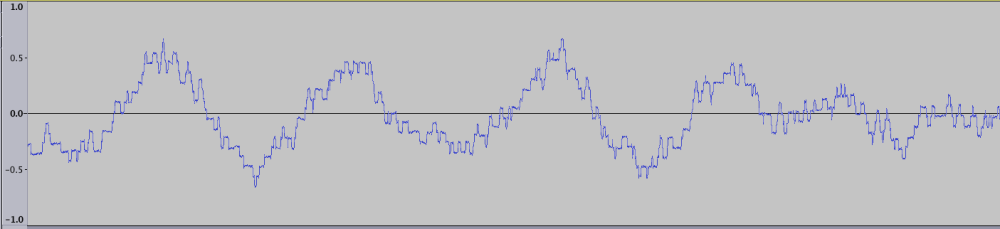
PCM (Pulse Code Modulation) PCM stands for Pulse Code Modulation and provides a digital representation of an analog signal that is sampled (digitized) at regular intervals (with a specified frequency in Hertz) and represented in binary form (with a specified precision – bit width). In addition to using PCM for computer digital audio and audio CDs, it is also used in some digital telephone systems and in various digital video formats. In PCM format, audio width values are represented using different numbers of bits (bit depth); the soundtrack is usually digitized in 12 to 24 bit, but most of the time 16 bit is used in PCM studio encoding for Blu-ray discs.
A PCM audio track can be an exact copy of a studio original encoded on a disc without compression if its bit depth is the same as that of the original. If the bit depth is reduced (as is often the case to save space allocated for storing audio on disk), this can cause a downgrade – for example, using 16-bit instead of 24-bit.