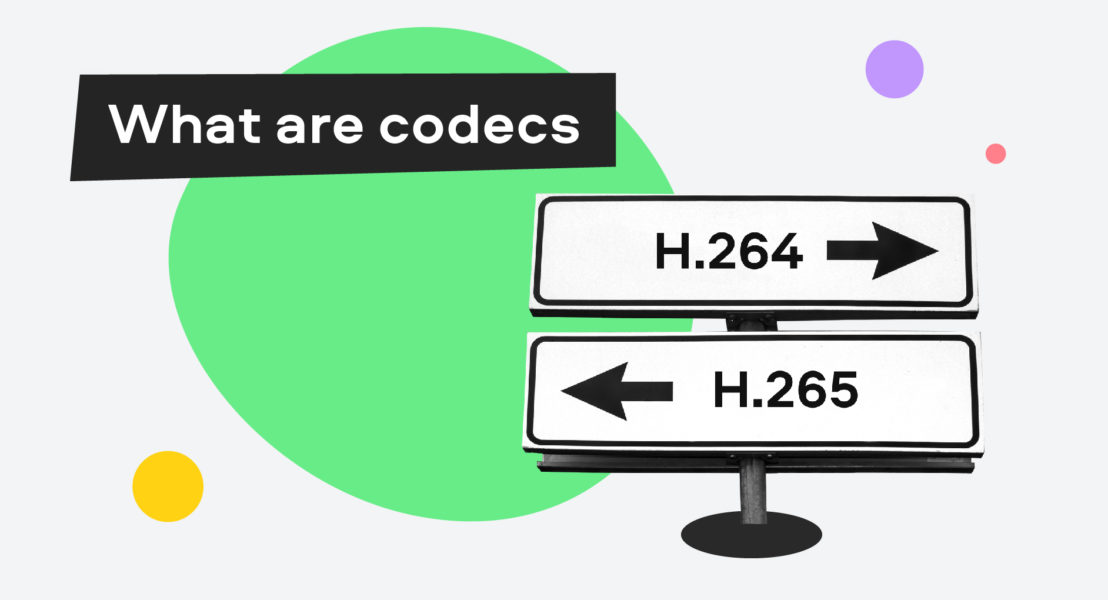
Video encoding methods


Free Download Mp4Gain
picture

Video encoding methods

Codec

Average video converter should have three encoding modes: CBR, VBR1 (1 step), VBR2 (2 steps).
Video Codecs

CBR is a constant bit rate that compresses all scenes equally. If there are static and dynamic scenes in the movie, then the CBR dynamics may be of insufficient quality and the static may be of excessive quality, which is completely unnecessary.

→ CBR can be used if the movie is small and can provide the highest encoding quality: 8500-9000 kbps.

VBR: variable bit rate. We set limits, for example, from 2000 to 9000 kbps. In static scenes, the encoder automatically reduces the bit rate and in dynamic scenes it increases. VBR1 is a single pass variable bit rate encoding. Its only advantage is speed, that is. the encoding time will be spent 2 times less than with VBR2. But the quality at average bitrate values ​​(5000-7000 kbps) will be lower than that of VBR2.

Having reached the first complex fragment, the encoder will be afraid to set the maximum bit rate, because it does not know what will happen next. What if suddenly dynamic scenes, and then we will not meet! And in simple, static scenes, the encoder is again afraid of reducing the bit rate considerably; if there are more scenes of the same, then we will not get the desired bitrate. As a result, the deviations from some average bit rate will be small. The quality is certainly better than CBR, but not enough.

→ If the film is smooth enough or pressed for time, use VBR1. Also, this method can encode a less important part of the disc, as a bonus.

VBR2 is a two-step variable bit rate encoding.
In VBR2 encoding mode, the encoder performs two passes, thus lengthening the encoding time. But after the first pass, you have all the information about the number and duration of the dynamic and static fragments, so the encoder safely increases the bitrate to the maximum or reduces it to the minimum. As a result, we will obtain the highest quality.

→ The VBR2 encoding method offers the best quality in a movie with scenes of different dynamics.


Free Download Mp4Gain
picture


Mp4Gain Main Window
picture


Mp4Gain Features
picture


Free Download Mp4Gain
picture

What is video encoding?

What is video encoding?

Video Codecs

Video encoding is the process of converting digital video files from one format to another.

Codecs

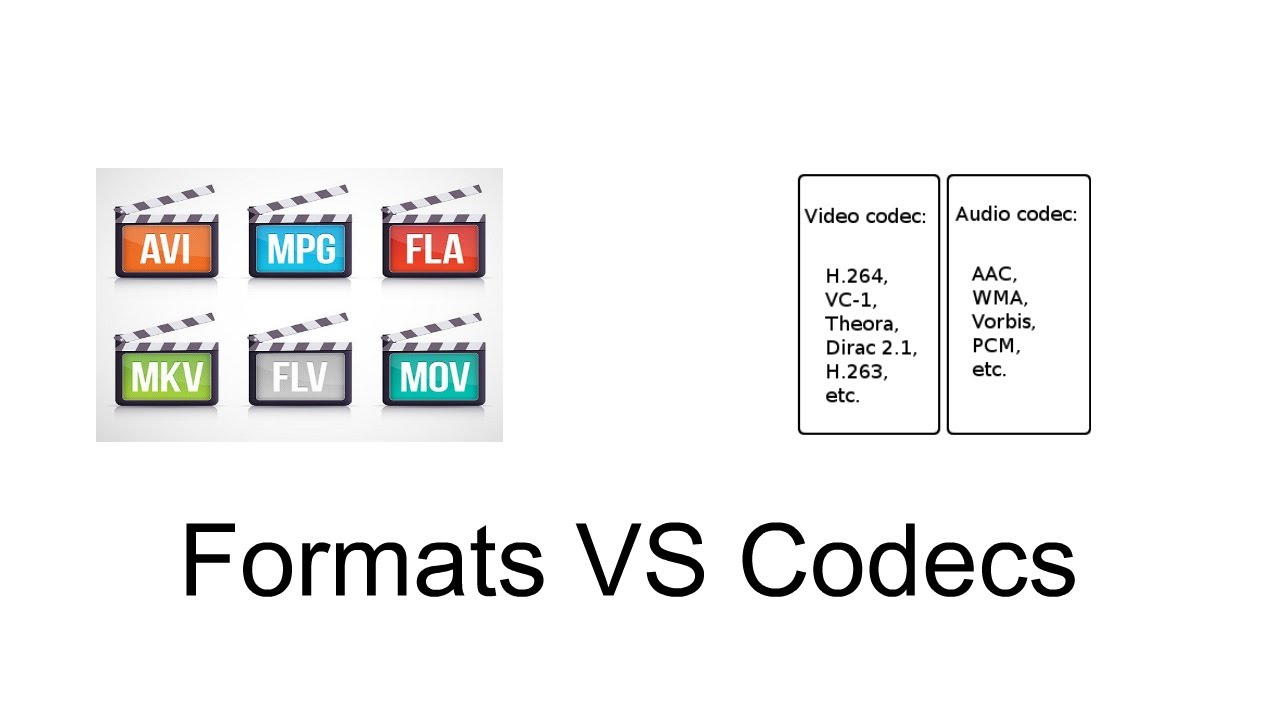
Encoding is also known as “transcoding” or “video conversion.” During recording, the device provides a video file in a specific format and other specifications. If the owner of a video wants to publish a video, he must consider the different devices on which the video can be played. All the videos we watch on our computers, tablets, and mobile phones have gone through an encoding process that converts the original video so that it can be viewed in a variety of output formats. This is because many types of devices and browsers only support certain video formats. Often times, the goal of a video editor is to ensure compatibility with different formats. Digital video can exist in many different formats, each with specific variables such as video containers (.MOV, .FLV, .MP4, .OGG, .WMV, WebM), codecs (H264, VP6, ProRes), and bitrates (in megabits or kilobits per second).

Different devices and browsers have different specifications, most of which are associated with one or more of these variables, and other variables. When encoding video, you should consider (a) the original source format and video capture method, (b) any subsequent encoding operations that have been performed on the video source, and (c) the required output formats.

There are many reasons why you would like to convert your videos. Also, if we talk about DVDs, they have a huge file size and are impractically divided. Honestly, the only reason we still use this format is because many people still use DVD players today. This format is incredibly outdated and has lagged behind current coding developments for several years. As for other video files, time is evolving.

The same file size that allowed us to watch mediocre AVI videos in the past now allows us to store 720p HD videos in MP4 format. Technology moves and so do we. Converting video files is a long and complicated process. While there are free apps that can get the job done, there is still a great deal of technical gibberish. If you want to know what happens during this process, read this article to the end.

Video containers Video containers are what most people use to differentiate between different video files. You should know most of them by name. The most popular ones are: AVI MPEG / MPEG-4 MKV RM / RMV MOV WMV The container is designed to store different types of data.

This includes audio, video, and sometimes subtitles. They are like the boxes in which we put our sweets. Note that the biggest difference between these containers is the support they provide for the basic bits of information. Different containers provide support for different audio and video compressions. Some will allow multiple audio tracks or subtitles to be included, while others will allow only one or none. If you want to add subtitles to an AVI or WMV file, you may need to burn them to the image. Video / Audio Codecs The actual difference between most video files depends less on the container used, but more on the video or audio codec in the container. The video codec determines how the information is processed. Some of the most popular video codecs include DivX / XviD h264 / x264 FFMPEG Theora You must remember that the content or how the content is stored is not always determined by the container, although it is often limited (for example, some containers support multiple streams audio, while AVI only supports one). As a result, there are several different combinations available between containers and codecs. Different codecs provide different picture or sound quality depending on the file size. The best known and most used are AVI containers, with DivX or the (free) XviD codec (but they are a bit outdated and have a terrible quality / file size ratio). There is also a newer x264 codec (which has an excellent quality / file size ratio). You can use it with the MKV container if you plan to use multiple audio tracks and subtitles, and also with the MP4 container. The MP4 container only supports one video stream and one audio track, but it has a higher support speed and can be played on iPod, PSP and most newer mobile phones. Bitrate The bitrate determines the data transfer rate. For video, this means that more data is included in a shorter audio / visual range. of the

Why do we need codecs and why are there different encoding qualities?

Why do we need codecs and why are there different encoding qualities?

What Are Codecs

Modern realities, namely the wide distribution of video on the Internet, require fast and high-quality data compression, and preferably with minimal requirements for the hardware part both during encoding and during decoding already on the client device.

How to Understand Codecs

To implement this idea, special algorithms (programs), called codecs, are introduced that are used to compress data. But, unfortunately, compression occurs with loss of information, that is, after decompression, the video becomes of lower quality, various problems appear, among them:

Decreasing colors (thicker gradients)
Average of adjacent areas (loss of detail and clarity)
Deterioration of the quality of moving objects (gaps in objects, artifacts, violations of object boundaries, mixing of objects with the background)

Freeze frame with video defects
However, currently widespread codecs are capable of compressing video into a very small amount of data with virtually no loss, but this is achieved through a significant increase in the requirements for calculations. In other words, compression takes a long time.

For video compression when it is done in advance, that is, not on the real-time playback scale, this problem is not that big. After all, if streaming a compressed stream is not important to stream in real time, you can either extend the stream, that is, assign a higher video bitrate for compression or compress the video as long as possible. And in any case, obtaining high quality, although with different data compression.

However, this scenario is not always available. If you want to stream a streaming, the encoding rate must be equal to or greater than the video playback rate. In this case, hypothetically, you can increase the bitrate and therefore use simplified compression methods, losing less detail during compression. And this would be so if modern streaming sites didn’t limit the bitrate available for a video stream.

In other words, to lose less quality when streaming video, you inevitably need to use data compression algorithms that consume more resources.

What are the configuration presets?
For both the x.264 codec and the more modern x.265 codec, there are many parameters that affect the quality of the encoding. Dozens of options with the ability to change many parameters, which form tens of thousands of combinations of settings. And so that the user does not have to waste time selecting optimal settings, out-of-the-box configuration presets were introduced. And for the x.264 codec and for the x.265 codec there are 10 presets.

Ultrafast
Super fast
Very fast
Faster
Fast
Means, medium
Slow
Slower
Very slow
Placebo
The default names convey their essence. And to be more precise, they characterize the video encoding rate. That is, the “Ultra Fast” preset allows you to encode ultra-fast video, “Slow” – to encode slowly, and the most “voracious” – “Placebo” was just invented “so was it” and to prove that this quality is also possible , but the possibility of its real application is more self-hypnosis than reality.

We discovered the presets. Now we need to understand the testing methodology and the quality criteria and evaluations.