The MP4 format


Free Download Mp4Gain
picture

The MP4 format – Parts, containers and extensions

When we talk about an .mp4 file or the MP4 format in general, what we are talking about is what is technically known as MPEG-4 Part 14. It is a standard format (ISO / IEC 14496-14) and it is a container format for multimedia tracks. In other words, this format defines how audio and video tracks (called data streams) can be contained in the file in various formats, and can even contain subtitles as well.

Within this container format, within the .mp4 file, the audio and video tracks can be encoded in various formats, as appropriate for the application to be given. Although in theory it supports many different formats (almost any) for these audio and video tracks, in practice the players of this format support only a few specific types, the most frequent being:

Audio: AAC (Advanced Audio Codec, which when they are loose are files with extensions .m4a or .3gp), or the MP3 format.
Video: the different variants of the MPEG format.

MPEG or Moving Picture Experts Group is a group of “authorities” and manufacturers in the field of audio and video that came together at the request of ISO in the late 1980s to create file encoding standards for this type of multimedia information, and thus guaranteeing compatibility between the media to be played and the playback devices. The first version of the standard, MPEG-1 came out in 1993, and since then there have been many new versions, and within these what they call “Parts”, which are concrete aspects of the standard and also extensions to the specification for concrete things, or improvements to the base format that they modify.

The most widespread version of this MPEG format is 4, or MPEG-4, which appeared in late 1998, and is what we know as MP4, due to the extension of its files. This version is divided into several sub-standards or “Parts” that describe certain issues of the format (for example, 14 the container, as I said at the beginning) and certain extensions.

Within the parts of the standard, part 10 describes an advanced encoding format that is what we also know as H.264, but that is actually also called MPEG-4 Part 10 and that is what Blue-Ray disks used , for example. That is why on many Internet sites they talk about H.264 and MPEG-4 being the same. And it is true, but not entirely, since in MPEG-4 parts 2, 12 or 14 also describe other compression formats that are MPEG-4, and the container format can also contain MPEG in previous versions of lower quality as MPEG -1 or MPEG-2.MPEG-4 Part 10 or H.264 or AVC format
Let’s recap what we know so far: when we talk about MP4 or .mp4 files nowadays, or about the “MP4 format” we are really talking about the container format. Within this one there can be audio and video in various formats, so speaking only of MP4 is not correct (or it is not precise at least) and it is necessary to specify more. Given that the format used to compress the video stream that contains the MP4 is of vital importance, the “surname” of said format is usually put to indicate well what we are referring to.

Thus, MP4 / H.264 is referred to for videos that use MPEG-4 part 10 and that are highly compatible and high-quality videos. It is also common to talk about the MP4 / MPEG-4 format, which in this case usually refers to Part 2 of MPEG-4, which is the original format that was released, and is of lower quality, so it is usually use to broadcast IP television (video surveillance) or distribute certain multimedia content (some “pirate” movies, multimedia CDs …) as it generally weighs less.

The MP4 / H.264 format is the one that must be used to play directly in browsers, since it is the one that all of them support today in all operating systems. It is much more efficient than MPEG-4 Part 2 (the original) when encoding, and offers much better quality even if we use a small bit rate or a reduced bandwidth when reproducing it. It resists transmission errors very well even if some packages are lost, so it works very well for streaming, video conferencing and similar applications. This format is also known as AVC (Advanced Video Coding), so sometimes you can read MP4 / AVC, but it is the same.

As a counterpart, the H.264 format is more complex and more complicated to encode (it may require up to 3 times more computing power than the original MPEG-4 format) and to decode (twice the power), but today with the devices that the average user has (both computers and mobiles, etc …) this is of little importance.


Free Download Mp4Gain
picture


Mp4Gain Main Window
picture


Mp4Gain Features
picture


Free Download Mp4Gain
picture

CHARACTERISTICS OF MP4 FILES


The MP4 format is considered a container that allows a combination of digital audio and digital video, as well as other data such as still images and subtitles that will be kept in a single file.

It is designed to synchronously contain multimedia information in a flexible format to exchange, manage and edit multimedia files.

This format allows storing information from audiovisual files such as those defined by MPEG, but it can also store other data such as subtitles and images.

Mp4 is known as the primary storage format for streaming audio and video from many websites, this is because MP4 provides high quality output equal to that of DVD at a compression ratio of 4MB per min.

Qualities of an MP4 format

It allows multiple signals or information flows to be sent through a communication link at the same time, that is, multiple audio and video tracks in a single file, and frames for variable seconds, subtitles, etc.

It is known as an ordered set of systematic operations, which allows encoding audio and video data optimizing its quality of storage, encoding and distribution in networks

With the help of new cameras on the market, capture and encoding are integrated in a single action, optimizing the user’s potential to issue it. The Mp4 can be used to create sound files that stand out from the rest due to their excellent quality.

Advantages of MP4 files

The MP4 has a broader support in operational systems and is widely used to share videos over the internet. The MP4 gives a quality impression very similar to that of the original DVD video. And videos of this type can be downloaded from websites quickly.

The MP4 format allows audiovisual content to be played on the Internet and also to be viewed in real time.

It is an international standard widely accepted by most programs and devices. The MP4 format is also considered a video format in which modern digital devices and devices can be played without problems.

This format can be adapted to create the basis for the development of new technologies as long as they are included in the “MP4 family”.

The MP4 format is considered a container that allows a combination of digital audio and digital video, as well as other data such as still images and subtitles that will be kept in a single file.

It is designed to synchronously contain multimedia information in a flexible format to exchange, manage and edit multimedia files.

This format allows storing information from audiovisual files such as those defined by MPEG, but it can also store other data such as subtitles and images.

Mp4 is known as the primary storage format for streaming audio and video from many websites, this is because MP4 provides high quality output equal to that of DVD at a compression ratio of 4MB per min.

The MP4 format is identical to the Apple MOV container format

Disadantages of MP4 files

Actually this type of format has few disadvantages, however it is advisable to mention them, and that is that when downloading an MP4 format file, there is a risk that it will be downloaded with viruses since it is one of the most used and sought formats in the market.

Due to its high demand in the audiovisual world, its acquisition is usually obtained by making some remuneration.

This type of format is not recommended for beginners, since its execution can be somewhat complex.

It can cause the computer to not work quickly if it becomes saturated with files with these formats.

MP4, a multimedia format


The term MP4 refers to a multimedia format that brings quality video closer to portable players, in the same way that MP3 did with music.

MP4 is a container format, this means that it is a type of file format that stores video, audio, subtitles, chapters, meta-data and synchronization information following a format pre-established in its specification, other multimedia container formats are : AVI, MPG, Quick Time, WMV, Ogg, OGM and Matroska.

The abbreviation MP4 is an abbreviation of an ISO specification, MPEG-4 Part 14 that serves to store audiovisuals, specified by ISO / IEC and the group MPEG (Moving Picture Experts Group).
MP4.jpg
MP4 is based on an application called “Quick Time” from the Apple company, in principle the extension was “.m4a” and it became popular thanks to the “Itunes” player from the same company.

This multimedia format can be used to record various types of data, including digital audio, digital video, images, etc. We can also say that it is known as MP4 due to its characteristic extension in * .mp4 files.

Due to this popularity, the MP4 extension is being used only for files that contain audio and video, while the M4a extension is used to name audio files. Although both are of the same format, the extension does not matter because the player must automatically detect the format even if the file does not have an extension.

In summary MPEG-4 is a series of international video, audio and data codecs and standards created especially for the web. It is made up of a series of compression algorithms that encode data, audio, and video, optimizing their quality of storage, coding and distribution in networks.

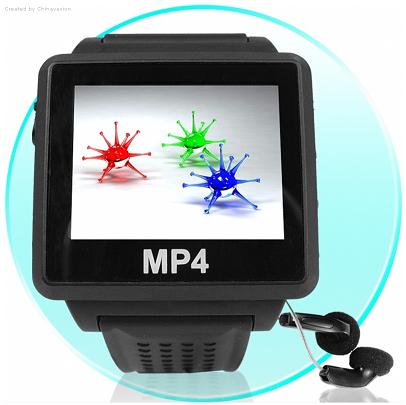
It is also common for many of the players used today to carry the name of MP4 in reference to the type of files they play, although in reality these devices can play other types of formats. Today we can obtain an electronic device that within its functions is the reproduction of this multimedia format, but there is also a wide range of brands of mini devices that reproduce the MP4 format.

6 advantages of MP4 video format

6 advantages of MP4 video format

The MP4 format (MPEG-4 Part 14 / MPEG-4 AVC -> Advanced Video Coding), is a popular video format that can combine resources such as audio + video + images and even subtitles. It has been designed to synchronize multimedia information in a format that allows you to effectively manage multimedia files.

It has become very popular on the Internet, unleashing other classic formats such as the famous MOV. In fact, many programs are not compatible with the latter format, so converters such as Movavi are used (on the brand website we can know more information about the format), to achieve a resulting MP4.

The MP4 has the advantage of providing high quality video output, similar to that of a DVD, with a compression ratio of 4MB / minute. It is estimated that the format is accepted by more than 90% of smart devices.

Next, we will study the main advantages of MP4.

Why should you use MP4?

Identical to the MOV: The MP4 was created based on the specifications of the MOV format (which was launched in 2001). The main difference is that in this first one, a support superior to certain characteristics such as IOD (“Initial Object Descriptors”) is specified.

Variety of extensions: We will commonly find the format extension as .MP4, but the files also have other extensions such as M4P or M4A. Those files within the format that use only unencrypted audio will work through the M4A extension. If data encryption is required, then the M4P file will be used.

Storage of other data: In addition to storing video data, it is also capable of storing other data, such as images, subtitles, object descriptors, scenes, etc.

Access: Videos with this format can be easily downloaded from websites with a high-speed band connection.

Streaming: MP4 allows streaming video over the Internet (allows us to view content in real time). It helps us to incorporate video clips in advertising pages to give you promotion.

Expandable: The technology on which the MP4 is based is ready to be expanded. It can be managed to create a base through which the new technologies of the MP4 family will be developed.

These are the main advantages that characterize MP4, a format that has a long future ahead.