
The Adobe Systems Flash Video format is commonly used to include online videos on websites, such as YouTube, Hulu, Vevo and numerous other video transfer services. Virtually any operating system (with the exception of iOS) can read and view FLV files by using Adobe Flash Player (including browser add-ons) and third-party software. Android mobile devices, as well as iPhone, can play FLV files using open source software and specific browsers. iOS still has some problems with Flash. The “Jelly Bean” version of Android allows users to use FLV files. Files with the FLV extension can only be viewed with FLV player programs. Screen capture in FLV video is possible through recording and screen capture programs.

Technical details about FLV files
FLV files that use the H.263 standard of the Sorenson Spark codec (FourCC FLV1) are normally considered compatible because they were the first codec files supported by Flash Player and because their exhaustive use through other versions allows the codec to be supported. The audio of FLV videos is usually encoded in MP3 format, but can be recorded on the video using a microphone with the Nellymoser Asao codec. Screen sharing is possible in two ways: using bitmaps or using lossless compression through reduced color depth. The main difference between these two screen sharing techniques is that the second one is only compatible with Flash Player 8.
Mp4 instead of FLV
For many years, the preferred file format for online video sharing (either through a hosting service or on your own website) has been the Adobe Flash Video format, or FLV. Currently there have been very important changes for video production since the FLV format today is only one option that has been strongly pushing the MPEG-4 (or MP4) format.
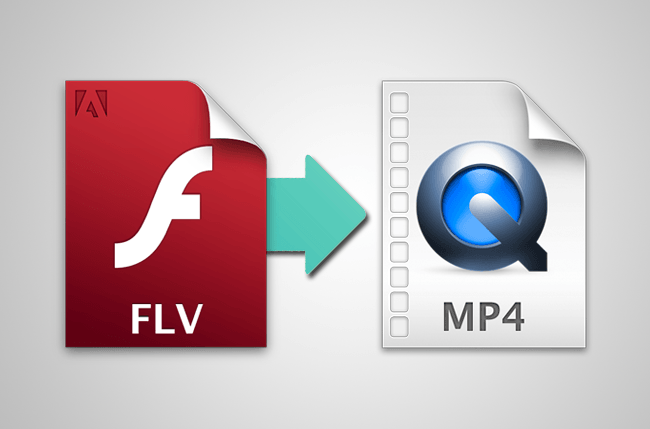
Video technology continues to evolve, offering the best production options for online video and movie viewers. FLV became a popular choice for video on the Internet due to the ubiquity of Adobe Flash plug-in, but advances in browser technology and the Flash plug-in itself means that the most traditional video file formats are now common. FLV files themselves are rarely served by video hosting services. Instead, MP4 has taken its place (often with a flash controller to play the MP4 file) as the new video standard on the Web. Other pages use HTML 5 to directly play the MP4 video file.
MP4 is a great way to provide high quality videos, along with the compression that gives the large file size, MP4 files use H.264 encoding. Currently, video providers like Vimeo, YouTube, or streams from the iTunes Store on video use an MP4 file with H.264 encoding. In addition, MP4 with H.264 encoding is one of the video codecs that a Blu-Ray player should be able to decode.
Many hosting services, such as Vimeo, now list MP4 as the preferred file format. In addition, some video distribution platforms, such as Vimeo or Apple’s iTunes store, are not compatible with the FLV format.
The rise of video on mobile devices has changed things too. For the most part, Adobe Flash content on websites is not available on mobile devices. For the video that can be seen anywhere, on any device, the MP4 format has become the latest series.
Detailed information
Many have been the fields that have evolved greatly thanks to the progress of computer technology and, one of these, is that of video. Currently, any smartphone has a photo and video camera that provides the solvency necessary to record home videos and even for professional use. But these videos must be recorded in some way, dumped to disk in a file format that allows them to maintain the image quality occupying as little as possible.
The algorithms that facilitate this storage and make videos compatible with certain physical electronic devices are called codecs, and like what happens with image formats, there are several different ones.
A wide variety depending on the medium
A codec encodes – and hence the name – the video information and compresses it to occupy the minimum possible space on the storage media. This always causes some information to be lost.
However, this loss and the quality of the resulting video that depends on the codec are defined according to the medium in which the video should be transmitted, since it is not the same to show a video designed to download from the Internet through our smartphone, than the movie we can see in a cinema.
And, in this regard, digital formats and online downloads have long since reached the world of seventh art for films shown in theaters.
The main codecs
Currently, and leaving aside some less used, the main video codecs that we can find are:
MPEG-1 You may sound more like the MPEG-4 that we will discuss in a moment, but this is its first precedent, used in the Video CD standard, and that provides a quality similar to that of a domestic VHS. The codec that is responsible for encoding the audio gained fame on its own merits: the MPEG-3, also known as MP3.
MPEG-2 Evolution of the previous one, is perhaps the most widespread in the industry to be chosen for broadcasts of DTT (Digital Terrestrial Television), and cable or satellite television. In addition to this, he was also chosen to use it on SVCDs and DVDs.
MPEG-4 Widely used for online video transmission and content distribution, many cameras and mobile phones record directly in this format thanks to the recognition of the main player devices and a multitude of software.
AVI It is not properly a codec, but a container file format, but what I will explain will make you understand why I add it to this list. Large companies tend to create their own standards and try to impose them. This is the case of Microsoft, which launched this format in 1992. Very flexible, it allows storing a video stream and several audio streams in the same file, for example each audio stream containing a different idiomatic version. The codecs of the video format and the different audios may be different, and the software corresponding to each of them installed on the computer will be needed.
video-formats-2-pc
DivX Originally based on the MPEG-4, it offers high compression without great sacrifice of quality, which makes it ideal for content distribution over the Internet.
XviD. Born as a free alternative to DivX (owned by the company of the same name), it is even more efficient than the latter, reducing the size of the resulting video file without suffering a great loss of quality, which has made it very popular among Internet users who download content from the network, not requiring much bandwidth.
WMV Windows Media Video, as the name suggests, was created by Microsoft for its operating system, although from here it has not gone much further.
FLV. Flash video, a format embedded in Flash files and that is intended for online use. It can have a lot of loss of quality but, in general, it allows you to greatly compress the resulting file, which saves a lot of bandwidth. Historically used by YouTube, but already in decline as the Adobe Flash itself. As in the case of AVI, it is a container format, whose video can be in formats such as, for example, H.263.
H.264 or MPEG-4 AVC. Created to have highly compressed video with the minimum possible loss of quality, thereby facilitating the transmission of HD content (High Definition) and higher resolutions through the Internet, compromising the minimum possible bandwidth.
MOV. Based on MPEG-4, it is a container format – and not a codec initially used by Apple for its QuickTime media player that has subsequently become popular and can also be read by other programs and devices.

