
Digital Audio: Pulse Code Modulation (PCM) Variants
Pulse Code Modulation
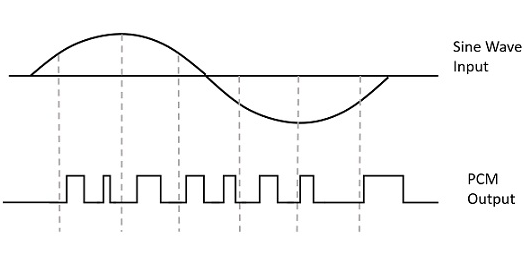
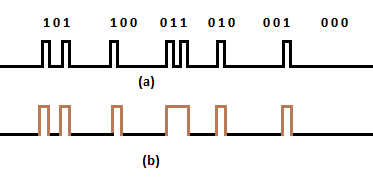
Pulse-code modulation (PCM) is a method of representing an analog signal as a sequence of numbers. It is the most common method of storing and transmitting digital audio.
PCM works by sampling the analog signal at a regular interval. The amplitude of the signal at each sample is then converted to a number. The number of samples per second is called the sampling rate. The higher the sampling rate, the more accurately the analog signal can be represented.
Once the analog signal has been sampled, it can be stored or transmitted as a digital signal. The digital signal can then be converted back to an analog signal by a process called decoding.
There are many different variants of PCM. Some of the most common variants include:
- Linear PCM (LPCM): This is the most basic form of PCM. In LPCM, the numbers that represent the samples are stored in a linear fashion.
- Differential PCM (DPCM): In DPCM, the numbers that represent the samples are stored in a differential fashion. This means that only the difference between the current sample and the previous sample is stored.
- Adaptive delta modulation (ADM): ADM is a type of DPCM that uses a feedback loop to adjust the quantization step size. This allows ADM to achieve better noise performance than DPCM.
- Pulse-density modulation (PDM): PDM is a type of PCM that uses pulses to represent the samples. PDM is often used in digital audio applications where low power consumption is important.
PCM is a versatile and efficient method of representing digital audio. It is the most common method of storing and transmitting digital audio, and it is used in a wide variety of applications, including CD players, MP3 players, and digital audio workstations.
Here are some additional details about the different variants of PCM:
Linear PCM (LPCM)
LPCM is the most basic form of PCM. In LPCM, the numbers that represent the samples are stored in a linear fashion. This means that the number for each sample is stored directly, without any compression.
LPCM is the most accurate form of PCM, but it is also the most bandwidth-intensive. This is because each sample must be stored as a separate number.
Differential PCM (DPCM)
DPCM is a type of PCM that uses a differential encoding scheme. In DPCM, only the difference between the current sample and the previous sample is stored. This allows DPCM to achieve better compression than LPCM, at the expense of some accuracy.
DPCM is often used in applications where bandwidth is limited, such as voice communications.
Adaptive delta modulation (ADM)
ADM is a type of DPCM that uses a feedback loop to adjust the quantization step size. This allows ADM to achieve better noise performance than DPCM.
ADM is often used in applications where high-quality audio is required, such as music production.
Pulse-density modulation (PDM)
PDM is a type of PCM that uses pulses to represent the samples. In PDM, the amplitude of the signal is represented by the width of the pulses.
PDM is often used in digital audio applications where low power consumption is important. This is because PDM can be implemented using very simple circuitry.

