What is the best way to listen to music on your car smartphone? Part 2


Free Download Mp4Gain
picture

What is the best way to listen to music on your car smartphone? Part 2

BLUETOOTH

What are the benefits of connecting a USB cable and listening?

Bluetooth

If you connect a USB cable to listen, you can upload your smartphone at the same time you play music. Therefore, you do not have to worry about running out of battery on your smartphone, even if you play music for a long time.

In addition to better sound quality than Bluetooth, there is less delay time. For example, when watching a video in a car, the image and sound may not be synchronized with Bluetooth, but with USB, the gap is small.

What are the disadvantages of connecting a USB cable and listening?
Since a cable is required, the audio area tends to be crowded. If it is too long, the pendant cable will not only be neglected, but can also be trapped on the gear lever or on the steering wheel, which is dangerous.

Connect and play with the voice entry (AUX)
If you are using a smartphone with a headphone connector and the navigation or audio system of the car has a hole to connect the AUX terminal, you can use this connection method using the cable for the AUX connection.

This is a method for connecting a smartphone directly to the audio system of a car. The price of the aux cable varies from one pin to another, but you can listen to good quality music for about 1000 yen.

What are the benefits of connecting an audio input (AUX)?
Like USB, AUX has a cable connection, so it does not have a load function. However, since it is a dedicated audio terminal, you can enjoy music with a better sound quality.

If you want to focus on sound quality, the AUX connection is the most recommendable.

What are the disadvantages of connecting the audio input (AUX) to listen?
As with USB cables, it is filled with more cables around the audio. Also, if you want to load at the same time, you will need more cables. The USB cable can be used for both domestic use, but the AUX cable is rarely used, so it is a nuisance to prepare it for the car.

In addition, recently, some smartphones do not have a headphone connector, so there is a tendency to prepare many things.


Free Download Mp4Gain
picture


Mp4Gain Main Window
picture


Mp4Gain Features
picture


Free Download Mp4Gain
picture

What is the best way to listen to music on your car smartphone?

What is the best way to listen to music on your car smartphone?

Bluetooth

Compare Bluetooth, USB, FM and more transmitters!

BLUETOOTH

How to listen to music on your smartphone by car?
Connect and play through Bluetooth
Connect with a USB cable and play
Connect and play with the voice entry (AUX)
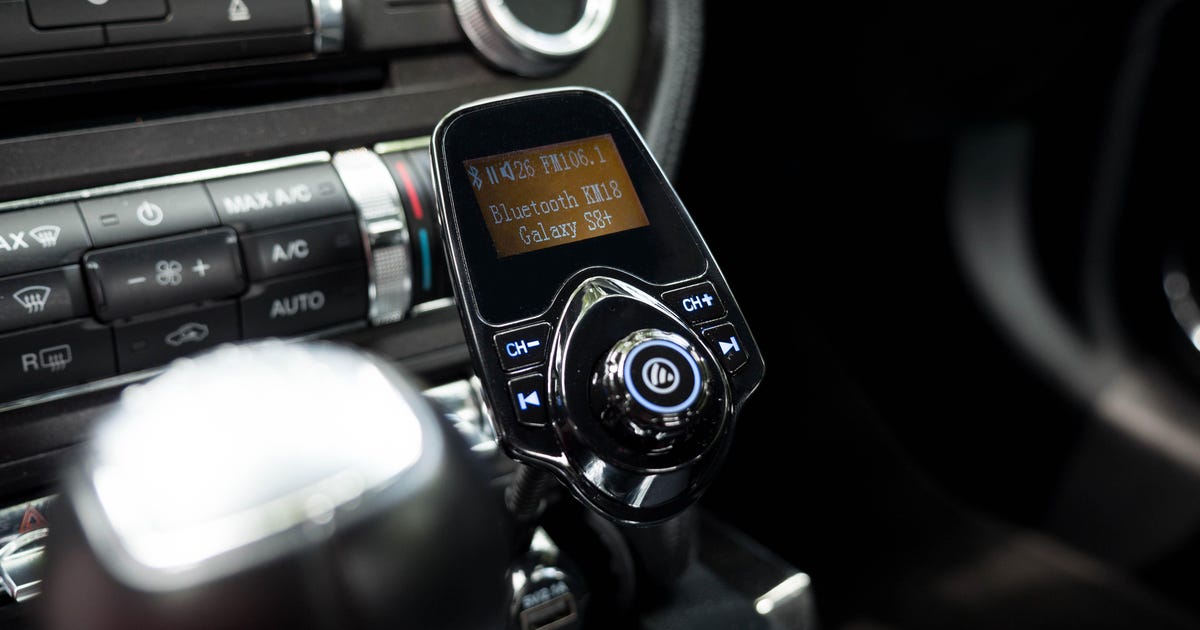
Connect with the FM transmitter and play
What to follow, the best connection method for each person
How to listen to music on your smartphone by car?

The smartphone that most people use now. Smartphones are playing an active role not only in daily life and work, but also in driving, for example, providing cars a function that allows car manufacturers to be linked to smartphones.

In addition, many people use their smartphones such as music players and many people want to listen to the songs that they usually listen while driving. There are four main ways to listen to music on your car smartphone.

Listen with Bluetooth
Connect the USB cable and listening
Listen with voice entry (AUX)
Listen with FM Transmitter
Bluetooth is the mainstream now, but some people can say that their car is not compatible with Bluetooth or that sound quality can deteriorate if it is wireless. Therefore, we will present the advantages and disadvantages of each connection method.

Connect and play through Bluetooth
The first method that I will present is to connect your smartphone to a car navigation system (or stereo of the automobile) via Bluetooth. If your car already has a car navigation or stereo system with Bluetooth, this method is the most economical.

What are the benefits of connecting through Bluetooth and Listen?
In the Bluetooth case, once the pairing is completed, the smartphone and the car will connect automatically from the next time, and the music will be played automatically when the car is turned on. ..

The best part is that you do not have to buy additional equipment. Since radio waves are omitted and music is reproduced, it is not necessary to prepare wiring as cables, and the cables do not hang into the car. As it is not necessary to enter the cable one by one, although you connect a person’s smartphone in the rear seat, for example, the cable does not go through the inside of the car and is very smart.

What are the disadvantages of connecting by Bluetooth and Listen?
Since it is necessary to have a navigation and audio system for the car that Bluetooth admits, it will be expensive to install it if it is not installed. In many cases, rental cars and shared cars are not compatible with this.

It can also be annoying to play automatically.

Connect with a USB cable and play
Many of the latest audio and navigation systems for automobiles can be equipped with a USB terminal. In most cases, this USB terminal supports not only the load, but also the audio playback. If you prepare and connect a USB cable, you can listen to music while loading.

TOP 5: Bluetooth audio codecs: aptX + (HD), LDAC, AAC and SBC

TOP 5: Bluetooth audio codecs: aptX + (HD), LDAC, AAC and SBC

Bluetooth audio codec

There are 5 main Bluetooth audio codecs, with which sound is transmitted from a source to headphones (or speakers) via Bluetooth: SBC, AAC, aptX, aptX HD, and LDAC. As wireless connectivity becomes more and more popular, it is a good idea to understand what Bluetooth codecs are and how they work.

Bluetooth Audio Codecs

Bluetooth aptx

It is worth noting 2 points at once:

-Bluetooth sound is still noticeably worse than wired sound in all quality parameters;
-At this stage, wireless sound with high-quality codecs can meet the needs of most users.
We will no longer focus on these “axioms”. In general, they are clear. And many people with experience in listening and comparison are unlikely to argue with them.

How to choose, change and learn the Bluetooth codec on an Android phone?

Which is better: listening to music via cable or via Bluetooth?

Basics of Bluetooth audio streaming

Bitrate
What is bitrate, I think everyone knows. This is the number of bits that are used to transfer data per second. The higher it is, the better, obviously. But the more resources required, in particular power consumption, disk space, etc.

Compression has long been used to optimize resources, lossy and lossless. Lossless compression uses algorithms to reduce the bit rate and file size without altering the original. That is, without loss, you can restore an exact copy of the original uncompressed file.

Maximum bit rate of bluetooth codecs
Maximum bit rate of Bluetooth codecs

Lossless processing allows you to reduce the bit rate a maximum of 2 times. More or less. For example, for a CD quality file (1411 kb / s) compressed without loss, we will see values ​​of 770-900 kb / s. Anything below is lossy compression.

When the bit rate and / or file size needs to be further reduced, it is compressed by discarding the “irrelevant” bits of information. That is, the selected codec, according to its algorithms, “decides” in which frequency range there is no data (or it can be neglected), and discards it. The uncompressed original cannot be recovered from the resulting file.
The algorithms for the codecs are different: some exclude only high-frequency sounds, some are based on psychoacoustics. For most, the difference between a good lossy track and its lossless version is negligible or non-existent.
In addition to “discarding” in lossy compression, “overlapping” information blocks are added. This part of the algorithm aims to flatten the signal and correct for quantization errors.
Sample rate and bit depth
The sample rate shows how many “discrete” segments the analog signal is divided into for digital recording. The larger it is, the closer the “figure” is to the original. Measured in Hertz. This concept is inextricably linked to the frequency range.
A person hears sounds from 20 Hz to 20 kHz. It has been shown that to quantize (digitize) a lossless audio signal, the sample rate must be more than 2 times the frequency range of the original audio signal. Consequently, the 44.1 kHz CD quality is sufficient: the creators of the format relied on this law.
Bit depth determines how many bits are needed to quantize each of the preceding segments. The bigger the better. It is logical that the audio format (or codec) is considered better the higher its bit rate and sample rate. 16 bit 44.1 kHz for CD versus 24 bit 88.2 (or more) kHz for Hi-Res Audio.
Sampling rate
Sampling rate

Background noise level
The background noise level determines when the desired signal becomes indistinguishable from the “noise” of the codec compression algorithm, in this case. The lower this level, the wider the dynamic range of the final signal, the quieter the sounds we can distinguish.

Noise level LDAC (990 kbps) (CD)
Example: LDAC noise level 990 kbps

On the charts, it is more correct to navigate from the highest peak, it can drown out the lowest sounds. It is not only the level of the peaks that is important, but also how smooth (“dense”) they are. Typical background noise levels are indicated in graphics by a dotted line for 16-bit quality and a top red area for 24-bit quality.

All codecs “try” to save bandwidth. In addition to all other settings, quantization noise is removed, if possible, in the HF range above 20 kHz. A person does not hear these sounds, so the algorithm is justified.

Bluetooth Audio Standards: How to Choose the Right Wireless Headphones

Bluetooth Audio Standards: How to Choose the Right Wireless Headphones

Bluetooth Headphones

In the age of modern technologies, you will no longer surprise anyone with wireless devices: We actively use Wi-Fi on phones and laptops, connect wireless mice and keyboards to computers, and listen to music through Bluetooth headphones. And here a drawback occurs: how to choose the best headphones specifically for your devices, because there are many BT audio transmission protocols, and not all of them are supported by the headphones and the device itself?

Bluetooth Headphones

History and characteristics of the Bluetooth standard

But we will start as usual in the history of BT. And they started creating it, which is remarkable, a few years before USB; In 1994, Ericsson, a well-known manufacturer of telecommunications equipment, began working on this standard. The standard itself was developed as a wireless alternative to a wired RS-232 connection (better known as a serial port). The specifications themselves were ready in 1998, when the Bluetooth SIG group was created, which, along with Ericsson, included IBM, Intel, Nokia, and Toshiba. In 2002, Bluetooth became part of the IEEE 802.15.1 standard (Wi-Fi, remember, is included in the IEEE 802.11 standard). The Bluetooth SIG currently includes more than 18,000 companies, making Bluetooth one of the few important standards for short-range data transmission.

How does Bluetooth work?

Like Wi-Fi and many other systems, it operates in the ISM band, 2.4 to 2.4835 GHz. Of course, using one range leads to signal interference (overlap) and this, in turn, negatively affects stability and performance. operating speed. Considering the fact that sound should always be transmitted with the same quality and without lag, the developers of the standard did a trick. Perhaps the most important problem for BT is precisely Wi-Fi: there are many such networks in the 2.4 GHz band in every home, and there may be 13 channels in this range with a width of 22 MHz.

Here the approach is simple: both the transmitter and the receiver use a fairly wide channel all the time. Yes, it can overlap with other channels, which will negatively affect speed, but not stability, and this suits everyone. Bluetooth uses a different approach: in the ISM band it already has 79 channels (in some countries there are 23, but Russia does not belong to them) with a width of only 1 MHz, and the receiver and transmitter with a frequency of 1600 times per second change the channel according to a given algorithm.

This is specifically done to greatly reduce the probability of signal aliasing in such a small frequency range. But this does not cancel out the interference: small BT channels can get into large Wi-Fi channels, and this will lead to a loss of speed, which is unacceptable for high-quality sound transmission. Therefore, BT uses AFH (Adaptive Frequency Hopping) technology. Its principle is that when changing Bluetooth channels, those channels that fall into the big Wi-Fi channel are ignored.

So if you use Bluetooth in one place, then in theory there are no problems with sound transmission: out of 79 channels, free ones will be selected, which will provide enough speed. Problems can arise if you move, but on the other hand, have you often seen Wi-Fi networks on the street? Therefore, the technology for transmitting sound through BT can be considered completely immune to noise, and it remains only to find out the standards for transmitting sound through it.

Sound via Bluetooth: versions and codecs, do they affect the sound quality?

Sound via Bluetooth: versions and codecs, do they affect the sound quality?

Bluetooth

Bluetooth is a wireless technology that allows, among other things, to connect headphones or portable speakers, stereo systems or sound bars to your smartphone or laptop.

Bluetooth 5 to double speed, quadruple range of wireless links - CNET

There are many devices on the market today with different versions of the Bluetooth protocol and with support for different codecs. What does all of this mean, which version is the latest, we need to understand all of this, and most importantly for us, does this somehow affect the sound quality? Let’s see.

One important thing to keep in mind up front is that the Bluetooth sound technology you hear has much less impact on sound quality than the design of the device itself. If you try to test multiple wireless headphones or speakers, you will hear the obvious differences between the devices. If you test the same device, but connected with different codecs or versions of Bluetooth, the difference may not be so obvious, maybe even subtle.

Simply put, you should not base your choice solely on the Bluetooth technologies and codecs supported by the device, this is neither the first nor the second most important criteria.

Bluetooth versions

Bluetooth has improved dramatically over the years since the turn of the century, and audio compression isn’t as brutal today as it was in the days of Bluetooth 1.1 or 2.0 (when wireless headphones and earphones first hit the market). ). Let’s highlight the main technical differences between the Bluetooth versions, devices with which they can be found for sale today.

Bluetooth 3.0: The data transfer rate has increased significantly (up to 24 Mbps vs. 2.1 Mbps in Bluetooth 2.0), but the power consumption has increased.

Bluetooth 4.0: reduced power consumption while maintaining a speed of 24 Mbps.

Bluetooth 4.1: added anti-crosstalk protection when working with LTE modules installed on all 4G smartphones.

Bluetooth 4.2: higher speed and improved data transmission security.

Bluetooth 5.0: range increased 4 times, speed increased 2 times.

Bluetooth 5.1: it was possible to determine the location and direction with the utmost precision.

As you can see, the new versions primarily address data rate and power efficiency issues, which rarely directly affect sound quality. However, newer versions can improve data transfer reliability, which can allow a heavier codec, such as aptX HD or LDAC, to run at higher data rates.

So to summarize:

The Bluetooth version generally does not directly affect the sound quality.

Both devices must support the Bluetooth version and specific codec.

The difference between different codecs on the same device can be subtle.

AAC is only meaningful to Apple, not of interest to Android.

aptX and other codecs, on the other hand, are not supported by Apple devices.

Wireless technology shouldn’t be an important consideration when choosing an audio device. Don’t automatically rule out headphones without the latest Bluetooth version or with SBC only, they may sound better or be more comfortable than their competitors.

What you need to know about listening on Bluetooth headphones

What you need to know about listening on Bluetooth headphones

Bluetooth

Harald Bluetooth IBluetooth is the wireless transmission of data between two devices in a short distance. This is done using radio waves (WPAN).

Bluetooth

Few know that the name of Bluetooth technology comes from the name of the Danish king Harald Bluetooth I (958 AD). It was he who brought together parts of Norway and Denmark. And the Bluetooth symbol itself denotes the Scandinavian runes B and H.

So to transfer music via Bluetooth 3 factors are required:

Sampling frequency (kHz): the higher the sampling frequency, the clearer the sound can be transmitted (closer to digital). Distortion in sound is reduced and the audible frequency range is widened.

Sampling depth (bits): The higher the sampling depth, the higher the resolution of the music. Dynamics increases as the range between soft and loud sounds increases. In this way, it is possible to obtain more subtle sound levels and tonal nuances.

Bit rate (kbps) – This is the connection speed at which music audio data is transmitted from the device to the headphones. However this is not entirely true. More precisely, this value indicates the possible size of the amount of data transmitted at a given time. The higher the baud rate with the Bluetooth headset, the more data (at the same time) the device can transfer. Therefore, the audible sound is greatly improved.Better Bluetooth audio: what aptX, aptX HD and LDAC are all about

What do the abbreviations aptX, pptx HD, and LDAC mean?
These abbreviations are for Bluetooth codecs and mainly describe various transmission parameters. They differ in sample rate, sample depth, and bit rate. Android 8.0 devices support these audio codecs and you can enjoy better sound quality.

atpX is the slowest option for wireless music streaming. This technology provides a maximum bit rate of 352 kilobits per second at a sample rate of 48 kHz and a sample depth of 16 bits. The analog signal is read 48,000 times per second and stored with 16 bits. In principle, these are solid numbers. In comparison, a CD is read and stored with identical parameters. However, relatively slow streaming results in a nearly 50% loss in audio quality. So the sampling depth is only 8 bit, which is related to the resolution of the music.

The AtpX HD also has a sample rate of 48 kHz, but the digital signal is stored at 24 bits. The dynamic range is increased, resulting in higher quality sound. The use of LPCM (Linear Pulse Code Modulation) results in lossless data transmission from analog to digital signal. The sound is thus clearer.

PCM is a modulation technique that converts an analog signal into digital. The CD receives the analog sound waves from the music recording.

Best Bluetooth audio: what aptX, aptX HD, and LDAC are all about
Sony H. EAR on wireless
It is not yet known to what extent the bit rate in this codec is adapted only for the best sound transmission in headphones.

Sony’s LDAC Bluetooth codec is the best and fastest of the three wireless audio capabilities.

At data rates of less than 1 Mbps at a sampling rate (96 kHz) and a sampling depth of 24 bits, almost CD quality is achieved.