What is bit?

bit is an abbreviation for binary digits.

16 bits and 24 bits in catalogs, etc. represent the number of binary digits * handled by computers, etc.
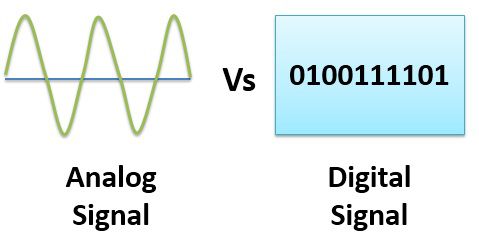
In digital audio, analog sound is converted to a digital signal,
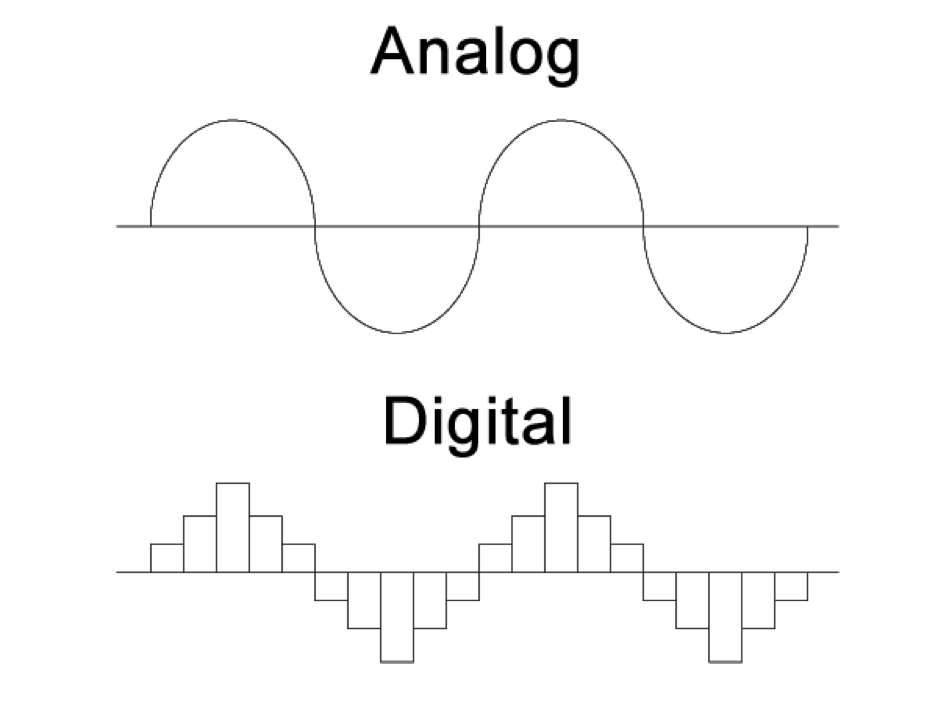
but the number of bits determines how precisely the amplitude value is converted when it is converted to a binary number (quantization) after sampling.
In the case of 1 bit, only 1 or 0 can be judged, but in 8 bit (10001001), 2 raised to the eighth power, that is, 256 steps can be judged in detail.
Currently, the 16-bit mainstream has 65,536 steps and the 24-bit mainstream has 16,777,216 steps.
Now,
there is a part that does not match the actual waveform (analog waveform) and the quantized and sampled digital waveform. This is called quantization noise.
This noise is especially noticeable when the number of bits is small.
So simply increasing the F’s and the number of bits will improve the sound (closer to the original sound)
, but it will consume a lot of memory. Also, in the case of digital recording, it is
very important to manage the input level to bring out the high quality of the sound.
If the recording level is too low, you won’t be able to bring out its goodness.
It is important to configure it so that it is not clipping at the maximum level of the music to be recorded,
but try to increase the overall average level as much as possible to have a wider dynamic range
(recordable high and low level difference) than analog. Make the most of it and record with a good signal-to-noise (SN) ratio.
* The decimal numbers that we usually use are represented by a combination of 10 types of numbers from 0 to 9, but in
binary numbers, are represented by a combination of 0 and 1.
For example, in a 4-digit binary number,
Decimal number 0 1 2 3 Four ・ ・ ・ ・ 14 15
Binary number 0 1 Ten 11 100 ・ ・ ・ 1110 1111
You can express a number from 0 to 15 as.
(5) What is timing?
It is a state in which each device moves in harmony with each other at the same time in the system.
Digital devices use a reference signal called a word clock, and
Each device can be synchronized with a high precision that cannot be compared with analog devices.
For the configuration of each device, the device that supplies the reference word clock is set as the word clock master, and
all other devices are configured as
word clock slaves so that they can operate synchronously in response to the instruction of a unit set by this master increases.
The role of the word clock is similar to that of the conveyor belt used on factory assembly lines.
The digitized audio data is divided into small times, it is
transmitted to each device, processed and finally returned to an analog audio signal by the DA converter.
What happens if the speed of the conveyor belt changes along the way?
The data will be lost or the time will not match.
If there are devices in the system that are not synced
, problems such as loss of sound and noise mixing will occur due to the same cause.
Regarding synchronization, if each device is precisely configured and word clock transmission between each device is guaranteed,
can achieve high-performance and comfortable operation unique to digital technology.
(6) Digital recording medium
CD compact disc. Introduced in 1982.
Bonus CD A CD that can also play back photos and pictures.
CD-R A CD that can only be burned once.
CD-RW A CD that can be recorded many times.
DAT Digital audio tape. Record and play back on magnetic tape.
Maryland Mini disco. Introduced in 1991.
MP3 Achieve CD-quality sound quality on the Internet, personal computers, etc.
SACD Super Audio CD. Higher sound quality than current CD.
DVD Audio You can play videos and music.