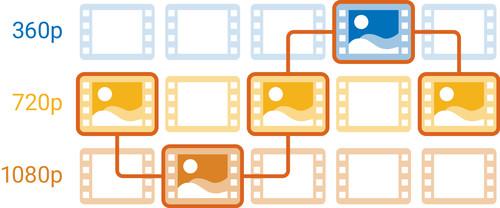
The adaptive transmission bit rate. Part 2

Current usage
Post-production buildings, content delivery networks, and studios use adaptive bitrate technology to provide consumers with higher-quality video using less manpower and fewer resources.
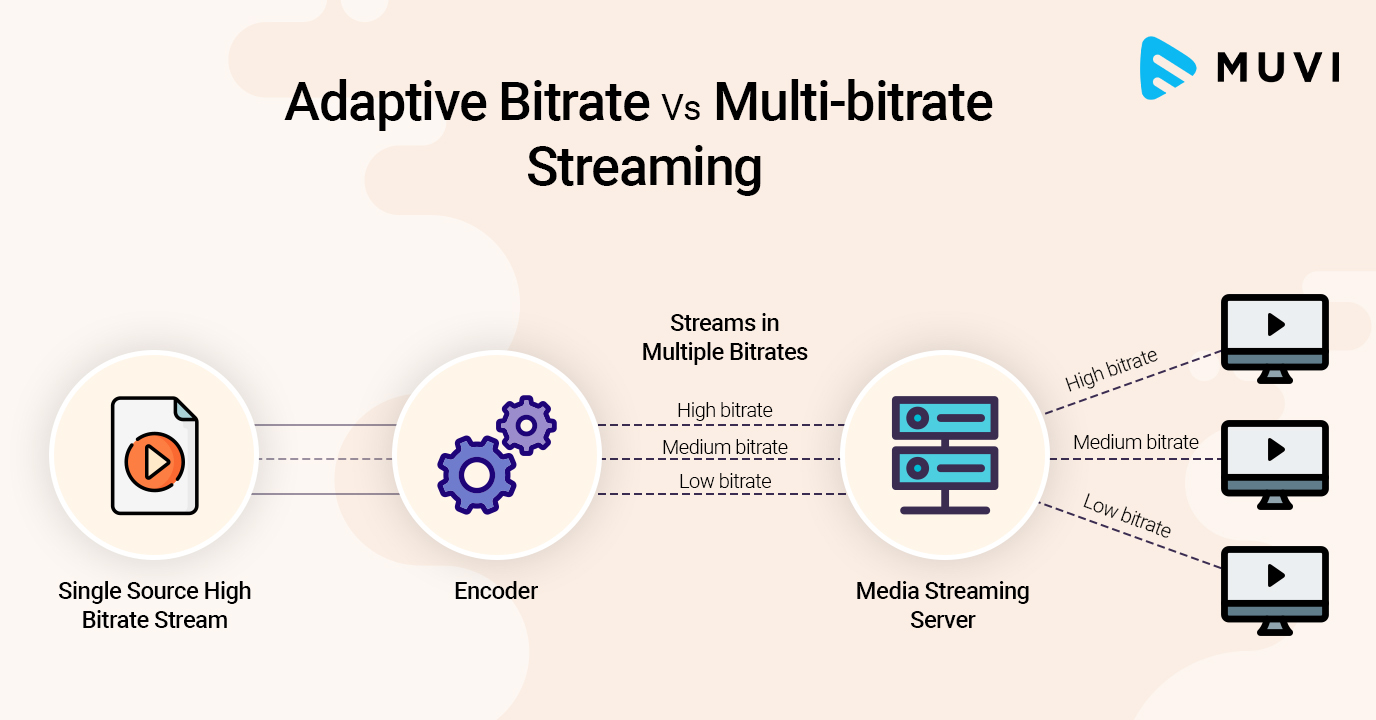
Creating multiple video outputs, especially for adaptive bit rate streaming, adds a lot of value to consumers. Whether the technology works as designed, it must be completely unknown to the end user or consumer. Therefore, even though adaptive bit rate technology has been actively used by media companies for many years, and it has essentially become common practice for today’s high-end providers, mainstream consumers are relatively ignorant. of your need.
Adaptive Bleed Bitrate Benefits
Adaptive streaming bitrate provides streaming media consumers with the best possible experience as the media server automatically adjusts to any changes in the network and the playback conditions of each user.
The media and entertainment industry also benefits from adaptive streaming bitrate. As the video space grows, content marketing networks and video providers can provide customers with a superior viewing experience. Adaptive bit rate technology requires additional coding, but it simplifies the overall workflow and produces better results.
Scalable CDN is used to deliver streaming media to an Internet audience. The CDN receives the stream from one source on its origin server and then copies it to many or all of its edge cache servers. The end user requests a transmission and is redirected to the “closest” end server. This can be verified using libdash and the Distributed DASH (D-DASH) dataset, which has multiple mirrors in Europe, Asia, and the US Using HTTP-based adaptive streaming allows Edge Server to run server software Simple HTTP that is cheap or free to license, reducing software licensing costs compared to expensive media server licenses (such as Adobe Flash Media Streaming Server).
History
Adaptive Bitrate was created by the DVD Forum at the WG1 Special Current Group in October 2002. The group was co-chaired by Toshiba and Phoenix Technologies, a group of experts in collaboration with Microsoft, Apple Computer, DTS Inc., Warner Brothers, 20th Century Fox, Digital Deluxe, Disney, Macromedia and Akamai … The technology was originally called DVDoverIP and was a composite effort from the DVD ENAV book. The concept came from storing DVD TS Sector MPEG-1 and MPEG-2 in small 2KB files to be served using an HTTP server for the player. MPEG-1 segments provided a lower bit rate stream, while MPEG-2 provided a higher bit rate. The original XML schema provided a simple playlist of bit rates, languages, and URL servers. The first working prototype was presented at the Phoenix Technologies DVD Forum at the Harman Kardon laboratory in Willingen, Germany.
Implementation
Traffic Networks introduced adaptive bit rate streaming and it is now being developed and used by Adobe Systems, Apple, Microsoft, and Octoshape. In September 2010, Traffic Networks received a patent for its adaptive bit rate transmission.